All posts by HollywoodGlee

I’m a veteran of several film festivals including the Newport Beach Film Festival, the Berlin International Film Festival, the American Film Institute's AFIFest Hollywood and AFI DOCS, the famed Venice International Film Festival, the San Luis Obispo SLO Film Fest, and the Santa Barbara International Film Festival's family of festivals including the SBIFF, the SBIFF French Wave Festivals and the SBIFF Showcase Film Series. To date I’ve written and published over 150 film reviews and have work posted on four sites including sbccfilmreviews.org, imdb.com. I have also been published in Classic Film Images magazine. In addition to writing reviews and covering film festivals, I am currently seeking distribution for new films. I have contacts in several major markets including Los Angeles, New York, Toronto, and Cannes, France. So when you’re looking for your film to get noticed, remember HollywoodGlee can help. We have professional marketers, respected critics and the most knowledgeable contacts on what film festival and/or distribution channel is right for you and your film. See you at the movies!

New BEN-HUR Featurette

BEN-HUR is the epic story of Judah Ben-Hur (Jack Huston), a prince falsely accused of treason by his adopted brother Messala (Toby Kebbell), an officer in the Roman army. Stripped of his title, separated from his family and the woman he loves (Nazanin Boniadi), Judah is forced into slavery. After years at sea, Judah returns to his homeland to seek revenge, but finds redemption. Based on Lew Wallace’s timeless novel, Ben-Hur: A Tale of the Christ. Also starring Morgan Freeman and Rodrigo Santoro. Directed by Timur Bekmambetov


See how the team brought the chariot race to life in this new featurette!


In theaters August 19, 2016

Screen Shot 2016-03-15 at 12.15.33 PM[4]

(Materials courtesy of ©2015 Paramount Pictures. All Right Reserved.
5555 Melrose Ave. Los Angeles, CA 90038)

#ANIME NEWS: Top directors Hosoda and Iwai to take center stage at #TIFF

June 9, 2016 at 11:00 JST

Animated works by director Mamoru Hosoda are to be showcased in the Animation Focus program at the 29th Tokyo International Film Festival (TIFF), which will run from Oct. 25 to Nov. 3.

The festival’s 2016 edition will also shine a spotlight on leading film director Shunji Iwai, who will provide the theme for the Japan Now section, which focuses on outstanding Japanese filmmakers.

Having celebrated its 30th anniversary last year, the TIFF, which was launched in 1985, is widely known as one of the leading film festivals held in Asia. In recent years, the festival has been putting extra emphasis on promoting Japanese culture trends including anime.

In 2014, the TIFF featured “Evangelion” anime creator Hideaki Anno in the Animation Focus program under the title of “The World of Hideaki Anno.” The festival also covered the “Mobile Suit Gundam” robot anime franchise last year.

Known for many hit anime films such as “The Girl Who Leapt Through Time,” “Summer Wars” and “The Boy and the Beast,” Hosoda will be the third anime creator to be featured in the Animation Focus program.

Screen Shot 2016-06-09 at 9.08.27 PM

“The Boy and the Beast” ((c) 2015 The Boy and the Beast Film Partners)

In addition to screening his recent films, the TIFF will also showcase Hosoda’s early works including “One Piece” and “Digimon Adventure” to offer a retrospective look at his career and wide-ranging creative expertise.

The Japan Now section deals with filmmakers most worthy of promoting internationally at the moment.

Known for “Love Letter,” his latest movie “A Bride for Rip Van Winkle” and other critically acclaimed films, Iwai is popular at home and abroad, particularly in Asia. He drew international attention with his animated feature film effort “Hana and Alice,” in 2015.

His artistic abilities will be brought to light in the program.

Details of the TIFF will be updated at its official website at (http://2016.tiff-jp.net/en/).

新TIFF_LOGO_s_yoko

To learn more about the latest developments in Japanese anime, visit the official site of Anime Anime (http://animeanime.jp/).

(Sourced and translated by The Asahi Shimbun from the website of Anime Anime Japan Ltd.)

THE MAN WHO SAW TOO MUCH

The AFI DOCS Interview: THE MAN WHO SAW TOO MUCH Director Trisha Ziff

For more than five decades, photojournalist Enrique Metinides risked his life to photograph tragedy — and the human emotion that accompanies it — in Mexico City. From crime scenes shot in black and white to explosions captured in full color, Metinides’ hauntingly beautiful pictures reveal the drama of disaster in a single frame as captured in THE MAN WHO SAW TOO MUCH.

AFI spoke to director Trisha Ziff ahead of the film’s AFI DOCS premiere. Also, check out the trailer below.

What led you to documentary filmmaking?

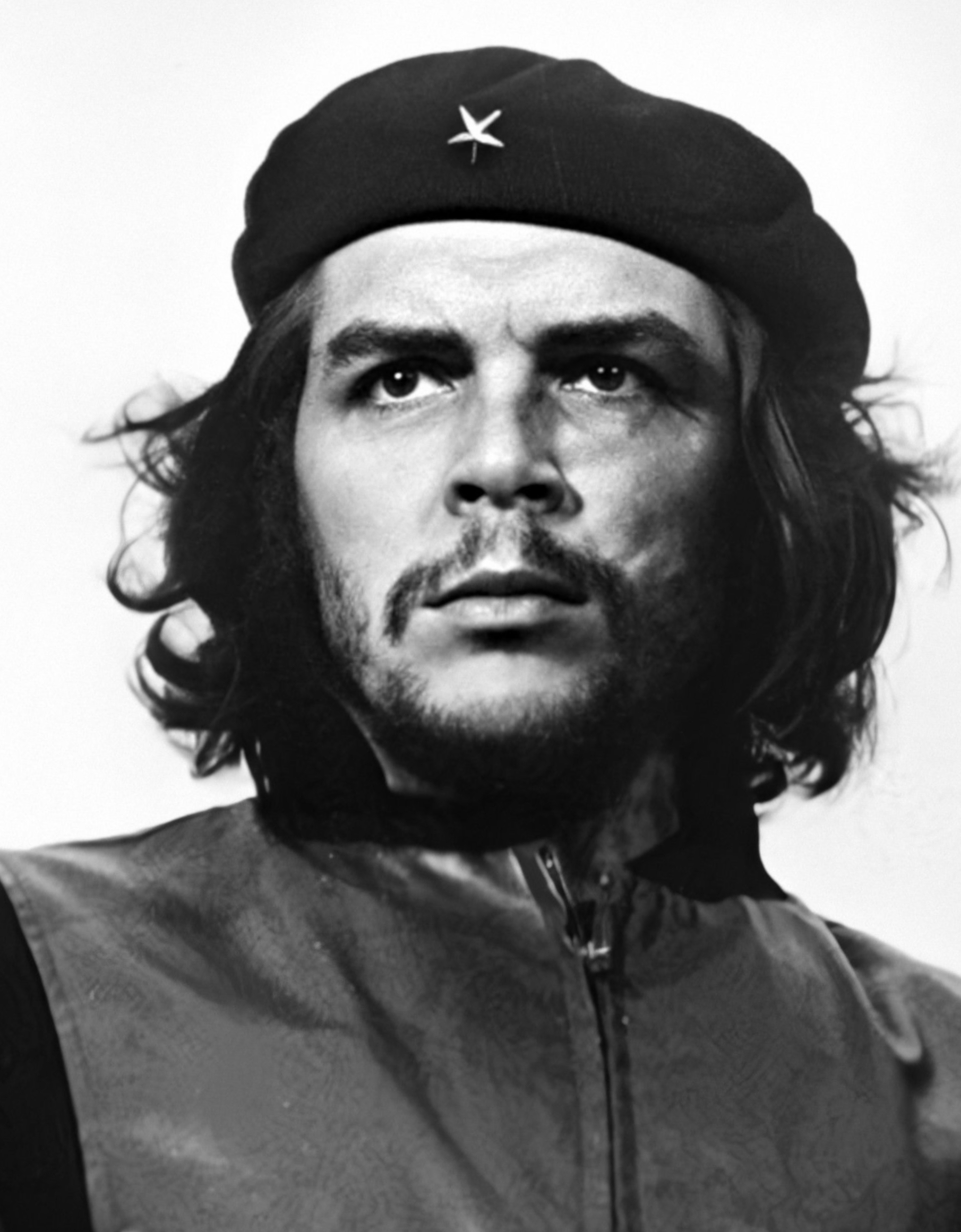
I come from a world of photography. My first film was based on an exhibition I curated about the famous photo of Che Guevara. It was a show about one single image and all its incarnations and hybrids. I saw the doc HELVETICA and I thought if you could make a film about a font, you could make a feature doc about a single image, a 60th of a second. I was fortunate enough to encounter amazing people to work with.

Coming from curation, I loved the world of documentary. It’s a different way of storytelling and the collectivity of filmmaking was a huge attraction. I grew up in England and spent my formative years watching Channel 4 docs and working with wonderful documentary filmmakers there. So to make my own film, with the support of Netflix, was a huge challenge and an amazing opportunity. I still curate and love the different ways of working with walls and with the moving image.

What inspired you to tell the story of Enrique Metinides?

I live in Mexico City and at every traffic light, we are confronted with tabloid images of the violence that took place the night before; we can never escape it. The frequency of the images assaulting us daily also makes them, ironically, feel mundane; they paralyze us. This is a film about a photographer who spent his life taking those images. I wanted to explore why we want to look at the image as much as he wants to take the photograph — the layers of looking, the voyeurism, the seduction. For me, it was about diving into a very dark world, understanding the sensationalism and meeting the photographers who do this work today. The film grew out of a seven-year relationship with my protagonist Enrique Metinides, three major exhibitions and a book.

How did you find your subject?

We had been working together for five years before we began to work on the film. I seem to have got into this pattern of a book, then an exhibition, followed by a film. It’s the third project with this model. I like it because each medium impacts and enriches the other . I was invited to curate a show of Enrique’s work at a big photo festival in Arles in the south of France; out of that grew our book, and later came the film. But my films grow from my curatorial work .

What was a particular obstacle you faced while making the film?

I think all of us might say funding! Despite the changes in how people see documentaries today and their popularity, it is still hard to make a film, and even harder to make a doc with a cultural theme. People tend to want Latin American films to address themes of victimhood and poverty, films that fit into a stereotype of sorts. So making a film about photography and a world of photography — which has the complexity of not being considered of cultural value — falls between two stools. The real challenge, however, was to find the contemporary photographers willing to work with me and to have us go out at night with them, documenting what they do. It took time to win their confidence but being at a crime scene with a cadaver is not something I will soon forget.

What do you want audiences to take away from your film?

My main concern in showing this film in the U.S. is: does this film, which addresses the depiction of violence in photography in Mexico, somehow contribute to a Trump-like stereotype of Mexico? Obviously that idea could not be further from my intention. But what I hope in the most modest of ways is that the audience leaves the cinema thinking about their own fragility — that they should check their seat belts are fastened! Understanding your own fragility is also about living each moment to the fullest. So I guess I want the audience to leave the theater recognizing how fragile it all is. It’s a theme that goes beyond the Mexican content; it applies to all of us.

Why is Washington, DC, a valuable location to screen your film?

DC has an extraordinary mix of people. It is a Mecca for people from all over the world. It also has a significant Mexican and Latin American population today. It’s a city with a strong photographic tradition thanks to the Corcoran and a museum dedicated to media, which is also a dominant theme in my film.

I think DC is an important Mecca for documentary; it is a city embroiled with sensationalism, with gossip, with drama about news. The news in my film may be different, but the culture of sensationalism is a different version of the same.

What documentary films or documentarians have been the most influential to you?

I have two favorite documentary filmmakers: Agnès Varda and Patricio Guzman. They both take documentary filmmaking to a lyrical place and yet through their storytelling, we confront important issues and narratives. They are so different but they both understand the media of cinema, which has always inspired me. I work and make films in Mexico and today the strength of young women documentary filmmakers is especially inspiring. Maya Goded, Viviana Garcia Besne, Maria José Cuevas and Tatiana Hueso all challenge the boundaries of documentary. They are an amazing energy in Mexican contemporary filmmaking.

THE MAN WHO SAW TOO MUCH plays AFI DOCS on Thursday, June 23, at 9:00 p.m., and Friday, June 24, at 2:00 p.m. Buy tickets here.

unnamed

[Source: American Film Magazine (blog)]

2016 The Wave Film Festival ~ France #SBIFF

Dear Cinephiles,

At The Wave Film Festivals over that last two years we have visited France twice, Spain, Latin America, and East Asia. From these countries we have seen 44 amazing films that we would not have been able to see otherwise.

The Wave Director Mickey Duzdevich and programmer Whitney Murdy are currently working on yet another exciting line up of 11 new French films of which will be announced shortly.

Wave_france

Passes are now on sale for the upcoming Wave which will be July 11th through 17th at the Riviera Theatre. Come take another cinematic trip to France with us!

Patron Pass ~ $250
• Reserved Seating
• Access to ALL Film Screenings
• Access to the Passholder Reception (date/location TBA)
• Pass is non-transferable

Cinephile Pass ~ $80
• Access to Eleven (11) Film Screenings (one screening of each film)
• Access to the Passholder Reception (date/location TBA)

Individual Tickets
• Not available for purchase until film schedule is released in early July
• General Admission $10
• Senior/Student $8

Purchase passes here!

(Source: sbiff.org)

AUDRIE & DAISY

Spotlight Screening
AUDRIE & DAISY tells the story of two teenage girls who went to parties, drank alcohol, passed out, and were sexually assaulted by guys they thought were their friends.  In the aftermath, both girls discovered that the crimes were documented on cell phones.  Video and pictures were passed around.  Their lives were changed forever.

audriedaisy

A riveting examination of the frightening consequences of social media gone out of control, AUDRIE & DAISY focuses on the traumatic aftermath for two teenage girls who were sexually assaulted in 2012. As evidence of the crimes went viral, the victims were scorned by their communities and cyber-bullied by their peers — to tragic ends. This heartbreaking film makes a powerful plea to end the cultures of shame and silence surrounding rape in the digital age. — Chuck Willett


Director’s Statement

As directors and parents of teenagers, we are struck by the frequency of sexual assaults in high schools across the country and have been even more shocked by the pictures and videos, posted online – almost as trophies – by teens that have committed these crimes.  This has become the new public square of shame for our adolescents.   Unfortunately, the story of drunken high school parties and sexual assault is not new.  But today, the events of the night are recorded on smartphones and disseminated to an entire community and, sometimes, the nation.  Such was the case for Audrie Pott and Daisy Coleman, two teenage girls, living thousands of miles apart but experiencing the same shame from their communities.  While the subject matter is dark, we are inspired by these stories to make a film that captures these truths but can also help audiences digest the complexities of the world teenagers live in today.

As we began our research, the Steubenville, Ohio High School rape case was underway.  At the time, there was wide criticism directed at national news outlets for their lack of focus on the victim and perceived sympathy for the perpetrators.  As more cases have come to light since then, this damaging attitude – stemming from what many refer to as pervasive “rape culture” in American society – has remained largely in tact.  However, journalists need stories and stories require characters.  As is the norm in underage rape cases, in Steubenville, the survivor chose (understandably) to maintain her anonymity as a “Jane Doe.” We decided then that a genuinely emotional, meaningful film about teenage sexual assault required the affirmative on- camera participation of the survivor.  Our main subjects, Daisy Coleman and Audrie Pott, involuntarily lost their anonymity when rumors, insults and photos about their assaults circulated around school and on social media.  Identified by name and subjected to online character assassination, Daisy decided with great courage to speak out publicly.  Audrie’s parents chose to go public with their daughter’s story after the unspeakable tragedy of Audrie’s suicide, as well. Thus, using their deeply personal – and, now public – stories as a starting point, we launched into production of our film.

AUDRIE & DAISY, directed by Bonni Cohen and Joe Shenk is screening Thursday, June 23rd, 2016, at the Newseum at 8:15 P.M. Click here for tickets.

eje02wbx

Trailer: MAYA ANGELOU: AND STILL I RISE

Co-directors Bob Hercules and Rita Coburn Whack present a lovingly crafted and comprehensive portrait of the esteemed Dr. Maya Angelou. The story is told by Angelou herself, along with a cast of contemporaries from her careers as actress, writer, poet and activist. In chronicling Angelou’s life from her youth in the Depression-era South through her rise to international prominence, the film is a vital document about the importance of grace, dignity and the quest for peace. — Chad Eberle

This clip from MAYA ANGELOU: AND STILL I RISE features footage from Maya Angelou’s days as a calypso singer/dancer and interviews with Diahann Carroll and Don Martin.

The film screens as part of AFI DOCS June 22-26, 2016 in Washington, DC. Get Tickets Here.

(Source: AFI DOCS 2016)

The AFI DOCS Interview: #NEWTOWN Director Kim A. Snyder

June 1, 2016

On December 14, 2012, a 20-year-old gunman forced his way into Sandy Hook Elementary School in Newtown, Connecticut, and murdered 20 schoolchildren and six educators. In the aftermath of the killings, filmmaker Kim Snyder traveled to Newtown and trained her lens on a grieving community, following several families who came face to face with tragedy. NEWTOWN reveals both the indelible scars gun violence leaves behind and the resilience of people who come together to heal.

16605_newtownworkingtitle_still1_newtownflagpole__byderekwiesehahn

AFI spoke to director Snyder ahead of the film’s AFI DOCS premiere.

What led you to documentary filmmaking?

I was working on the production side of narrative filmmaking when a turn in my personal life compelled me to direct my first documentary. I have been doing it ever since.

What inspired you to tell this story?

I was drawn to the profound effects of collective trauma and the need for many people in Newtown to be heard on their own terms in an effort to make meaning out of the unthinkable. I wanted to pierce through a growing desensitization to these escalating incidents of mass gun violence through creating an emotional experience that humanizes the issue in a universal way.

How did your subjects?

It was like peeling an onion. In that first year, I did not feel comfortable penetrating the privacy of those most affected. My first connections were with the Interfaith community, which informed an intimacy and framing that was at once philosophic, existential and spiritual to some extent; it lent a holistic approach to a community wrestling with the darkest of journeys. Friar Bob, the priest who buried eight of the 20 children, was among those severely affected in terms of trauma. As I organically developed relationships with others through careful trust building, I began to develop a story of a town through a number of prisms, including that of parents of loss, educators, first responders, neighbors, youth — faces that render a portrait of any town and one that would redefine what it means to be a victim, while exploring the profound effects of survivor guilt and the resilience required to repair the social fabric of the entire community in the wake of the tragedy.

What was a particular obstacle you faced while making the film?

I faced a profound sense of responsibility in not wanting the process of the film to add to the ongoing trauma of those who participated, and in keeping my own psychological and emotion reactions to the material in check.

What do you want audiences to walk away with?

I want them to take away a profoundly emotional but rewarding journey to experience in their own community. I want them to experience perspective, anger and uplift from a community that offers profound truth and life perspective. Most importantly, I want them to leave with the conviction to participate in effecting change.

Why is Washington, DC, a valuable location to screen your film?

It is perhaps the most essential place for us to screen. Presenting an intimate exploration of the aftermath of the deadliest mass shooting of schoolchildren in American history in the seat of government and policymaking will be extremely powerful. We hope to maximize this potential.

NEWTOWN plays AFI DOCS on Thursday, June 23 at 5:45. Buy tickets here.

eje02wbx

[Source: American Film Magazine (blog)]

ZERO DAYS: Opening Night Gala @AFIDOCS

North American Premiere

ZERO DAYS, directed by Alex Gibney is slated for Opening Night Film for the 2016 American Film Institute’s AFI DOCS. The film will be making its North American Premiere on Wednesday, June 22, 2016, 7:30 P.M., at the Newseum in Washington, D.C.

unnamed

When independent Internet technicians discovered a chillingly powerful computer virus unlike anything they’d seen before, signs pointed not merely to recreational or criminal hackers, but to a high-stakes game of cyber warfare between nations. Academy Award®-winning filmmaker Alex Gibney returns to the festival with ZERO DAYS, a fascinating exposé of American and Israeli covert operations aimed at Iran’s nuclear program. Gibney (TAXI TO THE DARK SIDE, GOING CLEAR: SCIENTOLOGY AND THE PRISON OF BELIEF) is a master of investigative documentary filmmaking, shining a light on institutions as diverse as WikiLeaks, the Church of Scientology, Apple Inc., Enron and the U.S. military. His latest work poses compelling and critically important questions about the role of technology in war and foreign policy, and its worldwide implications. — Mimi Brody

For more details click here.

OBIT: Celebrating Life @nytimes

How do you remember a life? OBIT takes us into the world of the legendary obituaries desk at The New York Times where the writers and editors ask themselves this question daily. The film eloquently reveals the art and craft of writing obituaries and shares the journeys of extraordinary individuals to show us why writing obits is not about death, but about celebrating lives. — Silvina Fernandez-Duque


Obit is screening on Saturday, June 25th, 2016 at 6:00 P.M. at the Landmark 6 in Washington, D.C. as part of the 2016 AFI DOCS. For more details visit Obit.


unnamed


COMMAND AND CONTROL

How do you manage weapons of mass destruction without being destroyed by them? It’s the great dilemma the world has faced since the dawn of the nuclear age. From the director of the groundbreaking film Food, Inc., and the executive producer of the Oscar-nominated film Last Days in Vietnam, comes Command and Control, the long-hidden story of a deadly accident at a Titan II missile complex in Damascus, Arkansas in 1980. The chilling documentary features the minute-by-minute accounts of Air Force personnel, weapon designers, and first responders who were on the scene that night, and recounts the feverish efforts to prevent the explosion of a ballistic missile carrying the most powerful nuclear warhead ever built by the United States. (http://www.commandandcontrolfilm.com/)

Director Robert Kenner ratchets up the tension in a film that is both a thrilling disaster movie and a probing documentary about the threat posed by aging nuclear warheads in our midst. The action centers on a true account of a nuclear accident in 1980 and the workers who raced to repair a damaged missile before it exploded. Suspenseful and thought-provoking, COMMAND AND CONTROL is a compelling cautionary tale. — Mark Page

cc_header_sm

COMMAND AND CONTROL is screening at AFI DOCS on Saturday, June 25th, 2016 at 3:00 P.M. at Landmark 1. For more details visit: Command and Control

unnamed


Film Review and Marketing