Denzel Washington is set to receive the Maltin Modern Master Award at the 32nd annual Santa Barbara International Film Festival. Washington will be honored for his longstanding contributions to the film industry culminating with Paramount’s upcoming Fences, a story adapted from August Wilson’s Pulitzer Prize-winning play of the same name. Washington directs, produces and stars in the saga about a 1950s Pittsburgh sanitation worker and former Negro League baseball player, Troy Maxson (Washington), as he deals with racism while struggling to provide for his family.
Fences hits theatres on Christmas Day.
Leonard Maltin, for whom the award was recently renamed after, will return for his 26th year to moderate the evening. The award will be presented on Thursday, February 2, 2017 at Santa Barbara’s historic Arlington Theatre.
SBIFF Executive Director Roger Durling stated, “Denzel Washington directing, producing and acting in Fences defines the Modern Master for the 21st Century.”
The Modern Master Award was established in 1995 and is the highest accolade presented by SBIFF. Created to honor an individual who has enriched our culture through accomplishments in the motion picture industry, it was re-named the Maltin Modern Master Award in 2015 in honor of long-time SBIFF moderator and renowned film critic Leonard Maltin. Past recipients include Michael Keaton, Bruce Dern, Ben Affleck, Christopher Plummer, Christopher Nolan, James Cameron, Clint Eastwood, Cate Blanchett, Will Smith, George Clooney and Peter Jackson.
Palm Springs, CA (November 28, 2016) – The 28th annual Palm Springs International Film Festival (PSIFF) will present Academy Award® winning actress Nicole Kidman with the International Star Award for her performance in Lion at its annual Film Awards Gala. The Film Awards Gala, hosted by Mary Hart, will be held Monday, January 2 at the PalmSprings Convention Center. The Festival runs January 2-16.
“One of the world’s most luminous and versatile actresses, Nicole Kidman has filled so many unforgettable roles including her performances in The Hours, Moulin Rouge!, Cold Mountain, Rabbit Hole and dozens more,” said Festival Chairman Harold Matzner. “In her latest film, Lion, she gives yet another award-worthy performance as Sue Brierley, an Australian woman who adopts two young boys from India. The Palm Springs International Film Festival is honored to present the International Star Award to Nicole Kidman.”
Kidman received the Festival’s Chairman’s Award in 2005. Past International Star Award honorees include BAFTA and Academy Award winning actors Javier Bardem, Helen Mirren and BAFTA and Academy Award nominated actress Saoirse Ronan.
In The Weinstein Company film, Lion, five-year-old Saroo (Sunny Pawar) gets lost on a train traveling away from his home and family. Frightened and bewildered, he ends up thousands of miles away, in chaotic Kolkata. Somehow he survives living on the streets, escaping all sorts of terrors and close calls in the process, before ending up in an orphanage that is itself not exactly a safe haven. Eventually Saroo is adopted by an Australian couple (Nicole Kidman and David Wenham), and finds love and security as he grows up in Hobart. As an adult, not wanting to hurt his adoptive parents’ feelings, Saroo (Dev Patel) suppresses his past, his emotional need for reunification and his hope of ever finding his lost mother and brother. But a chance meeting with some fellow Indians reawakens his buried yearning. Armed with only a handful of memories, his unwavering determination, and a revolutionary technology known as Google Earth, Saroo sets out to find his lost family and finally return to his first home. Based on the true story, A Long Way Home, Lion is directed by Garth Davis and written by Luke Davies with performances from Dev Patel, Nicole Kidman, Rooney Mara, David Wenham, and Sunny Pawar.
Nicole Kidman is an internationally-recognized, award-winning actress and producer known for her range and versatility. Her extensive film work includes To Die For (Golden Globe for Best Actress), Moulin Rouge! (Academy Award® nomination, Golden Globe for Best Actress in a Musical), The Others (Golden Globe nomination, Saturn Award),The Hours (Academy Award®, BAFTA, Golden Globe for Best Actress and Berlin Silver Bear), Rabbit Hole (Golden Globe for Best Actress, Academy Award® nomination) and The Paperboy (Golden Globe nomination, SAG Award nomination).
Previously announced honorees attending the 2017 Film Awards Gala are Casey Affleck, Tom Hanks, Ruth Negga, the cast of La La Land, including Emma Stone, Ryan Gosling, and director Damien Chazelle.
About The Palm Springs International Film Festival
The Palm Springs International Film Festival (PSIFF) is one of the largest film festivals in North America, welcoming 135,000 attendees last year for its lineup of new and celebrated international features and documentaries. The Festival is also known for its annual Film Awards Gala, an upscale black-tie event attended by 2,500, honoring the best achievements of the film year by a celebrated list of talents who, in recent years, have included Ben Affleck, Javier Bardem, Cate Blanchett, Sandra Bullock, Bradley Cooper, George Clooney, Daniel Day-Lewis, Leonardo DiCaprio, Clint Eastwood, Tom Hanks, Matthew McConaughey, Julianne Moore, Brad Pitt, Eddie Redmayne, Julia Roberts, David O. Russell, Meryl Streep, and Reese Witherspoon.
For more information, call 760-322-2930 or 800-898-7256 or visit www.psfilmfest.org.
AFI FEST 2016 presented by Audi has jumped on the virtual reality (VR) bandwagon in a big way on Saturday, November 12th, with its State of the Art Technology Showcase Presented by Google Spotlight Stories. Keynote Speaker, Anthony Blatt, Co-Founder of Wevr, kicked off the Showcase at 11:00 A.M inside the Hollywood Roosevelt Hotel’s AFI FEST Cinema Lounge.
Blatt spoke extensively on where VR is today as behemoths Google and Microsoft are investing billions of dollars in an uncertain VR future. Nevertheless, VR filmmaking is presently bringing together filmmakers as they explore emerging VR technologies including 360 degree VR. It is Blatt’s hope these new technologies will continue to bring together filmmakers, introduce them to what is possible and that they will collaborate to present stories in years to come.
Some Hollywood directors have been outspoken and semi-critical of the new VR
Hollywood Director Steven Spielberg at 2016 Cannes Film Festival (Photo: The Guardian)
filmmaking that attempts to arrange circumstances with bits of code that give the viewer agency. This differs from traditional filmmaking where one view is presented by the director. At the 2106 Cannes Film Festival, veteran Hollywood Director Steven Spielberg was quoted saying, “I think we’re moving into a dangerous medium with virtual reality,” he said. “The only reason I say it is dangerous is because it gives the viewer a lot of latitude not to take direction from the storytellers but make their own choices of where to look. ” (The Guardian)
While Spielberg may have a point, most legitimate VR filmmakers have techniques to gently guide the viewer in a linear or specifically designed narrative through either sound, color schematic or lighting. One intriguing aspect of VR viewing is its capacity to immerse a viewer in the presentation. Once a headset or goggle are in place, peripheral vision that occurs in a theatrical experience is removed. Blatt stipulates this will create a more “real” experience and, in addition, will stimulate lucid dreaming about the experience.
To illustrate and to help substantiate his claims on the VR experience, Blatt related a story of Jon Favreau‘s first VR viewing experience. Favreau was so overwhelmed after donning the VR goggles that upon their removal he stated he had to make a story and began sketching right away.
VR stories are similar to traditional film stories as both initially start in the writing process in script format, proceed to story-boarding and then to analysis. However, as noted earlier, the VR viewer has some agency. So, the VR experience is still a narrative story. However, VR also adds additional aspects of gamesmanship and puzzles. Another aspect under development in VR is the introduction of artificial intelligence (AI). The introduction of AI turns a viewing experience into an interactive experience potentially. Here again, is where production design aids the filmmaker in gently leading the viewer towards the pre-defined narrative. Blatt refers to the process as story to puzzle, puzzle to story. And, he strongly asserted that the focus for VR filmmaking needs to be on the story versus the technology or the medium.
In addition to storytelling and production design, Blatt discussed issues in editing VR and some of the challenges filmmakers are facing. He also mentioned the various uses of photogrammetry in storytelling. Ultimately, Mr. Blatt believes VR is a better experience. When asked why a viewer would want to choose VR rather than the traditional theatrical experience in the brief Q & A following the presentation, Blatt cited curiosity. Blatt culminated his remarks saying VR has the power to transform and change lives with its immersive storytelling techniques much like his 1977 Saturday afternoon matinee viewing of George Lucas’s first installment of the Star Wars saga.
VR Viewing Room at the 2016 Venice International Film Festival (Photo credit: Larry Gleeson/HollywoodGlee)
Recently, I attended a 40-minute segment viewing of what is being marketed as the first feature-length VR film with human actors, Jesus VR, set for release on Christmas Day. The portion I viewed contained a scene where a parable was used to illustrate a teaching point. To me, I believe the application of VR for storytelling and teaching is astounding. The issue seems to be how to get there. Currently, the technology costs associated with VR filmmaking are prohibitively high.
Nevertheless, in my opinion, VR is here to stay. So lace up your boots and hop on. You’ll be glad you did. It’s going to be quite a ride!
A new film explores the trials, hardships and endless problem solving required in documentary filmmaking — by putting the entire process itself under the lens.
The film, co-directed and co-produced by Michael Savoie and Jennifer diCresce, candidly follows Vancouver’s Zaritsky as he embarks on what he believes is his tour de force. It is an official selection for the 2016 Whistler Film Festival.
“I was uncertain about it,” Savoie told host Sheryl MacKay on CBC’s North by Northwest. “But the film is unlike anything I’ve ever seen about the filmmaking process. It’s not the kind of film that gets tacked onto the end of a DVD … this is really getting into the head of a fellow on the top of his game.”
The Thalidomide Saga
The film follows Zaritsky as he shoots No Limits: The Thalidomide Saga— a documentary that explores the after-effects of the controversial drug.
Thalidomide was first synthesized in the former West Germany and marketed worldwide as a “wonder drug” that provided “safe and sound sleep,” according to the Association of Canadian Victims of Thalidomide.
However, when the drug was taken during pregnancy, it led to serious birth defects and many infant deaths. The drug was available in Canada for three years before being pulled off the shelves in 1962.
John Zaritsky talks to a subject and thalidomide survivor, explaining that he is also the subject of a documentary. (Michael Savoie and Jennifer diCresce/John Zaritsky on TV)
Zaritsky decided to catch up with some of the survivors to showcase how the after-effects of the drug linger, and that it is allegedly being re-branded in Germany. The timing of the project aligned with Savoie’s desire to create a documentary that turned the genre on its head by shining a light on the filmmaking process.
“It seemed to me to be the perfect time to do this,” he said. “But what we didn’t expect was that eight weeks before [production], John wanted me to shoot his film.”
A character in his own film
Savoie, who had worked with Zaritsky in the past as well, accepted the role of cameraman, and in so doing, ended up becoming the subject of his own film. He says at first, being one of the characters was strange — until the harsh reality of documentary filmmaking set it in.
“We just got so tired. Over the course of 25 days we traveled 25,000 kilometers. And eventually, you’re just surviving out there. You’re eating when you can, sleeping when you can, so the crew that was [filming us] really disappeared.”
Michael Savoie is both filmmaker and subject as he tiredly looks at his watch after little sleep and many days of shooting for John Zaritsky’s No Limits: The Thalidomide Saga. (Michael Savoie and Jennifer diCresce/John Zaritsky on TV)
“It’s such a difficult way to live your life. Making a documentary is hard. And the whole process of raising funds and bank accounts and tax credits is a really hard thing to do with your life. And when you finally do get to do the fun part and start filming it, you don’t want to make any mistakes.”
And he says once a filmmaker is out on the field, things always fall apart.
For example, at one point, one of Zaritsky’s essential characters drops out of the film. The camera catches the moment as it happens, lingering on the filmmaker as he takes it in and begins to work around it.
Savoie (left) tells Zaritsky (right) a key character has dropped out of the film while they’re in the middle of a shoot.
“A major building block of his film just disappeared, and he had to think fast and get back on his feet … that’s one of my favorite sequences of the film. That’s real cinéma vérité.”
The film premiers at the Whistler Film Festival on Dec. 1.
Warner Bros. has signed an agreement to acquire Machinima, the global programming service focused on fandom and gamer culture, and it will become part of the recently founded Warner Bros. Digital Networks. The announcement was made today by Craig Hunegs, President, Business and Strategy, Warner Bros. Television Group and President, Warner Bros. Digital Networks.
“Machinima is a strong gamer and fandom content and social brand with enormous reach and high engagement with audiences that play our games and are big fans of DC films and television shows,” said Hunegs. “Machinima also produces great, high quality content for their community, and together we can create an even more compelling experience and do some really exciting things involving our key franchises. This acquisition is another meaningful move forward as Warner Bros. develops more direct relationships with our consumers.”
“Since making their first investment in Machinima in 2014, Warner Bros. has been an active business partner in our transformation, so we already have proof points as to how the companies can work together to accelerate Machinima’s growth plans,” said Chad Gutstein, CEO, Machinima. “We’ll now be able to take full advantage of Warner Bros.’ intellectual property, sales and distribution, while still creating content for social and premium digital platforms that gamers and geeks love. Plus, we’ll be fully embedded and can help Warner Bros. continue their incredible digital marketing successes. It’s honestly a win-win.”
In the past two years, Machinima has transitioned from a YouTube MCN to a global programming service and production company delivering popular programming to millions. Since joining Machinima in 2014, Gutstein revamped the executive team, brand, programming and business strategy. As part of that strategy, the company opened a full-service production studio and executed first-of-its-kind premium content partnerships with platforms, including Playstation Vue, Amazon Prime, Verizon’s go90, China’s Sohu and The CW Network. According to comScore, Machinima is the 10th largest digital video entertainment media company in the U.S. ranked by total unique viewers.
Machinima will operate as a wholly owned part of Warner Bros. Digital Networks, a division founded in June 2016 to grow the Studio’s digital and OTT offerings. As part of Time Warner’s overall strategy to reach audiences directly through company-owned current and yet-be-launched OTT services, WBDN works closely with Time Warner’s divisions Turner and HBO.
About Warner Bros.:
Warner Bros. is a leader in all forms of entertainment and their related businesses across all current and emerging media and platforms. The Studio stands at the forefront of every aspect of the industry, from feature film, television and home entertainment production, animation, comic books and video games. Warner Bros. manages one of the most successful collections of brands and franchises in the world, and has a library of more than 79,000 hours of programming, including nearly 7,500 feature films and 4,500 television programs comprised of tens of thousands of individual episodes.
About Machinima:
Machinima is the most notorious purveyor and cultivator of fandom and gamer culture. The FIRST! Many2Many programing service (M2M), we create, curate and celebrate the best fandom and gamer content across multiple video platforms. As one of the largest online video platforms in the world, Machinima programs to a community passionate about video games, animation, movies, TV, and the other endless forms of pop culture. With a focus on scripted, topical and gaming programing, and a talent network of thousands of programmers, Machinima reaches nearly 150 million viewers each month.
Palm Springs, CA (November 11, 2016) – The 28th annual Palm Springs International Film Festival (PSIFF) will present Casey Affleck with the Desert Palm Achievement Award, Actor at its annual Film Awards Gala for his performance in Manchester By the Sea. Each year the festival selects an actor and actress to receive this award. The Film Awards Gala, hosted by Mary Hart, will be held Monday, January 2 at the Palm Springs Convention Center. The Festival runs January 2-16.
“Casey Affleck delivers his finest performance in Manchester By the Sea, playing a Boston janitor living a lonely and isolated existence,” said Festival Chairman Harold Matzner. “He has earned rave reviews from critics and is sure to garner awards attention. It is our honor to present the Desert Palm Achievement Award, Actor, to Casey Affleck.”
Past actor recipients of the Desert Palm Achievement Award include Jeff Bridges, Bradley Cooper, Johnny Depp, Daniel Day-Lewis, Colin Firth, Matthew McConaughey, Sean Penn, Brad Pitt and Eddie Redmayne. In the years they were honored, Bridges, Day-Lewis, McConaughey, Penn and Redmayne went on to win the Academy Award® for Best Actor, while Cooper, Firth and Pitt received Oscar® nominations.
Affleck stars in Manchester by the Sea, the latest film from award-winning writer and director Kenneth Lonergan, about the life of a solitary Boston janitor who is haunted by his past when he returns to his hometown to take care of his teenage nephew. The story of the Chandlers, a working-class family living in a Massachusetts fishing village for generations, Manchester by the Sea is a deeply poignant, exploration of the power of familial love, community, sacrifice and hope. The film also stars Michelle Williams, Kyle Chandler, Lucas Hedges, Gretchen Mol and C.J. Wilson.
Casey Affleck was nominated for an Academy Award®, a Golden Globe Award® and a Screen Actors Guild Award for his performance in the character drama The Assassination of Jesse James by the Coward Robert Ford. His film credits include Gone Baby Gone, Gerry, Good Will Hunting, To Die For, Interstellar,Out of the Furnace, Ain’t Them Bodies Saints, Steven Soderbergh’s Oceans trilogy, Triple 9, and The Finest Hours.
About The Palm Springs International Film Festival
The Palm Springs International Film Festival (PSIFF) is one of the largest film festivals in North America, welcoming 135,000 attendees last year for its lineup of new and celebrated international features and documentaries. The Festival is also known for its annual Film Awards Gala, an upscale black-tie event attended by 2,500, honoring the best achievements of the filmic year by a celebrated list of talents who, in recent years, have included Ben Affleck, Javier Bardem, Cate Blanchett, Sandra Bullock, Bradley Cooper, George Clooney, Daniel Day-Lewis, Leonardo DiCaprio, Clint Eastwood, Tom Hanks, Matthew McConaughey, Julianne Moore, Brad Pitt, Eddie Redmayne, Julia Roberts, David O. Russell, Meryl Streep, and Reese Witherspoon.
For more information, call 760-322-2930 or 800-898-7256 or visit www.psfilmfest.org.
Viewed by Larry Gleeson as part of the American Film Institute’s (AFI) AFIFEST 2016 presented by Audi. Citizen Kane, directed by Orson Welles, was first on AFI’s first 100 Greatest American Movies Movies of All Time in 1998. Ten years later, a 10th Anniversary Edition of AFI’s 100 Greatest American Movies found Citizen Kane still perched in the top spot.
Loosely based on newspaper tycoon, William Randolph Hearst, Citizen Kane was the first feature film by Welles. Hearst forbad any mention of the film in his newspapers upon the film’s release.
After signing his contract, Welles had been green-lighted for his film with a directorial final cut by RKO Pictures after his string of successes on Broadway with his Mercury Theater, including the thrilling radio broadcast of ‘The War Of The Worlds.’ Welles also brought several of his Mercury Theater actors on board for the project, several of whom would go on to have substantial Hollywood film careers including Joseph Cotton, Agnes Moorehead, Everett Sloane and Ruth Warrick.
Welles shared writing credits for Citizen Kane with Herman Mankiewicz and the two won the Academy Award for Best Screenplay in 1942. The film received a total of nine Oscar nominations in 1942 including Best Picture, Best Director (Welles), Best Actor in a Leading Role (Welles), Best Cinematography (Gregg Toland), Best Sound, Recording (John Aalberg), Best Music, Scoring of a Dramatic Picture (Bernard Herrmann), Best Film Editing (Robert Wise), and Best Art Direction-Interior Decoration, Black-and-White (Perry Ferguson, Van Ness Polglase, A. Roland Fields, Darrell Silvera).
The film opens in what appears to be a surreal reflection with a Bengali Tiger and ominous non-diagetic music with snow falling inside a crystal with an utterance of “Rosebud.” A strong, deep-toned, narrative voice-over begins informing the viewer with wartime newsreel clips from “News on The March,” mentioning among others Khubla Khan. After a series of quick edits, a low-angle shot of a large, stone-built castle the narrator refers to as “Xanadu, a pleasure dome,” is held for a moment.
Without missing much of a beat the narration continues with quick frames of paintings, pictures and statues that have been “looted” from the finest European museums. Not stopping, the narration intensifies as the narrator projects powerfully about animals of the land, foul of the air – two of each – in creation of the world’s largest private zoo since Noah and the largest monument a man has built to himself since the pyramids using 100,000 tons of concrete and 200,00 tons of marble in its construction culminating in a crescendo as the narrator introduces by name only the film’s protagonist, Charles Foster Kane, the great yellow journalist and heir of the Colorado Lode. News stories and the biography of the his life and death are flashed on screen as the story begins with a smoke-filled room of newsmen trying to determine the significance of the last word the newspaper tycoon uttered, ‘rosebud.’
Told primarily through flashbacks as the mystery of rosebud is explored, Citizen Kane contains a highly structured narrative coupled with revolutionary deep focus cinematography, mostly unseen before in mainstream cinema. Cinematographer Gregg Toland provided the deep focus effect with his specially treated lenses and light-sensitive film stock. The deep focus cinematography allowed the entire scene being shot to have primary focus and thus allowing the subjects to have equal importance visually. In addition, Welles and Toland removed floorboards in another groundbreaking scene to create ultra low-angle shots of the newspaper men following Kane’s unsuccessful pursuit of the American Presidency. The effect visually is stunning as rather ordinary, though influential, men are now seen as overly large, powerful titans squaring off.
In its essence, CitizenKane, is the tragic tale of a man who has high ideals to be the people’s voice, the voice of the common everyday man. Slowly, however, the benevolence of the man becomes consumed with a passionate pursuit for power.
Tellingly, Citizen Kane’s message is still pertinent today. After Kane is defeated at the ballot box by the ‘sleaze factor’ (a decidedly distasteful tactic that can skewer even the most accurate polling data) he uses his newspapers to declare “Fraud at the Polls” in large-type newsprint headlines. Historians often cite Welles’ depiction of Susan Alexander Kane (a character purportedly representative of Hurst’s long-time, close intimate, Marion Davies) as the basis for Hurst strong negative reaction to Citizen Kane. More recently, several news outlets cite President Obama’s infamous roasting of President-elect Donald Trump at a 2011 White House Correspondents’ Dinner as the catalyst for Trump’s headlong dive into the 2016 race for the White House. Interestingly, even before Election Day, Trump declared fraud on the election. Interesting indeed. Citizen Kane is a must-see film for any serious cinephile and is highly recommended for all filmgoers.
Nowhere to Hide by Zaradasht Ahmed won the IDFA Award for Best Feature-Length Documentary and Still Tomorrow by Jian Fan won the IDFA Special Jury Award for Feature-Length Documentary.
The award for best Dutch documentary went to Reber Dosky for Radio Kobanî. Guido Hendrikx’s Stranger in Paradise, which opened the festival, received the IDFA Special Jury Award for Dutch Documentary.
At the beginning of the evening, Heddy Honigmann presented the Prins Bernhard Cultuurfonds Documentary Award (€ 50,000) to filmmaker Ester Gould.
A total of 16 awards were presented, following last night’s presentation of the IDFA Alliance of Women Film Journalists’ EDA Award for Best Female-Directed Documentary to Maite Alberdi for The Grown-Ups.
The festival continues through Sunday, when the winner of the VPRO IDFA Audience Award will be announced.
Zaradasht Ahmed won the IDFA Award for Best Feature-Length Documentary (€ 12,500) for Nowhere to Hide (Norway/Sweden). The film is an eyewitness report by an Iraqi nurse forced to flee when his home falls into the hands of IS.
From the jury report: There are those films which are wonderful to see and there are films that the world needs to see. The film we choose is both of these things. The experience was immersive and left us deeply touched. The director respected the unique perspective that only the subject could have and in doing so he gave us an unprecedented window into the real life lasting consequences of war.
In addition, the jury presented the IDFA Special Jury Award for Feature-Length Documentary (€ 2,500) to Still Tomorrow (China) by Jian Fan. The documentary is a portrait of Chinese poet Xiuhua Yu, who blossoms from a disabled farmer caught in a loveless marriage into an internet sensation and Chinese media darling.
The jury of the IDFA Competition for Feature-Length Documentary consisted of chair Tom Paul (USA), Yuri Ancarini (Italy), Jordana Berg (Brazil), Ingrid van Tol (the Netherlands) and Debra Zimmerman (USA). Jury report VPRO IDFA Award for Best Feature-Length Documentary
The IDFA DocLab Award for Digital Storytelling (€ 5,000) went to DeathTolls Experience (Iran) by Ali Eslami.
Mia Donovan received the Scenic IDFA DocLab Immersive Non-Fiction Award (€ 2,500) for Deprogrammed (Canada).
The IDFA Award for First Appearance (€ 7,500) was presented to Sine Skibsholt for Who We Were(Denmark).
The Special Jury Award for First Appearance (€ 2,500), dedicated to the memory of Peter Wintonick, was presented toPlastic China (China) by Jiu-liang Wang. Plastic China was made with financial support from the IDFA Bertha Fund.
The jury of the IDFA Competition for First Appearance was made up of Marjoleine Boonstra (the Netherlands), Uldis Cekulis (Latvia), Kahane Cooperman (USA), Samir Mehanovic (Scotland) and Bob Moore (Canada). Jury report IDFA Award for First Appearance
Tali Shemesh and Asaf Sudry won the IDFA Award for Best Mid-Length Documentary (€ 10,000) for Death in the Terminal (Israel).
Ksenia Okhapkina won de IDFA Special Jury Award for Mid-Length Documentary (€ 2,500) for Come Back Free (Estonia).
The jury of the IDFA Competition for Mid-Length Documentary consisted of Ryan Harrington (USA), Noe Mendelle (Scotland), Jake Perlin (USA), Andrea Prenghyová (Czech Republic) and Digna Sinke (the Netherlands). Jury report IDFA Award for Best Mid-Length Documentary
The Beeld en Geluid IDFA Award for Dutch Documentary (€ 7,500) went to Radio Kobanî by Reber Dosky.
Guido Hendrikx received the IDFA Special Jury Award for Dutch Documentary (€ 2,500) for Stranger in Paradise.
The jury of the IDFA Competition for Dutch Documentary was made up of Tine Fischer (Denmark), Maureen Gosling (USA), Ester Gould (the Netherlands), Nilotpal Majumdar (India) and Qi Zhao (China). Jury report Beeld en Geluid IDFA Award for Dutch Documentary
The ARRI IDFA Award for Best Student Documentary (€ 5,000) was awarded to When Will This Wind Stop (Poland) by Aniela Astrid Gabryel. Close Ties (Poland) by Zofia Kowalewska won the IDFA Special Jury Award for Student Documentary (€ 2,500). Alongside the cash prize, both winners were given an Amira camera, made available by ARRI for the makers’ next productions.
The jury of the IDFA Competition for Student Documentary was made up of Judy Kibinge (Kenya), Salome Machaidze (Georgia) and Daan Veldhuizen (the Netherlands). Jury report IDFA Award for Student Competition
The IDFA Award for Best Children’s Documentary (€ 2,500) was awarded to Rocknrollers (the Netherlands) by Daan Bol.
Saskia Gubbels won the IDFA Special Jury Award for Children’s Documentary (€ 1,000) for Naomi’s Secret (the Netherlands).
Other awards
At the beginning of the evening, Heddy Honigmann presented the Prins Bernhard Cultuurfonds Documentary Award to filmmaker Ester Gould (A Strange Love Affair with Ego, Strike a Pose). This bursary is made available by an anonymous donor and was set up by the Cultuurfonds. It consists of an amount of € 50,000 for the production of a new documentary.
Palm Springs, CA (November 16, 2016) – The 28th annual Palm Springs International Film Festival (PSIFF) will present Ruth Negga with the Rising Star Award at its annual Film Awards Gala for her performance in Loving. The Film Awards Gala, hosted by Mary Hart, will be held Monday, January 2 at the Palm Springs Convention Center. The Festival runs January 2-16.
“Ruth Negga’s performance as Mildred Loving is one of the year’s most luminous and striking portrayals,” said Festival Chairman Harold Matzner. “This timeless love story about an interracial couple reminds us of the unstoppable power of love in the face of hate and prejudice – a story that could not be more resonant and powerful today. This will certainly be just one of many breathtaking performances in a long career. The Palm Springs International Film Festival is honored to present Ruth Negga with this year’s Rising Star Award.”
Past recipients of the Rising Star Award include Alicia Vikander, Jennifer Lawrence, Scarlett Johansson, Anna Kendrick, Dakota Fanning, and Terrence Howard.
New in theaters this month from Focus Features, Loving is written and directed by Jeff Nichols, and stars Joel Edgerton and Ruth Negga as Richard and Mildred Loving. Loving celebrates the real-life courage and commitment of the interracial couple who fell in love and were married in 1958. The couple had grown up in Central Point, a small town in Virginia that was more integrated than surrounding areas in the American South. Yet it was the state of Virginia, where they were making their home and starting a family, that first jailed and then banished them. Their civil rights case, Loving v. Virginia, went all the way to the Supreme Court, which in 1967 reaffirmed the very foundation of the right to marry. Richard and Mildred returned home and their love story has become an inspiration to couples ever since.
Ruth Negga’s body of work spans award-winning theatre productions, big-screen dramas, independent films, and innovative television series. Her film work includes World War Z, The Samaritan, Breakfast on Pluto, Una Vida (a.k.a. Of Mind and Music), Noble; Jimi: All Is by My Side, Warcraft; and Iona. Negga won the Irish Film & Television Academy (IFTA) Award for Best Actress for her portrayal of legendary singer Shirley Bassey in the telefilm Shirley. Her other TV work includes Misfits, Love/Hate, the miniseries Coup (a.k.a. Secret State), Five Daughters, and Agents of S.H.I.E.L.D., She currently stars on AMC’s series Preacher.
About The Palm Springs International Film Festival
The Palm Springs International Film Festival (PSIFF) is one of the largest film festivals in North America, welcoming 135,000 attendees last year for its lineup of new and celebrated international features and documentaries. The Festival is also known for its annual Film Awards Gala, an upscale black-tie event attended by 2,500, honoring the best achievements of the filmic year by a celebrated list of talents who, in recent years, have included Ben Affleck, Javier Bardem, Cate Blanchett, Sandra Bullock, Bradley Cooper, George Clooney, Daniel Day-Lewis, Leonardo DiCaprio, Clint Eastwood, Tom Hanks, Matthew McConaughey, Julianne Moore, Brad Pitt, Eddie Redmayne, Julia Roberts, David O. Russell, Meryl Streep, and Reese Witherspoon.
For more information, call 760-322-2930 or 800-898-7256 or visit www.psfilmfest.org.
Notes on Blindness is like no other film you’re likely to see this year. It traces one man’s difficult journey and emerges with a reflection on the human condition that’s as uplifting and edifying as it is simply moving.
Below find the New York Times Review which named it Critic’s Pick. It plays throughout the week; tonight at 5:00pm, tomorrow at 7:30pm, and Thursday/Friday/Saturday at 11:00am at the Riviera Theatre.
See you at the movies!
Roger Durling
‘Notes on Blindness’ Is John Hull’s Trip From Darkness to Light
By Stephen Holden – The New York Times
In 1983, John M. Hull, a professor of religion at the University of Birmingham in England, lost his eyesight and began the agonizing personal journey to hell and back that he describes in the magnificent documentary “Notes on Blindness.”
Adapted from Professor Hull’s memoir, “On Sight and Insight: A Journey Into the World of Blindness,” the film, using mostly his words, describes with extraordinary eloquence, precision and poetic sensitivity his physical and psychological metamorphosis as he felt the world retreat until it seemed mostly out of reach.
Not only his vision faded, but his visual memory to the extent that he felt his past disappearing as well as his future. At his lowest point, he was overwhelmed by a profound loneliness and isolation, a sense of being forever cut off and trapped in darkness.
The spine of the film — the first feature directed by Peter Middleton and James Spinney — is an audiocassette diary that Professor Hull kept for three years and published in 1990 as “Touching the Rock.” A decade earlier, while awaiting the birth of his first son, Professor Hull became alarmed by black discs interfering with his vision and underwent a series of unsuccessful operations to correct the condition. In 1983, he went completely blind and by September of that year, he began forgetting what his wife and children looked like, except their images in still photos. “I knew that if I didn’t understand blindness, it would destroy me,” he says.
One of his first responses was to amass a collection of recorded books related mostly to his academic career. But behind his determination lurked fearful dreams and fantasies. In the most vivid nightmare, restaged in the film, he is in a supermarket aisle as a torrential wave rounds a corner and rushes toward him. A low point came at Christmastime 1983 when he suffered panic attacks and decided he could never accept blindness. He describes a desperate sense of being enclosed and “entirely alone.”
But he was not alone. By his side until his death in 2015, at the age of 80, was his wife, Marilyn. The couple are portrayed by Dan Skinner and Simone Kirby, who lip-sync his words with such impeccable precision and delicacy you quickly forget they’re actors. The intensity of their bond is evoked in a scene of the pair slow dancing to the Mamas and the Papas’ recording of “Dedicated to the One I Love.”
Shortly after this nadir, Professor Hull was roused from his despair by the sound of rainfall, which gave a shape and texture to his environment, and he began using the tape recorder to document his interactions with his wife and children, as well as his inner thoughts.
Because he was born in Australia, he decided that reconnecting with his roots might provide solace. But the trip was a disaster when he discovered that his homeland had changed so much that the comforting sense of familiarity he expected was not to be had. He struggled to communicate with his aging parents, and to rediscover a landscape that he thought he remembered but didn’t.
Returning to England, he felt re-engaged with the world and determined to live not in nostalgia but in reality, and to accept his blindness. After a profound spiritual revelation and sense of renewal, his despair miraculously lifted and he was filled with joy and appreciation of the fullness of life.
“Notes on Blindness” avoids the sentimental pitfalls of a documentary this personal. Its overt religiosity is minimal. The tone of the narration is so wrenchingly honest that the film never lapses into self-pity or relies on mystical platitudes.
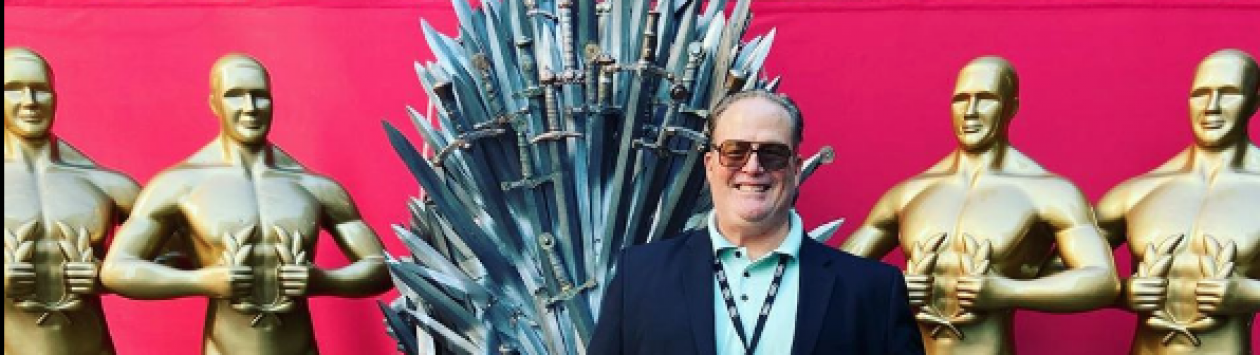

SBIFF Executive Director Roger Durling stated, “Denzel Washington directing, producing and acting in Fences defines the Modern Master for the 21st Century.”


 the International Star Award for her performance in Lion at its annual Film Awards Gala. The Film Awards Gala, hosted by Mary Hart, will be held Monday, January 2 at the PalmSprings Convention Center. The Festival runs January 2-16.
 escaping all sorts of terrors and close calls in the process, before ending up in an orphanage that is itself not exactly a safe haven. Eventually Saroo is adopted by an Australian couple (Nicole Kidman and David Wenham), and finds love and security as he grows up in Hobart. As an adult, not wanting to hurt his adoptive parents’ feelings, Saroo (Dev Patel) suppresses his past, his emotional need for reunification and his hope of ever finding his lost mother and brother. But a chance meeting with some fellow Indians reawakens his buried yearning. Armed with only a handful of memories, his unwavering determination, and a revolutionary technology known as Google Earth, Saroo sets out to find his lost family and finally return to his first home. Based on the true story, A Long Way Home, Lion is directed by Garth Davis and written by Luke Davies with performances from Dev Patel, Nicole Kidman, Rooney Mara, David Wenham, and Sunny Pawar.

 bandwagon in a big way on Saturday, November 12th, with its State of the Art Technology Showcase Presented by Google Spotlight Stories. Keynote Speaker, Anthony Blatt, Co-Founder of


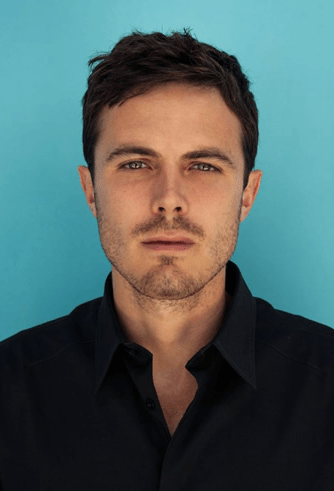 janitor living a lonely and isolated existence,” said Festival Chairman Harold Matzner. “He has earned rave reviews from critics and is sure to garner awards attention. It is our honor to present the Desert Palm Achievement Award, Actor, to Casey Affleck.”


 Film Awards Gala for her performance in Loving. The Film Awards Gala, hosted by Mary Hart, will be held Monday, January 2 at the Palm Springs Convention Center. The Festival runs January 2-16.
 Dear Cinephiles,