Tag Archives: film festivals

First Films for the Competition of the Berlinale 2017

Posted by Larry Gleeson

The first 14 films have been selected for the Competition and Berlinale Special section of the 67th Berlin International Film Festival. So far ten productions and co-productions have been invited to the Competition from Belgium, Chile, the Czech Republic, Denmark, Finland, France, Germany, the United Kingdom, Hungary, Lebanon, Poland, Portugal, Romania, Senegal, the Slovak Republic, Spain, Sweden, and the USA.

As part of the official programme, Berlinale Special also presents topical works by contemporary filmmakers, documentaries and extraordinary formats. To date four productions have been invited.

Further announcements regarding programme selections will be made in the coming weeks.

screen-shot-2016-12-17-at-9-04-58-am
Colo

Competition

Teströl és lélekröl (On Body and Soul)
Hungary
By Ildiko Enyedi (My 20th Century, Simon the Magician)
With Géza Morcsányi, Alexandra Borbély, Zoltán Schneider
World premiere

Ana, mon amour
Romania / Germany / France
By Călin Peter Netzer (Child‘s Pose, Maria)
With Mircea Postelnicu, Diana Cavallioti, Carmen Tănase, Adrian Titieni, Vlad Ivanov
World premiere

Beuys – Documentary
Germany
By Andres Veiel (Black Box Germany, Addicted To Acting, If not us, Who)
World premiere

Colo
Portugal / France
By Teresa Villaverde (The Major Age, The Mutants, Trance)
With João Pedro Vaz, Alice Albergaria Borges, Beatriz Batarda, Clara Jost
World premiere

The Dinner
USA
By Oren Moverman (The Messenger, Rampart)
With Richard Gere, Laura Linney, Steve Coogan, Rebecca Hall, Chloë Sevigny
World premiere

Félicité
France / Senegal / Belgium / Germany / Lebanon
By Alain Gomis (L’Afrance, Andalucia, Tey)
With Véro Tshanda Beya, Gaetan Claudia, Papi Mpaka
World premiere

The Party
United Kingdom
By Sally Potter (Orlando, Yes, Ginger & Rosa)
With Patricia Clarkson, Bruno Ganz, Cherry Jones, Emily Mortimer, Cillian Murphy, Kristin Scott Thomas, Timothy Spall
World premiere

Pokot (Spoor)
Poland / Germany / Czech Republic / Sweden / Slovak Republic
By Agnieszka Holland (Europa Europa, Bitter Harvest, In Darkness)
With Agnieszka Mandat, Wiktor Zborowski, Miroslav Krobot, Jakub Gierszał, Patricia Volny, Borys Szyc
World premiere

Toivon tuolla puolen (The Other Side of Hope)
Finland
By Aki Kaurismäki (The Match Factory Girl, I Hired A Contract Killer, Juha, Le Havre)
With Sakari Kuosmanen, Sherwan Haji
International premiere

Una Mujer Fantástica (A Fantastic Woman)
Chile / Germany / USA / Spain
By Sebastián Lelio (El Año del Tigre, Gloria)
With Daniela Vega, Francisco Reyes, Luis Gnecco, Aline Küppenheim, Amparo Noguera
World premiere

Berlinale Special

Berlinale Special Gala at the Friedrichstadt-Palast

La Reina de España (The Queen of Spain)
Spain
By Fernando Trueba (The Year of Awakening, Belle Époque, The Girl of Your Dreams)
With Penélope Cruz, Antonio Resines, Chino Darín, Cary Elwes, Mandy Patinkin, Neus Asensi, Ana Belén
International premiere

Le jeune Karl Marx (The Young Karl Marx)
France / Germany / Belgium
By Raoul Peck (Sometimes In April, Moloch Tropical, Fatal Assistance)
With August Diehl, Stefan Konarske, Vicky Krieps, Hannah Steele, Olivier Gourmet
World premiere

Berlinale Special at the Kino International

Últimos días en La Habana (Last Days in Havana)
Cuba / Spain
By Fernando Pérez (Life Is to Whistle, Madrigal)
With Jorge Martínez, Patricio Wood, Gabriela Ramos
European premiere

Berlinale Special at the Volksbühne

Acht Stunden sind kein Tag (Eight Hours Don’t Make a Day)
Federal Republic of Germany 1972 – TV series with 5 episodes
By Rainer Werner Fassbinder
With Hanna Schygulla, Gottfried John, Luise Ullrich, Werner Finck, Irm Hermann
World premiere of the restored version

1280px-berlin_international_film_festival_logo-svg

(Source: Berlinale Press Office press release)

#SBIFF The Showcase – Daughters of the Dust

25TH ANNIVERSAY RESTORATION OF JULIE DASH’S LANDMARK FILM!

daughtersAt the dawn of the 20th century, a multi-generational family in the Gullah community on the Sea Islands off of South Carolina – former West African slaves who adopted many of their ancestors’ Yoruba traditions – struggle to maintain their cultural heritage and folklore while contemplating a migration to the mainland, even further from their roots.

Cohen Media Group is proud to present the 25th anniversary restoration of director Julie Dash’s landmark film “Daughters of the Dust.” The first wide release by a black female filmmaker, “Daughters of the Dust” was met with wild critical acclaim and rapturous audience response when it initially opened in 1991. Casting a long legacy, “Daughters of the Dust” still resonates today, most recently as a major in influence on Beyonce’s video album “Lemonade.” Restored (in conjunction with UCLA) for the first time with proper color grading overseen by cinematographer AJ Jafa, audiences will finally see the film exactly as Julie Dash intended.

DAUGHTERS OF THE DUST
Written and Directed by Julie Dash
Starring Alva Rogers, Bahni Turpin, Barbara-O, Cheryl Lynn Bruce,
Cora Lee Day, Tony King, Trula Hoosier
Country of Origin: USA, UK
Running Time: 112 min

Get Tickets Here

Screening:
Sunday, December 18 @ 2:00pm
Monday, December 19 @ 7:30pm
Tuesday, December 20 @ 5:00pm
Wednesday, December 21 @ 7:30pm
at the Riviera Theatre – 2044 Alameda Padre Serra

“A film of spellbinding visual beauty.”
Stephen Holden – NY Times

“Dash’s boldly imaginative, ecstatically visionary drama … is one of the best of all American independent films; she turns one family’s experience of the Great Migration into a vast mythopoetic adventure.”
Richard Brody – New Yorker

“It is an astonishing, vivid portrait not only of a time and place, but of an era’s spirit.”
Rita Kempley – Washington Post

(Source:sbiff.org)

BUT WAIT, THERE’S MORE! Sundance adds four more films

Posted by Larry Gleeson

Park City, UT — Rounding out an already robust slate of new independent work, Sundance Institute adds two Documentary Premieres and two archive From The Collection films to the 2017 Sundance Film Festival. Screenings take place in Park City, Salt Lake City and at Sundance Mountain Resort.

screen-shot-2016-12-14-at-4-40-57-pm

Bending the Arc and Long Strange Trip join archive films Desert Hearts and Reservoir Dogs, which premiered at the Sundance Film Festival in 1986 and 1992, respectively. The archive films are selections from the Sundance Institute Collection at UCLA, a joint venture between UCLA Film & Television Archive and Sundance Institute. The Collection, established in 1997, has grown to over 4,000 holdings representing nearly 2,300 titles, and is specifically devoted to the preservation of independent documentaries, narratives and short films supported by Sundance Institute, including Paris is Burning, El Mariachi, Winter’s Bone, Johnny Suede, Working Girls, Crumb, Groove, Better This World, The Oath and Paris, Texas. Titles are generously donated by individual filmmakers, distributors and studios.

With these additions, the 2017 Festival will present 118 feature-length films, representing 32 countries and 37 first-time filmmakers, including 20 in competition. These films were selected from 13,782 submissions including 4,068 feature-length films and 8,985 short films. Of the feature film submissions, 2,005 were from the U.S. and  2,063 were international. 101 feature films at the Festival will be world premieres.

DOCUMENTARY PREMIERES

Bending the Arc / U.S.A. (Directors: Kief Davidson, Pedro Kos, Screenwriter: Cori Shepherd Stern) — This powerful epic is about the extraordinary doctors and activists—including Paul Farmer, Jim Yong Kim, and Ophelia Dahl—whose work 30 years ago to save lives in a rural Haitian village grew into a global battle in the halls of power for the right to health for all. World Premiere

Long Strange Trip / U.S.A. (Director: Amir Bar-Lev) — The tale of The Grateful Dead is inspiring, complicated and downright messy. A tribe of contrarians, they made art out of open-ended chaos and inadvertently achieved success on their own terms. Never-before-seen footage and interviews offer this unprecedented and unvarnished look at the life of the Dead. World Premiere

FROM THE COLLECTION

Desert Hearts / U.S.A. (Director: Donna Deitch, Screenwriter: Natalie Cooper) — Nevada, 1959: Vivian Bell arrives to get a divorce and finds herself increasingly drawn to Cay Rivvers, a self-assured lesbian. The emotions released by their developing intimacy combined with Vivian’s insecurities are played out against a backdrop of rocky landscapes and country and western songs. The Festival will screen a new digitally restored version by the Criterion Collection and UCLA Film & Television Archive in conjunction with Sundance Institute and Outfest UCLA Legacy Project. Cast: Andra Akers, Dean Butler, Patricia Charbonneau, Audra Lindley, Helen Shaver, Glen Welles.

Reservoir Dogs / U.S.A. (Director and screenwriter: Quentin Tarantino) — They were perfect strangers, assembled to pull off the perfect crime. Then their simple robbery explodes into a bloody ambush and the ruthless killers realize one of them is a police informant. But which one? Miramax provided a brand-new 35mm print for this special 25th anniversary screening, which will be followed by an extended Q&A with Tarantino and producer Lawrence Bender. Cast: Harvey Keitel, Tim Roth, Chris Penn, Steve Buscemi, Lawrence Tierney, Michael Madsen.

The Sundance Film Festival has introduced global audiences to some of the most groundbreaking films of the past three decades, including Boyhood, Beasts of the Southern WildFruitvale Station, Whiplash, Brooklyn, Twenty Feet from Stardom, Life Itself, The Cove, The End of the Tour, Blackfish, Me and Earl and the Dying Girl, Super Size Me, Dope, Little Miss Sunshinesex, lies, and videotapeReservoir Dogs, Hedwig and the Angry InchAn Inconvenient TruthPrecious and Napoleon Dynamite.
The Sundance Film Festival®
The Festival is a program of the non-profit Sundance Institute®. 2017 Festival sponsors to date include: Presenting Sponsors – Acura, SundanceTV, Chase Sapphire®, and Canada Goose; Leadership Sponsors – Adobe, AT&T, DIRECTV, Omnicom, Stella Artois® and YouTube; Sustaining Sponsors – American Airlines, Canon U.S.A., Inc., Creators League Studio, Daydream, Francis Ford Coppola Winery, GEICO, The Hollywood Reporter, IMDb, Jaunt, Kickstarter, Oculus and the University of Utah Health. Sundance Institute recognizes critical support from the Utah Governor’s Office of Economic Development, and the State of Utah as Festival Host State. The support of these organizations helps offset the Festival’s costs and sustain the Institute’s year-round programs for independent artists. Look for the Official Sponsor seal at their venues at the Festival. sundance.org/festival

sundance_logo

Sundance Institute
Founded in 1981 by Robert Redford, Sundance Institute is a nonprofit organization that provides and preserves the space for artists in film, theatre, and new media to create and thrive. The Institute’s signature Labs, granting, and mentorship programs, dedicated to developing new work, take place throughout the year in the U.S. and internationally. The Sundance Film Festival and other public programs connect audiences to artists in igniting new ideas, discovering original voices, and building a community dedicated to independent storytelling. Sundance Institute has supported such projects as Beasts of the Southern Wild, Fruitvale Station, Sin Nombre, The Invisible War, The Square, Dirty Wars, Spring Awakening, A Gentleman’s Guide to Love and Murder and Fun Home. Join Sundance Institute on Facebook, Instagram, Twitter and YouTube.

# # #
(Source: sundance.org)

Ruth Negga to Receive the Rising Star Award at Palm Springs

Palm Springs, CA (November 16, 2016) – The 28th annual Palm Springs International Film Festival (PSIFF) will present Ruth Negga with the Rising Star Award at its annual Ruth NeggaFilm Awards Gala for her performance in Loving. The Film Awards Gala, hosted by Mary Hart, will be held Monday, January 2 at the Palm Springs Convention Center. The Festival runs January 2-16.

“Ruth Negga’s performance as Mildred Loving is one of the year’s most luminous and striking portrayals,” said Festival Chairman Harold Matzner. “This timeless love story about an interracial couple reminds us of the unstoppable power of love in the face of hate and prejudice – a story that could not be more resonant and powerful today. This will certainly be just one of many breathtaking performances in a long career. The Palm Springs International Film Festival is honored to present Ruth Negga with this year’s Rising Star Award.”

Past recipients of the Rising Star Award include Alicia Vikander, Jennifer Lawrence, Scarlett Johansson, Anna Kendrick, Dakota Fanning, and Terrence Howard.

New in theaters this month from Focus Features, Loving is written and directed by Jeff Nichols, and stars Joel Edgerton and Ruth Negga as Richard and Mildred Loving. Loving celebrates the real-life courage and commitment of the interracial couple who fell in love and were married in 1958. The couple had grown up in Central Point, a small town in Virginia that was more integrated than surrounding areas in the American South. Yet it was the state of Virginia, where they were making their home and starting a family, that first jailed and then banished them. Their civil rights case, Loving v. Virginia, went all the way to the Supreme Court, which in 1967 reaffirmed the very foundation of the right to marry. Richard and Mildred returned home and their love story has become an inspiration to couples ever since.

Ruth Negga’s body of work spans award-winning theatre productions, big-screen dramas, independent films, and innovative television series. Her film work includes World War Z, The Samaritan, Breakfast on Pluto, Una Vida (a.k.a. Of Mind and Music), Noble; Jimi: All Is by My Side, Warcraft; and Iona. Negga won the Irish Film & Television Academy (IFTA) Award for Best Actress for her portrayal of legendary singer Shirley Bassey in the telefilm Shirley. Her other TV work includes Misfits, Love/Hate, the miniseries Coup (a.k.a. Secret State), Five Daughters, and Agents of S.H.I.E.L.D., She currently stars on AMC’s series Preacher.

psiff16_logo_01_360

About The Palm Springs International Film Festival
The Palm Springs International Film Festival (PSIFF) is one of the largest film festivals in North America, welcoming 135,000 attendees last year for its lineup of new and celebrated international features and documentaries. The Festival is also known for its annual Film Awards Gala, an upscale black-tie event attended by 2,500, honoring the best achievements of the filmic year by a celebrated list of talents who, in recent years, have included Ben Affleck, Javier Bardem, Cate Blanchett, Sandra Bullock, Bradley Cooper, George Clooney, Daniel Day-Lewis, Leonardo DiCaprio, Clint Eastwood, Tom Hanks, Matthew McConaughey, Julianne Moore, Brad Pitt, Eddie Redmayne, Julia Roberts, David O. Russell, Meryl Streep, and Reese Witherspoon.

For more information, call 760-322-2930 or 800-898-7256 or visit www.psfilmfest.org.

MEDIA CONTACTS:
Steven Wilson / Lauren Peteroy
B|W|R Public Relations
212-901-3920
steven.wilson@bwr-pr.com / lauren.peteroy@bwr-pr.com

David Lee
Palm Springs International Film Society
760-322-2930
david@psfilmfest.org

(Source: http://www.psfilmfest.org)

Five Ways to Build a Powerful Financing and Distribution Network for Your Film

Posted by Larry Gleeson

Written by Christopher Rufo and Keith Ochwat

You’ve heard it said before: “It’s not what you know, it’s who you know.”

As an independent filmmaker, your network — the relationships you forge with individuals, institutions and media in your niche — is what will drive every step of your film’s distribution. After all the hard work of getting your film made, you’ll need a tight-knit group of supporters and evangelists who believe in your work and will help you build an audience.

For our documentary Age of Champions, which tells the story of five competitors up to 100 years old who compete in the Senior Olympics, our network was the engine that powered our success. It allowed us to spend more than two years distributing our film and helped us generate more than $1.5 million in revenues.

screen-shot-2016-11-16-at-10-21-45-am

Networking involves much more than attending cocktail receptions or shaking hands at festivals. It’s about actively connecting with the people and organizations who share a passion for your work. It’s about creating partnerships throughout the entire process of funding, marketing, and distribution. In short, your network is the catalyst that will make things happen for your film.

As we cover in our Filmmaker.MBA online course, here’s our five-step guide to building your network of partners to help you maximize your film’s exposure and impact:

1. Focus on Your Niche

Your niche is the smallest, most passionate, and highest impact core of people who would love your film. These are the people who will watch your film for free on Netflix, then buy a DVD, host a screening in their community, and spread the word to their friends.

You’ll want to pinpoint the smallest niche audience you can find based on the subject matter of your film. For example, with our Senior Olympics documentary, Age of Champions, we discovered our audience by reaching out to nonprofits and businesses in the senior health community. We made phone calls to organizations, attended conferences, and started selling DVDs and community screening kits to senior centers, retirement homes and hospitals. They loved the film and wanted to share it with their local communities. Eventually, we discovered that our core audience was “female professionals ages 40 to 65 who worked in the senior health.” You should be as specific as possible — and it’s important to keep in mind that your core audience might not be what you thought when you started your project.

2. Reach Out to Institutions

Getting an institution to partner with you and promote your film can be one of the most powerful ways for getting your film out into the world. As soon as possible, you should make a list of all the important nonprofits, educational institutions, companies, and foundations in your niche.

Pay particular attention to mission-driven institutions that have connections to a potential audience with an interest in the same topic as your film. For example, if your film is about endangered whales, you’ll want to target organizations that are involved in marine conservation, animal rights, and environmental issues, and marine biology. The simplest way is to gauge their interest is to call and ask if they’d be interested in sharing your film with their members.

Age of Champions

3. Attend a Conference

Conferences are the secret shortcut to building your network quickly and efficiently. Although they can be a little awkward, you’ll be able to network face-to-face with the most influential people in your niche. The process is simple: do some research and find the biggest annual gatherings of people in your niche, book your ticket, and set up as many meetings as possible in advance.

For our upcoming documentary about three failing American cities, America Lost, we attended three public policy conferences and made connections with potential funders who eventually donated more than $500,000 towards production of the film. Our process was simple: we contacted the conference organizers six months in advance and pitched them on participating on a panel and sharing the trailer for our work-in-progress film. Six weeks before the conference, we asked the organizers for a complete attendee list and reached out to potential funders to set up coffee meetings during the event. We met one funder at Dunkin’ Donuts across from the Convention Center in Denver, and he committed to writing a $100,000 check on the spot.

By participating as a speaker, the conference organizers usually waived the attendance fee, so we just had to book our own transportation and accommodations. Despite the time and expense of attending these conferences, they paid out one-hundredfold. Making connections in person was extremely important in solidifying relationships and opening doors. We could have never raised our full production budget without participating at conferences.

4. Reach Out to Influencers

You can partner with an influential person in your niche who’s passionate about your film’s message. This could be a thought-leader, author, speaker, or celebrity. The goal is to tap into their devoted network of fans and start a discussion of your film online. You can ask your celebrity to host an online screening of your film, appear in bonus content, or promote your film on social media—whatever’s the best way to engage their fanbase.

Stacy Peralta, the filmmaker behind the skateboarding documentary Bones Brigade, rallied the pro skateboarders in his film (including Tony Hawk) to promote Bones Brigade to their millions of followers on Twitter and Facebook. After two months of a sustained social media campaign, Stacy added 46,000 fans to his mailing list and made nearly four times as much money as he was offered for a conventional distribution deal at Sundance.

Don’t worry if you aren’t already as connected as Stacy Peralta — with a little sleuthing and hard work, you can track down almost anyone. For Age of Champions, we connected with “stars” like author Dan Buettner (Blue Zones) and tennis great Andre Agassi by cold-calling their organizations and finding advocates within them who wanted to help promote our film. These advocates talked with their bosses and helped us secure social media posts on their behalf that drove awareness and traffic to our website.

5. Reach out to media

You can create buzz around your film by pitching your story to media in your niche. This could mean blogs, websites, podcasts, or video sites. Approach it like a typical PR campaign — reach out to the publications, provide them with a good story, and give them relevant content from your film. You’ll find that niche media are always looking for stories and can connect you with their readers.

The filmmakers behind Indie Game: The Movie, a documentary about the making of video games, launched a niche media campaign well before they even finished their film. They created more than 150 blog posts over the course of two years and shared content with video game websites and fan pages. By the time they were ready to release the film, they had built an email list of more than 30,000 people and sold $150,000 in DVD pre-orders.

In our experience with Age of Champions, niche media delivered a much bigger audience than mainstream media. For example, we appeared on NPR’s Tell Me More and in the Alzheimer’s Association newsletter — to our great surprise, we received only a few hundred website visitors after our national NPR segment broadcast, compared to more than 10,000 visitors after the Alzheimer’s Association newsletter went out to their list. Remember: you don’t have to be in the New York Times to have a successful PR campaign, just “the New York Times of your niche.”

(Source: http://www.filmmakermagazine.com)

Jackie Chan reflects on 50-year career and honorary Oscar

Posted by Larry Gleeson

By Sandy Cohen, Ap Entertainment Writer

LOS ANGELES (AP) — As an action star, Jackie Chan never expected to get an Oscar.

So he considers receiving an honorary Academy Award from the film academy’s Board of Governors his proudest professional achievement.

Chan will accept his Oscar statuette Saturday at the eighth annual Governors Awards. Film editor Anne Coates, casting director Lynn Stalmaster and documentarian Frederick Wiseman are also receiving honorary Academy Awards, which recognize lifetime achievement and contributions to the film industry.

“I never imagined that I’d receive such an award,” Chan said. “I still remember my very first proudest moment was when I received an award for stunt choreography. At that time, I didn’t know much about directing, I just knew how to do action and fighting sequences and stunts. Receiving this honorary award has raised my feelings to another level.”

The 62-year-old writer, director, producer and actor reflected on his career in an email interview with The Associated Press from his home base in Hong Kong. He plans to be in Los Angeles to accept his award in person.

AP: What was your most challenging film to make and why?

Chan: “Rumble in the Bronx” had a lot of action choreography, fighting sequences, and dangerous stunts. In “Operation Condor” I filmed in extreme temperatures of over 40 degrees Celsius in the desert. I had a near-death accident while doing a stunt in “Armor of God.” In “Rush Hour,” I found the English dialogue most challenging.

AP: How does making movies in Hong Kong differ from Hollywood’s approach to film?

Chan: I find Hollywood’s approach to film production very systematic and organized. Of course, being organized is a good thing, but sometimes I feel restrained within set rules. Hong Kong filmmaking is more dynamic because things can be changed on the set while we’re still filming. It’s more flexible and encourages creativity, and if we think of something that might work, we try it right away.

AP: What changes in the industry have been most surprising to you?

Chan: Because I’ve been in the film industry for over 50 years, the most significant change I’ve noticed is the change from using 35mm film to digital technology, and even 3D filming. The improvement of technology has changed how films are now made. What we used to use back then is now part of history. I’m still fascinated by digital technology and the amount of work that can be done in post-production with CG (computer-generated) effects.

AP: What has been was your most exciting Hollywood experience?

Chan: All my experiences in Hollywood have been interesting and exciting. I’ve learned so many new things in Hollywood, made new friends and family, such as my American Chinese brother Brett Ratner. I’ve had many great memorable moments while working in Hollywood. I guess the most fun was making the “Rush Hour” series.

*Featured photo: Photo: Lai Seng Sin, AP

(Source: http://www.thehour.com)


Chattanooga-produced film ‘Hunter Gatherer’ lands national distribution deal

Posted by Larry Gleeson

By Sean Phipps

A film produced in Chattanooga will receive a national theatrical release following a distribution deal.

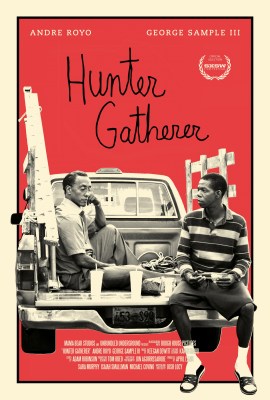
hunter-gatherer-posterHunter Gatherer starring Andre Royo (The Wire, Empire) debuted at the 2016 South by Southwest Film Conference and Festival to rave reviews. The film was written and directed by Josh Locy—a Bryan College grad—and Chattanooga’s Mama Bear Studios served as the executive producer, along with Unbundled Underground in association with Rough House Pictures.

National distributors The Orchard acquired digital rights for the film. Rough House Pictures will release the film in New York City and Los Angeles beginning Nov. 18, with a theatrical rollout to follow.

Hunter Gatherer follows Royo in his portrayal of Ashley Douglas, a man recently released from prison who finds out that everyone and everything has moved on without him. He attempts to win back his girlfriend, enlisting the aid of a fellow loner (George Sample III) as a business partner.

Royo garnered the Jury Award at SXSW for Best Actor.

Read a previous Nooga.com story on Hunter Gatherer here.

Isaiah Smallman, a producer of the film and co-founder of Chattanooga’s Mama Bear Studios, said a screening of the film in Chattanooga will take place near the beginning of 2017. In the meantime, he said the deal with The Orchard will open the door to new possibilities for the company.

“Since winning the award at SXSW, we’ve been playing lots of different festivals around the country, but we still didn’t know exactly what the next step was for distribution,” he said. “We had several small offers, but none of them were really all that enticing because you often end up sacrificing a huge percentage of the upside without much upfront money or hustle from the distributor to justify it.”

Smallman said he and the other producers—April Lamb, Sara Murphy, Michael Covino and Locy—thought about self-distributing the film, but that would take an enormous amount of time and relationship building to pull off.

“We couldn’t be more thrilled about landing distribution with an awesome company like The Orchard,” Smallman said. “They have all the right relationships with places like Netflix, Amazon, iTunes, cable VOD and all the other buyers that we will be targeting. And they know a lot about getting great small films like ours to the audiences who will love them.”

The film will be released on digital platforms in January. Hunter Gatherer is the first film produced by Mama Bear Studios from start to finish. Smallman said he hopes to continue championing Chattanooga as a film town.

“Cine-Rama and the Chattanooga Film Festival are doing an amazing job of creating a place for independent films to be screened, but we’re hoping in the next few years to make Chattanooga a destination for super-successful writers, directors and producers as well,” he said. “We’re constantly repping Chattanooga to people … and encouraging them to make their home base here, even if they might still have to produce their films elsewhere from time to time.”

Mama Bear Studios currently has 15 projects in various stages of completion, according to Smallman. Projects include two small indie drama films, a comedy TV pilot, two thriller features, two romantic comedies and more.

The studio previously released Low and Behold, a partnership with the Sundance Institute’s #ArtistServices program. The film follows the story of a young insurance claims adjuster in post-Katrina New Orleans who risks his job to help a local man find his dog.

Mama Bear Studios was founded by Smallman and his business partner, Drew Belz.

aaeaaqaaaaaaaaqlaaaajdm5zjyxzdbjlwy0yzytngfmzi1imgnklwnmzdzlyznjmdling

(Source: http://www.nooga.com)

Holocaust comedy snares grand prize at 29th Tokyo International Film Festival

Posted by Larry Gleeson

By Philip Brasor, Special To The Japan Times

Philippine trans people, Scandinavian reindeer herders and a romantic comedy about the Holocaust dominated the closing ceremony of the 29th Tokyo International Film Festival on Thursday.

The ceremony at Ex Theater Roppongi opened appropriately enough with awards to individuals who furthered domestic cinema this year, including Godzilla, who appeared on stage to accept an award for the year’s big hit, Shin Godzilla, on the 62nd anniversary of the first Godzilla film released in 1954.

screen-shot-2016-11-04-at-12-29-45-pm

Tokyo Gov. Yuriko Koike, decked out in a matching black pantsuit and fedora, awarded the Grand Prix to The Bloom of Yesterday, a provocative comedy about two Holocaust researchers — one German, the other French — who battle over history while falling in love.

However, the top award didn’t arouse as much audience excitement as Koike’s announcement that next year’s TIFF budget would be even larger than this year’s, thanks to additional government expenditure for the 2020 Tokyo Olympics.

Another festival winner was “Die Beautiful,” a Philippine film about a transgender woman who dies while being crowned for a beauty pageant. In addition to winning the Audience Award, the film’s leading man, Paolo Ballesteros, won the festival’s best actor award, although presenter Mabel Chung made the point that Ballesteros could have easily won either the “best actor or best actress” prize.

The best actress award went to Lene Cecilia Sparrok, the teen star of the Swedish-Danish-Norwegian co-production, Sami Blood, which examines the discrimination that the indigenous Sami people of northern Scandinavia suffered, and which also won the second place Jury Prize. Sparrok, a reindeer herder in real life, was so overwhelmed that she lost her English-language capability and conveyed her gratitude in Sami.

The best artistic contribution prize went to Mr. No Problem, a gorgeously shot and staged comedy of manners, financed and produced by the Beijing Film Academy, about a Chinese farm and its impossibly agreeable manager that takes place in 1943, when Japan and China were at war.

During his Grand Prix speech, jury head Jean-Jacques Beineix stressed that what unified the films he and his colleagues judged this year was their rejection of a “globalist mindset.” All of the films “accepted our differences” and proved that “a universal cinema does not exist.”

The fact that there were no Japanese winners in the main competition categories wasn’t lost on local reporters. During the post-ceremony news conference, one Japanese journalist asked Beineix how he “discussed” the two Japanese entries with his colleagues.

“As you know, our discussions have to be kept secret,” Beineix replied, evincing a wave of laughter. In any case, Poolsideman, which depicts the lonely life of a Tokyo pool lifeguard, won the Japan Splash prize for domestic indie films, and director Hirobumi Watanabe openly wept on stage while accepting the award.

(Source:www.japantimes.co.jp)


Ghana Passes New Law To Regulate Its Film Industry

Ghana’s parliament recently passed a new law for the regulation of films produced in the country’s local movie industry otherwise known as “Ghallywood.”

According to Ghana.gov, in an official press release issued last week, Ghana’s parliament passed a bill, entitled “Development and Classification of Film Bill After Its Third Reading in the House,” which repeals the Cinematography Act of 1961 and the Cinematographer Amendment Decree of 1975.

The new act seeks to provide a legal framework for the production, regulation, nurturing, and development of the Ghanaian film industry as well as for the distribution, exhibition, and marketing of films and related matters.

The act calls for the establishment of a national film authority to promote the creation of a conductive environment for the local production, distribution, exhibition, and marketing of films.

The main objectives of the film authority includes the evolution of a dynamic, economically self-sustaining and culturally conscious film industry and the creation of a conducive environment for the local production, distribution, exhibition, and marketing of films that project the identity and image of the republic and its people within and outside the country.

The bill defines a Ghanaian film as a film that is registered with the National Film Authority and satisfies any three of the following criteria: the language used in the film is English or a Ghanaian language, has a Ghanaian producer, has a Ghanaian production team, and/or has a Ghanaian film director.

The soon-to-be-established film authority is also expected to facilitate co-production between local and foreign producers and regulate foreign participation in the Ghanaian film industry to ensure its benefit to Ghanaian film practitioners.

In addition, a national film board will be established under the act to institutionalize and enforce the culture of quality, priority, and decency in the distribution, sale, and exhibition of films and videos in the country.

The film board is empowered by the act to censor or edit content it considers indecent or offensive, including pornographic material, with Section 20 of the act stating, “The Board shall not approve for exhibition, a film it considers to be pornographic.”

Section 19 (4) rates movies as “Universal” for all categories of persons, “PG,” “12,” and “15” for parental guidance, with “12” and “15” rated films being for persons older than 12 years old and 15 years old, respectively. Movies rated an “18” are for adults only with children excluded from entering centers exhibiting such films.

Watch a trailer from Ghanaian film director, writer, and producer Shirley Frimpong-Manso:

Ghana’s local film industry has grown remarkably in the last couple of years. By incorporating influences mainly from Hollywood (the world’s biggest movie industry) and Nigeria’s Nollywood, Ghanaian movie makers have managed to create an industry that is uniquely empowered to give an authentic Ghanaian narrative with a global outlook.

Watch American-Ghanaian film director Leila Djansi’s “Like Cotton Twines” trailer:

The industry, however, continues to grapple with a number of challenges, including a lack of proper financing, limited technical resources, poor policy framework, and piracy.

*Featured photo – Ghanaian movie superstars Majid Michael and Jackie Appiah on the set of a movie. Photo Credit: Premium times

(Source: https://face2faceafrica.com)

Five Soviet Movies That Shook The World

2016 has been named ‘The Year of Cinema’ in Russia, with extra funds allocated for the local film industry. Russian Sputnik News service recalls five Soviet movies which left a lasting impression worldwide and are still looked up at as examples of stunning cinematography.

The Cranes are Flying, 1957 (Letyat Zhuravli)

This military drama, based on the play “Eternally Alive” (“Vechno zhivye”) by Viktor Rozov was directed at Mosfilm studio by the Soviet director Mikhail Kalatozov. The Cranes are Flying has become the first and so far the only domestic film to have been awarded the Palme d’Or — the top prize at the Cannes Film Festival.

With surprising emotional power, the film reveals a tragic story of two lovers, who were cruelly and permanently separated by war. Picasso himself was shocked, saying he had not seen anything like this in the last hundred years.

In order to film some of the epic scenes, Russian cinematographer Sergei Urusevsky invented and built the first operator’s circular rail. Some of the groundbreaking techniques he pioneered are still used by filmmakers. According to renowned American film critic Todd McCarthy, the influence of Kalatozov and Urusevsky was obvious in the 2015 Oscar-winning movie The Revenant.

Battleship Potemkin, 1925 (Bronenosets Potyomkin)


In 1958, this Soviet silent film directed by Sergei Eisenstein and produced by Mosfilm was named the greatest film of all time at the Brussels World’s Fair. Twenty years later, film critics worldwide rated this movie first on their hundred best films list. And in 2009, the Russian drama was cited as one of the top 15 blockbusters to have had the greatest impact on world cinema.

Created in just four months, Battleship Potemkin was ordered by the Soviet government, which needed propaganda material to mark the anniversary of the First Russian Revolution. In 1926 in Germany, the government tried to ban the film. A few years later, mutineers aboard the Dutch ship “De Zeven Provinciën” claimed that their revolt was inspired by this film.

Hundreds of examples can be found in world cinema copying the principles of the film’s famous shooting scene. The scene was directly quoted in Coppola’s Godfather, Gilliam’s Brazil, and De Palma’s The Untouchables. Even The Simpsons have referenced Eisenstein.

Andrei Rublev, 1966

A sincere biographical historical drama directed by Andrei Tarkovsky and co-written with Andrei Konchalovsky is loosely based on the life of Andrei Rublev, the great 15th-century Russian icon painter. A version of the film was shown at the 1969 Cannes Film Festival, where it won the FIPRESCI prize from The International Federation of Film Critics).

Tarkovsky sought to create a film that shows the artist as “a world-historic figure” and Christianity “as an axiom of Russia’s historical identity” during a turbulent period of Russian history. It became a real eye-opener for Western audiences, which had perceived the Soviet Union as a bastion of atheism and godlessness.

At home, the film was often labeled as “Anti-Russian, antipatriotic and ahistorical.” The Soviet government refused to release the movie until 1971, when a censored version of the film was released. According to a 1978 survey of world film critics, the film had become one of the hundred best movies in the history of cinema. The European Film Academy in 1995 included it in its ten best films of world cinema.

War and Peace, 1966-67

Leo Tolstoy’s immortal novel has been adopted for the silver screen and television several times. The Soviet war drama written and directed by Sergei Bondarchuk won the Golden Globe Award in 1969 for Best Foreign Language Film. It was the first Soviet picture to win the Academy Award for Best Foreign Language Film, and also the longest film ever to receive an Academy Award. Produced by the Mosfilm studios and released in four parts, the film became the most expensive one ever made in the USSR, at a cost of 8,291,712 Soviet rubles, equal to 9,213,013 USD in 1967 or over 66 mln USD in today’s money. In 1967, the film was entered into the 1967 Cannes Film Festival outside of the competition; it was sent there instead of Andrei Tarkovsky’s Andrei Rublev.

Bondarchuk’s War and Peace became known for its large-scale battle scenes and use of innovative panoramic filming of battlefields. Several scenes were shot using a hand-held 1KSSHR camera, which weighed about 10 kg and required uncommon physical strength when wielded by film operator Anatoly Petritsky.

Some unusual techniques were adopted by the film makers during the shooting. Some scenes of the Battle of Borodino were taken with the camera fixed on a 120-meter-long cable, which was stretched across the battlefield. To “dive” into the atmosphere of the Natasha Rostova’s first ball, Petritsky stood on roller skates and was moved among the waltzing couples by an assistant. These techniques were included in a documentary about filming the movie and were later used as study material for the training of future operators.

Hedgehog in the Fog, 1975

This Soviet animated film was directed by Yuriy Norshteyn and produced by Soyuzmultfilm animation studio in Moscow. In 1976, the cartoon won its first prizes at the All-Union festival of animated films in Frunze and at the Festival of Films for Children and Young Adults in Tehran. In 2003, the cartoon was crowned the best animated film of all time in Japan and worldwide from among a top-150 list created by 140 critics and animators from different countries. The main hero of this animated film, the Hedgehog, received its own sculpture in Kiev. The film was also referenced in one of the episodes of the animated comedy series Family Guy, “Spies Reminiscent of Us” in 2009.

Famous Japanese film director Hayao Miyazaki, who created such anime masterpieces as My Neighbor Totoro, Spirited Away and Howl’s Moving Castle, named this Soviet story about a little hedgehog his favorite work.

Interesting techniques were used during the cartoon’s creation. The fog effects were created by putting a very thin piece of paper on top of the scene and slowly lifting it up toward the camera frame-by-frame until everything behind it became blurry and white. The film also used a trick of combined filming; for example, the water was real, albeit hatched by the artist.

(Source: https://sputniknews.com)