
Tag Archives: entertainment

AFI FEST 2016 State of the Art Technology Showcase

AFI FEST 2016 presented by Audi has jumped on the virtual reality (VR) bandwagon in a big way on Saturday, November 12th, with its State of the Art Technology Showcase Presented by Google Spotlight Stories. Keynote Speaker, Anthony Blatt, Co-Founder of Wevr, kicked off the Showcase at 11:00 A.M inside the Hollywood Roosevelt Hotel’s AFI FEST Cinema Lounge.

Blatt spoke extensively on where VR is today as behemoths Google and Microsoft are investing billions of dollars in an uncertain VR future. Nevertheless, VR filmmaking is presently bringing together filmmakers as they explore emerging VR technologies including 360 degree VR. It is Blatt’s hope these new technologies will continue to bring together filmmakers, introduce them to what is possible and that they will collaborate to present stories in years to come.

Some Hollywood directors have been outspoken and semi-critical of the new VR

screen-shot-2016-11-28-at-11-16-11-am
Hollywood Director Steven Spielberg at 2016 Cannes Film Festival (Photo: The Guardian)

filmmaking that attempts to arrange circumstances with bits of code that give the viewer agency. This differs from traditional filmmaking where one view is presented by the director. At the 2106 Cannes Film Festival, veteran Hollywood Director Steven Spielberg was quoted saying, “I think we’re moving into a dangerous medium with virtual reality,” he said. “The only reason I say it is dangerous is because it gives the viewer a lot of latitude not to take direction from the storytellers but make their own choices of where to look. ” (The Guardian)

While Spielberg may have a point, most legitimate VR filmmakers have techniques to gently guide the viewer in a linear or specifically designed narrative through either sound, color schematic or lighting. One intriguing aspect of VR viewing is its capacity to immerse a viewer in the presentation. Once a headset or goggle are in place, peripheral vision that occurs in a theatrical experience is removed. Blatt stipulates this will create a more “real” experience and, in addition, will stimulate lucid dreaming about the experience.

To illustrate and to help substantiate his claims on the VR experience, Blatt related a story of Jon Favreau‘s first VR viewing experience. Favreau was so overwhelmed after donning the VR goggles that upon their removal he stated he had to make a story and began sketching right away.

VR stories are similar to traditional film stories as both initially start in the writing process in script format, proceed to story-boarding and then to analysis. However, as noted earlier, the VR viewer has some agency. So, the VR experience is still a narrative story. However, VR also adds additional aspects of gamesmanship and puzzles. Another aspect under development in VR is the introduction of artificial intelligence (AI). The introduction of AI turns a viewing experience into an interactive experience potentially. Here again, is where production design aids the filmmaker in gently leading the viewer towards the pre-defined narrative. Blatt refers to the process as story to puzzle, puzzle to story. And, he strongly asserted that the focus for VR filmmaking needs to be on the story versus the technology or the medium.

In addition to storytelling and production design, Blatt discussed issues in editing VR and some of the challenges filmmakers are facing. He also mentioned the various uses of photogrammetry in storytelling. Ultimately, Mr. Blatt believes VR is a better experience. When asked why a viewer would want to choose VR rather than the traditional theatrical experience in the brief Q & A following the presentation, Blatt cited curiosity. Blatt culminated his remarks saying VR has the power to transform and change lives with its immersive storytelling techniques much like his 1977 Saturday afternoon matinee viewing of George Lucas’s first installment of the Star Wars saga.

FullSizeRender
VR Viewing Room at the 2016 Venice International Film Festival (Photo credit: Larry Gleeson/HollywoodGlee)

Recently, I attended a 40-minute segment viewing of what is being marketed as the first feature-length VR film with human actors, Jesus VR, set for release on Christmas Day. The portion I viewed contained a scene where a parable was used to illustrate a teaching point. To me, I believe the application of VR for storytelling and teaching is astounding. The issue seems to be how to get there. Currently, the technology costs associated with VR filmmaking are prohibitively high.

Nevertheless, in my opinion, VR is here to stay. So lace up your boots and hop on. You’ll be glad you did. It’s going to be quite a ride!

What Filmmakers Need To Know About Marketing In Digital Space

Posted by Larry Gleeson

By Charmalne Lim

The 27th Singapore International Film Festival (SGIFF) kicked off on 23rd November and we delve into the exploration of digital space.

Watching TV used to be a communal activity with the family, and movie theatres were exciting places to hang out with friends as we stuff our faces with popcorn, but now, technology gives us a push and we fall backwards into a couch at home, streaming movies and dramas online with a subscription fee of about $12 a month.

We find out from three SGIFF forum speakers, Missy Laney, Lionel Chok, and Scott Kaplan, via email interviews, on whether Virtual Reality can be a game changer, and how the Internet is a boon and a bane for filmmakers.

Choose The Right Platform, Not Any Platform

The challenge of the new-age behavioral phenomenon is not only finding the platforms to host your show, but also adopting various marketing strategies to promote it.

It boils down to the basics of marketing: Knowing what you really want to achieve.

Scott Kaplan, SVP in Global Sales at Gunpowder & Sky Distribution, points out that film distribution in digital space is a reaction to macro-shifts in human behavior.

“People want to watch WHAT they want to watch, WHERE they feel like it, and WHEN they feel like it.” – Scott Kaplan

screen-shot-2016-11-25-at-8-17-40-pm

Kaplan outlines the rigmarole of choosing a distributing platform, “Viewership?  Revenue? Awards-recognition?  It comes to knowing how the platforms respond to creatively, what they will pay, what territories, rights and terms they need, [and if] they need exclusivity etc.”

screen-shot-2016-11-25-at-8-19-25-pm

The Right Audience, Not A Large Audience

“Social media is a tool, not a solution. It can be used to elevate a film or degrade a film. It allows us to measure our audience, dissect our audience demographically, and ultimately communicate with our audience.” – Missy Laney

It’s easy to mistake online marketing as mindless updates, which can dilute your film’s branding.

Missy Laney, Film Strategist and Director of Creative Initiatives at BitTorrent, believes it has been easier than ever to reach your audience, but keeping their attention is tough.

She drops a strategic tip like a giant hotcake:

“To stand out on social media, you have to have a strategy customised for each platform.  Your Twitter strategy should not be the same as your Facebook strategy. Study how your audience engages, learn their language, and build a timeline of when and how you plan to cultivate and activate your fan base.”

Laney raises an issue with most strategies, “The biggest missed opportunity is slowing down once their film has been released.  Once the final release rolls around, they are either too burnt out or funds are too tight to further engage an agency. Make a post release strategy and stick to it for one or two months following the release. The release is just the beginning.”

Money As The Cause Of Frustration & Motivation

A monthly subscription doesn’t really justify the money pumped into physical production. Film creators are losing money and are desperately trying to work the digital space towards their advantage.

Kaplan says, “The decline in box office for independent films and the collapse of the DVD market can’t be replaced by a monthly Netflix subscription. But there is a ton of new money being injected into the film-ecosphere as new platforms launch, and filmmakers are getting smarter and better at making great films for less money.”

Additionally, fans can also interact with films now as funders and backers using crowd funding so that’s another big shift in the relationship we have with movies now,” says Missy Laney.

“I believe the success of each film is measured by one question, ‘Did it find an audience?’”

Virtual Reality As Our New Reality?

screen-shot-2016-11-25-at-8-20-44-pm

The entire scope of cinematography is now changed. We have to change the environment to suit the 360 capture and delivered through a headset. So you cannot just capture it and then watch it on YouTube after.” – Lionel Chok

Lionel Chok is a Singapore filmmaker, director, and many other titles under his belt. From how he sees it, Lionel thinks the digital trend and VR technology are two great things amalgamated.

“This is something very powerful. We are currently developing apps for VR content to be published in an online store. As the cost of app development has reduced, this is definitely going to impact filmmakers, as the Play Store or the iOS store will now become a method of distribution. The platforms are also evolving and content can be priced across different stores for all demographics,” says Lionel.

While the local movie scene in Singapore is still quite dry, VR is a new direction for aspiring local filmmakers. Having a passion in Augmented and Virtual Reality, Lionel is excited about its future.

He says, “The cameras are becoming more affordable with prices matching up to $2000 ~ $4000. In time to come, I see more VR stories that are going to be curated and delivered via apps, headsets and who knows, maybe even communal VR spaces in open spaces.”

Future of Cinema Forum – Independent Film: Navigating the Digital Space, as part of the Singapore International Film Festival, will be held on 26 November 2016, 1pm at *SCAPE.

More information can be found at sgiff.com.

Feature Image Credit: onespacemedia.com

(Source:www.vulcanpost.com)


Warner Bros. Entertainment to Acquire Machinima

Warner Bros. has signed an agreement to acquire Machinima, the global programming service focused on fandom and gamer culture, and it will become part of the recently founded Warner Bros. Digital Networks. The announcement was made today by Craig Hunegs, President, Business and Strategy, Warner Bros. Television Group and President, Warner Bros. Digital Networks.

screen-shot-2016-11-25-at-10-07-15-pm

“Machinima is a strong gamer and fandom content and social brand with enormous reach and high engagement with audiences that play our games and are big fans of DC films and television shows,” said Hunegs. “Machinima also produces great, high quality content for their community, and together we can create an even more compelling experience and do some really exciting things involving our key franchises. This acquisition is another meaningful move forward as Warner Bros. develops more direct relationships with our consumers.”

“Since making their first investment in Machinima in 2014, Warner Bros. has been an active business partner in our transformation, so we already have proof points as to how the companies can work together to accelerate Machinima’s growth plans,” said Chad Gutstein, CEO, Machinima. “We’ll now be able to take full advantage of Warner Bros.’ intellectual property, sales and distribution, while still creating content for social and premium digital platforms that gamers and geeks love. Plus, we’ll be fully embedded and can help Warner Bros. continue their incredible digital marketing successes. It’s honestly a win-win.”

In the past two years, Machinima has transitioned from a YouTube MCN to a global programming service and production company delivering popular programming to millions. Since joining Machinima in 2014, Gutstein revamped the executive team, brand, programming and business strategy. As part of that strategy, the company opened a full-service production studio and executed first-of-its-kind premium content partnerships with platforms, including Playstation Vue, Amazon Prime, Verizon’s go90, China’s Sohu and The CW Network. According to comScore, Machinima is the 10th largest digital video entertainment media company in the U.S. ranked by total unique viewers.

Machinima will operate as a wholly owned part of Warner Bros. Digital Networks, a division founded in June 2016 to grow the Studio’s digital and OTT offerings. As part of Time Warner’s overall strategy to reach audiences directly through company-owned current and yet-be-launched OTT services, WBDN works closely with Time Warner’s divisions Turner and HBO.

About Warner Bros.:
Warner Bros. is a leader in all forms of entertainment and their related businesses across all current and emerging media and platforms. The Studio stands at the forefront of every aspect of the industry, from feature film, television and home entertainment production, animation, comic books and video games. Warner Bros. manages one of the most successful collections of brands and franchises in the world, and has a library of more than 79,000 hours of programming, including nearly 7,500 feature films and 4,500 television programs comprised of tens of thousands of individual episodes.

About Machinima:
Machinima is the most notorious purveyor and cultivator of fandom and gamer culture. The FIRST! Many2Many programing service (M2M), we create, curate and celebrate the best fandom and gamer content across multiple video platforms. As one of the largest online video platforms in the world, Machinima programs to a community passionate about video games, animation, movies, TV, and the other endless forms of pop culture. With a focus on scripted, topical and gaming programing, and a talent network of thousands of programmers, Machinima reaches nearly 150 million viewers each month.

###

FILM REVIEW: Mifune: The Last Samurai (Okazaki, 2015): Japan

Reviewed by Larry Gleeson

Viewed during AFIFEST 2016 presented by Audi, Mifune: The Last Samurai, directed by Steven Okazaki, is a feature-length documentary about the life and films of legendary Japanese actor Toshiro Mifune. Okazaki utilizes archival clips, photographic stills and interviews with those who worked with Mifune. The film is narrated by Keanu Reeves.

Interestingly, the film is more of a creative interpretation of specific formative elements, both personal and cultural, that led to Mifune’s distinct personality. Okazaki presents Mifune is a non-linear fashion. He opens the film with the infamous rape scene from Rashomon. From there he discusses Mifune’s approach to some of his Rashomon scenes. Apparently, to embody the untamed animal instinct of his character, Mifune studied the movements and behavior of a lion. To add substance to such a claim, Okazaki shows, much to the audience’s delight, Mifune closing in on his samurai opponent in a lion-like fashion.

Screen Shot 2016-11-26 at 5.41.05 PM.png
Iconic Japanese Director Akira Kurasaw, left, and legendary Japanese Actor Toshiro Mifune, during a set break.

The 1950’s and 60’s were a Golden Age for Japanese Film. Iconic Japanese Director Akira Kurasawa had won the Golden Lion at Venice with Rashomon in 1951 putting Japanese films on the world scene. Kurasawa and Mifune would go on to collaborate on 16 films over an eighteen year period including renowned, classic films such of Rashomon (1950), Seven Samurai (1954), Throne of Blood (1957) and Yojimbo (1961). 

Telling interviews from Kyoko Kagawa, Takeshi Kato, Haruo Nakajima, Yosuke Natsoki and Sadao Nakajima reveal Mifune’s ardent preparation for roles, painstakingly researching and laborious rehearsal processes. Kurasawa rarely, if ever, gave Mifune specific direction on creating characters. Other interviews came from American directors Martin Scorcese and Steven Spielberg revealing the admiration and respect Mifune garnered not only in Japan but in Hollywood as well.

With the advent of war in 1931 and Japan invading Manchuria every able-bodied Japanese male was conscripted into service including Mifune. Mifune and his parents were Japanese Nationalists living in China at the time. Mifune’s early experiences in the war consisted of a lot of beatings as his superior officers found his tone of voice off-putting and insubordination charges followed. By war’s end males as young as eleven years old were brought into the army and referred to as Little Citizens and Children of the Emperor. Mifune’s role became training the young men as Kamakazi’s. Both of Mifune’s parents were casualties of the war.

After the war, time were tough for the Japanese. Men sold their suits and women sold their socks just to have enough to eat. Mifune made himself a pair of trousers and a matching coat from his army blanket. Such a look, coupled with his strong voice, gave Mifune a big presence. He applied for a camera assistant position with a film studio and got the position. However, in 1947, Mifune made his entrance as an actor in Kurasawa’s Snow Trail. Kurasawa was impressed with Mifune’s work and began writing bigger and better roles for Mifune. Mifune would not go back to being a camera assistant.

Kurasawa was a well-known director in Japan before the war and continued filmmaking during the war years with propaganda films. The US banned swordplay films after the war for seven years. When the ban was lifted Kurasawa was ready with one of the great films in cinematic history, Seven Samurai, with Mifune playing a often humorous, wanna-be Samurai. Mifune’s father had been a photographer and young Toshiro often posed as a Samurai for photos.

Mifune became an inspiration for young actors who found his minimalist approach accessible. Often referred to as the John Wayne of Japan, Toshiro Mifune is The Last Samurai. Warmly recommended…a cinephile’s dream!

Palm Springs Film Fest Appoints Michael Lerman as Artistic Director

The Palm Springs International Film Festival (PSIFF) has announced the hiring of Michael Lerman as Artistic Director.  Currently, Lerman serves as Acting Michael LermanHead of Programming and Primetime Programmer for the Toronto Film Festival, which concludes its 11-day run on September 18, as well as the Artistic Director for the Philadelphia Film Society, where he has worked since 2005.

Lerman will oversee all artistic decisions for the 28th annual Palm Springs International Film Festival that runs from January 2-16, 2017.

“Michael Lerman is a young but very seasoned film festival veteran who brings a keen eye for identifying and curating remarkable films and filmmaker talent. He is an exemplary match for the Palm Springs International Film Festival,” said Festival Chairman Harold Matzner. “We were very impressed with his programming work at the Toronto International Film Festival and are honored to have him join our Palm Springs team.”

About The Palm Springs International Film Festival
The 28th Annual Palm Springs International Film Festival (PSIFF), will hold its Film Awards Gala at the Palm Springs Convention Center on Monday, January 2, 2017 hosted by Mary Hart.  Considered an important stop on the Oscar campaign trail, the Film Awards Gala honors individuals in the film industry with awards for acting, directing and lifetime achievement.  Honorees will be presented with either the John Kennedy “The Entertainer” statue or a Chihuly Glass Sculpture.   In the past 4 years, 40 of the 44 honorees have been nominated for the Academy Awards.  Amazingly, all honorees have attended for the past 14 years. The Palm Springs International Film Festival (PSIFF) is one of the largest film festivals in North America, welcoming 135,000 attendees last year for its lineup of new and celebrated international features and documentaries.

For more information, call 760-322-2930 or 800-898-7256 or visit www.psfilmfest.org.

psiff16_logo_01_360

MEDIA CONTACT:
Steven Wilson
B|W|R Public Relations
212-901-3920
steven.wilson@bwr-pr.com

David Lee
Palm Springs International Film Society
760-322-2930
david@psfilmfest.org

SBIFF Showcase – The Handmaiden

From Chan-wook Park, the celebrated director of OLDBOY, LADY VENGEANCE and STOKER, comes a ravishing new crime drama. PARK presents a gripping and sensual tale of two women – a young Japanese Lady living on a secluded estate, and a Korean woman who is hired to serve as her new handmaiden, but is secretly plotting with a conman to defraud her of a large inheritance. Inspired by the novel Fingersmith by British author Sarah Waters, THE HANDMAIDEN borrows the most dynamic elements of its source material and combines it with PARK Chan-wook’s singular vision to create an unforgettable viewing experience.

“One of the year’s sliest, sexiest thrillers. The first section is only part of the story. The rest is so suspenseful, sexy and surprising that it would be a shame to say any more.” – Entertainment Weekly

“A feast for all the senses.” – Rolling Stone

“A hugely entertaining thriller. Simmering with genuine sexual tension.” – The Guardian

the-handmaideen

Screening:
Sunday, November 27 @ 2:00pm
Monday, November 28 @ 7:30pm
Tuesday, November 29 @ 5:00pm
Wednesday, November 30 @ 7:30pm
Sunday, December 4 @ 2:00pm
Monday, December 5 @ 7:30pm
Tuesday, December 6 @ 5:00pm
Wednesday, December 7 @ 7:30pm
at the Riviera Theatre – 2044 Alameda Padre Serra

THE HANDMAIDEN
Directed by Chan-wook Park
Written by Seo-Kyung Chung, Chan-wook Park
Inspired by the novel “Fingersmith” by Sarah Waters
Starring Min-hee Kim, Kim Tae-ri, Jung-woo Ha,
Jin-woong Cho, Hae-suk Kim, So-ri Moon
Country of Origin: South Korea
Running Time: 144 min
Subtitled

To purchase tickets click here.

showcasesbiff

(Source:sbiff.org)

FILM REVIEW: Divines (Benyamina, 2016): France

Viewed by Larry Gleeson as part of AFIFEST 2016 presented by Audi.

screen-shot-2016-11-18-at-11-01-54-amDivines is the first feature length film by self-taught director Houda Benyamina. Benyamina, Actress Oulaya Amamra, and Divines were AFIFEST 2016 winners of the New Auteurs Audience Award, the Breakthrough Audience Award and a Special Jury Mention for Acting.

The film opens in surreal fashion with an out of focus frame containing a smoke and fog-like effect reminiscent of a meditation and indicative of the filmmaker’s use of dream logic.

Quickly, homage is made to Martin Scorcese’s Taxi Driver, with lead character, Dounia, played exquisitely by Oulaya Amamra, standing in front of a mirror pretending to fire a pistol while asking, “You looking at me?” Later in the film another homage to Scorcese is made from his early work,  Mean Streets, with Dounia on her knees  in the middle of the street pleading with God.

screen-shot-2016-11-25-at-10-18-53-am

And, without too much adieu, Benyamina quickly takes us into the inner world of her lead character, Dounia. In a sacred space Dounia sneaks voyeuristically in a low-key lit, high-angle omniscient shot looking down on a theater stage during an audition. She likes what she sees in the form of Djigui, a dancer with moves and passion, played by Kevin Mishel.

A transition is made to a rambunctious classroom. Soon, Dounia is arguing with hyper intensity as Dounia questions her teacher’s values and choice of vocation. The moment culminates with Dounia quitting school vowing to “show them.” Her vocation is to make money.

Another transition is made to a slow motion sequence in a darkly lit dance club playing diagetic music from a singing disc jockey. Here we see Dounia’s troubled mother inebriated and looking for love in all the wrong places – a common scenario throughout Divines for Dounia’s mother.

screen-shot-2016-11-18-at-11-08-25-amBefore long, Dounia witnesses a drug stash in the back of the theater. Dounia seizes the moment and takes the stash to a local dealer with her best friend, Maimouna, an Iman’s daughter, played by Deborah Lukumuena. The circle is complete as the drug dealer, Rebecca, played handsomely by Jisca Kalvanda, rounds out a strong cast of mostly female characters.

Throughout Divines, Dounia is searching for dignity. She lives in a Roma (gypsy) camp on the outskits of Paris and is frequently called Bastard. She discovers drug dealing as a way to gain respect and power. Before long, however, Dounia finds out the price she must pay for her vocation might be too high.

In Divines, Benyamina illuminates an emerging Parisian subculture made up of colorful, fringe characters steeped in Islam highlighting their highly creative, unique, and authentic stories. In furthering her artistic vision to democratize cinema, Benyamina formed a mutual assistance cinematic trade association, 1000 Visages (Faces).

screen-shot-2016-11-25-at-10-17-07-am

Possibly quite coincidentally, American mythologist, Joseph Campbell’s tome, “The Hero with a Thousand Faces,” a seminal work on archetypal heroes and myths shared by world religions and traditions, contains the association’s name in the book’s title. However, I believe Benyamina has dissected the work drawing extensively from its teachings as we witness the transformation of Dounia.

For a first feature, Benyamina’s Divines is polished. Costuming is realistic. The camera work and editing augment the film’s reality well. The musical score sets the mood and aids in pacing. And the acting is quite good. Highly recommended.

Casey Affleck to Receive the Desert Palm Achievement Award

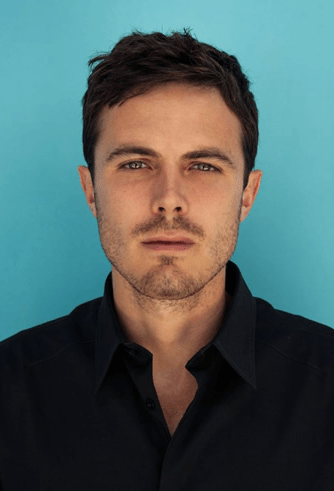
Palm Springs, CA (November 11, 2016) – The 28th annual Palm Springs International Film Festival (PSIFF) will present Casey Affleck with the Desert Palm Achievement Award, Actor at its annual Film Awards Gala for his performance in Manchester By the Sea. Each year the festival selects an actor and actress to receive this award. The Film Awards Gala, hosted by Mary Hart, will be held Monday, January 2 at the Palm Springs Convention Center. The Festival runs January 2-16.

“Casey Affleck delivers his finest performance in Manchester By the Sea, playing a Boston screen-shot-2016-11-24-at-4-21-37-pmjanitor living a lonely and isolated existence,” said Festival Chairman Harold Matzner. “He has earned rave reviews from critics and is sure to garner awards attention. It is our honor to present the Desert Palm Achievement Award, Actor, to Casey Affleck.”

Past actor recipients of the Desert Palm Achievement Award include Jeff Bridges, Bradley Cooper, Johnny Depp, Daniel Day-Lewis, Colin Firth, Matthew McConaughey, Sean Penn, Brad Pitt and Eddie Redmayne. In the years they were honored, Bridges, Day-Lewis, McConaughey, Penn and Redmayne went on to win the Academy Award® for Best Actor, while Cooper, Firth and Pitt received Oscar® nominations.

Affleck stars in Manchester by the Sea, the latest film from award-winning writer and director Kenneth Lonergan, about the life of a solitary Boston janitor who is haunted by his past when he returns to his hometown to take care of his teenage nephew. The story of the Chandlers, a working-class family living in a Massachusetts fishing village for generations, Manchester by the Sea is a deeply poignant, exploration of the power of familial love, community, sacrifice and hope.  The film also stars Michelle Williams, Kyle Chandler, Lucas Hedges, Gretchen Mol and C.J. Wilson.

Casey Affleck was nominated for an Academy Award®, a Golden Globe Award® and a Screen Actors Guild Award for his performance in the character drama The Assassination of Jesse James by the Coward Robert Ford. His film credits include Gone Baby Gone, Gerry, Good Will Hunting, To Die For, Interstellar, Out of the Furnace, Ain’t Them Bodies Saints, Steven Soderbergh’s Oceans trilogy, Triple 9, and The Finest Hours.

About The Palm Springs International Film Festival
The Palm Springs International Film Festival (PSIFF) is one of the largest film festivals in North America, welcoming 135,000 attendees last year for its lineup of new and celebrated international features and documentaries. The Festival is also known for its annual Film Awards Gala, an upscale black-tie event attended by 2,500, honoring the best achievements of the filmic year by a celebrated list of talents who, in recent years, have included Ben Affleck, Javier Bardem, Cate Blanchett, Sandra Bullock, Bradley Cooper, George Clooney, Daniel Day-Lewis, Leonardo DiCaprio, Clint Eastwood, Tom Hanks, Matthew McConaughey, Julianne Moore, Brad Pitt, Eddie Redmayne, Julia Roberts, David O. Russell, Meryl Streep, and Reese Witherspoon.

psiff16_logo_01_360

For more information, call 760-322-2930 or 800-898-7256 or visit www.psfilmfest.org.

MEDIA CONTACTS:
Steven Wilson / Lauren Peteroy
B|W|R Public Relations
212-901-3920
steven.wilson@bwr-pr.com / lauren.peteroy@bwr-pr.com

David Lee
Palm Springs International Film Society
760-322-2930
david@psfilmfest.org

(Source:www.psfilmfest.org)

FILM REVIEW: Citizen Kane (Welles, 1941): USA

Viewed by Larry Gleeson as part of the American Film Institute’s (AFI) AFIFEST 2016 presented by Audi. Citizen Kane, directed by Orson Welles, was first on AFI’s first 100 Greatest American Movies Movies of All Time in 1998. Ten years later, a 10th Anniversary Edition of AFI’s 100 Greatest American Movies found Citizen Kane still perched in the top spot.

Loosely based on newspaper tycoon, William Randolph Hearst, Citizen Kane was the first feature film by Welles. Hearst forbad any mention of the film in his newspapers upon the film’s release.

After signing his contract, Welles had been green-lighted for his film with a directorial final cut by RKO Pictures after his string of successes on Broadway with his Mercury Theater, including the thrilling radio broadcast of ‘The War Of The Worlds.’ Welles also brought several of his Mercury Theater actors on board for the project, several of whom would go on to have substantial Hollywood film careers including Joseph Cotton, Agnes Moorehead, Everett Sloane and Ruth Warrick.

Welles shared writing credits for Citizen Kane with Herman Mankiewicz and the two won the Academy Award for Best Screenplay in 1942. The film received a total of nine Oscar nominations in 1942 including Best Picture, Best Director (Welles), Best Actor in a Leading Role (Welles), Best Cinematography (Gregg Toland), Best Sound, Recording (John Aalberg), Best Music, Scoring of a Dramatic Picture (Bernard Herrmann), Best Film Editing (Robert Wise), and Best Art Direction-Interior Decoration, Black-and-White (Perry Ferguson, Van Ness Polglase, A. Roland Fields, Darrell Silvera).

The film opens in what appears to be a surreal reflection with a Bengali Tiger and ominous non-diagetic music with snow falling inside a crystal with an utterance of “Rosebud.” A strong, deep-toned, narrative voice-over begins informing the viewer with wartime newsreel clips from “News on The March,” mentioning among others Khubla Khan. After a series of quick edits, a low-angle shot of a large, stone-built castle the narrator refers to as “Xanadu, a pleasure dome,” is held for a moment.

Without missing much of a beat the narration continues with quick frames of paintings, pictures and statues that have been “looted” from the finest European museums. Not stopping, the narration intensifies as the narrator projects powerfully about animals of the land, foul of the air – two of each – in creation of the world’s largest private zoo since Noah and the largest monument a man has built to himself since the pyramids using 100,000 tons of concrete and 200,00 tons of marble in its construction culminating in a crescendo as the narrator introduces by name only the film’s protagonist, Charles Foster Kane, the great yellow journalist and heir of the Colorado Lode. News stories and the biography of the his life and death are flashed on screen as the story begins with a smoke-filled room of newsmen trying to determine the significance of the last word the newspaper tycoon uttered, ‘rosebud.’

Told primarily through flashbacks as the mystery of rosebud is explored, Citizen Kane contains a highly structured narrative coupled with revolutionary deep focus cinematography, mostly unseen before in mainstream cinema. Cinematographer Gregg Toland provided the deep focus effect with his specially treated lenses and light-sensitive film stock. The deep focus cinematography allowed the entire scene being shot to have primary focus and thus allowing the subjects to have equal importance visually. In addition, Welles and Toland removed floorboards in another groundbreaking scene to create ultra low-angle shots of the newspaper men following Kane’s unsuccessful pursuit of the American Presidency. The effect visually is stunning as rather ordinary, though influential, men are now seen as overly large, powerful titans squaring off.

In its essence, Citizen Kane, is the tragic tale of a man who has high ideals to be the people’s voice, the voice of the common everyday man. Slowly, however, the benevolence of the man becomes consumed with a passionate pursuit for power.

Tellingly, Citizen Kane’s message is still pertinent today. After Kane is defeated at the ballot box by the ‘sleaze factor’ (a decidedly distasteful tactic that can skewer even the most accurate polling data) he uses his newspapers to declare “Fraud at the Polls” in large-type newsprint headlines. Historians often cite Welles’ depiction of Susan Alexander Kane (a character purportedly representative of Hurst’s long-time, close intimate, Marion Davies) as the basis for Hurst strong negative reaction to Citizen Kane. More recently, several news outlets cite President Obama’s infamous roasting of President-elect Donald Trump at a 2011 White House Correspondents’ Dinner as the catalyst for Trump’s headlong dive into the 2016 race for the White House. Interestingly, even before Election Day, Trump declared fraud on the election. Interesting indeed. Citizen Kane is a must-see film for any serious cinephile and is highly recommended for all filmgoers.

Ruth Negga to Receive the Rising Star Award at Palm Springs

Palm Springs, CA (November 16, 2016) – The 28th annual Palm Springs International Film Festival (PSIFF) will present Ruth Negga with the Rising Star Award at its annual Ruth NeggaFilm Awards Gala for her performance in Loving. The Film Awards Gala, hosted by Mary Hart, will be held Monday, January 2 at the Palm Springs Convention Center. The Festival runs January 2-16.

“Ruth Negga’s performance as Mildred Loving is one of the year’s most luminous and striking portrayals,” said Festival Chairman Harold Matzner. “This timeless love story about an interracial couple reminds us of the unstoppable power of love in the face of hate and prejudice – a story that could not be more resonant and powerful today. This will certainly be just one of many breathtaking performances in a long career. The Palm Springs International Film Festival is honored to present Ruth Negga with this year’s Rising Star Award.”

Past recipients of the Rising Star Award include Alicia Vikander, Jennifer Lawrence, Scarlett Johansson, Anna Kendrick, Dakota Fanning, and Terrence Howard.

New in theaters this month from Focus Features, Loving is written and directed by Jeff Nichols, and stars Joel Edgerton and Ruth Negga as Richard and Mildred Loving. Loving celebrates the real-life courage and commitment of the interracial couple who fell in love and were married in 1958. The couple had grown up in Central Point, a small town in Virginia that was more integrated than surrounding areas in the American South. Yet it was the state of Virginia, where they were making their home and starting a family, that first jailed and then banished them. Their civil rights case, Loving v. Virginia, went all the way to the Supreme Court, which in 1967 reaffirmed the very foundation of the right to marry. Richard and Mildred returned home and their love story has become an inspiration to couples ever since.

Ruth Negga’s body of work spans award-winning theatre productions, big-screen dramas, independent films, and innovative television series. Her film work includes World War Z, The Samaritan, Breakfast on Pluto, Una Vida (a.k.a. Of Mind and Music), Noble; Jimi: All Is by My Side, Warcraft; and Iona. Negga won the Irish Film & Television Academy (IFTA) Award for Best Actress for her portrayal of legendary singer Shirley Bassey in the telefilm Shirley. Her other TV work includes Misfits, Love/Hate, the miniseries Coup (a.k.a. Secret State), Five Daughters, and Agents of S.H.I.E.L.D., She currently stars on AMC’s series Preacher.

psiff16_logo_01_360

About The Palm Springs International Film Festival
The Palm Springs International Film Festival (PSIFF) is one of the largest film festivals in North America, welcoming 135,000 attendees last year for its lineup of new and celebrated international features and documentaries. The Festival is also known for its annual Film Awards Gala, an upscale black-tie event attended by 2,500, honoring the best achievements of the filmic year by a celebrated list of talents who, in recent years, have included Ben Affleck, Javier Bardem, Cate Blanchett, Sandra Bullock, Bradley Cooper, George Clooney, Daniel Day-Lewis, Leonardo DiCaprio, Clint Eastwood, Tom Hanks, Matthew McConaughey, Julianne Moore, Brad Pitt, Eddie Redmayne, Julia Roberts, David O. Russell, Meryl Streep, and Reese Witherspoon.

For more information, call 760-322-2930 or 800-898-7256 or visit www.psfilmfest.org.

MEDIA CONTACTS:
Steven Wilson / Lauren Peteroy
B|W|R Public Relations
212-901-3920
steven.wilson@bwr-pr.com / lauren.peteroy@bwr-pr.com

David Lee
Palm Springs International Film Society
760-322-2930
david@psfilmfest.org

(Source: http://www.psfilmfest.org)