Denzel Washington is set to receive the Maltin Modern Master Award at the 32nd annual Santa Barbara International Film Festival. Washington will be honored for his longstanding contributions to the film industry culminating with Paramount’s upcoming Fences, a story adapted from August Wilson’s Pulitzer Prize-winning play of the same name. Washington directs, produces and stars in the saga about a 1950s Pittsburgh sanitation worker and former Negro League baseball player, Troy Maxson (Washington), as he deals with racism while struggling to provide for his family.
Fences hits theatres on Christmas Day.
Leonard Maltin, for whom the award was recently renamed after, will return for his 26th year to moderate the evening. The award will be presented on Thursday, February 2, 2017 at Santa Barbara’s historic Arlington Theatre.
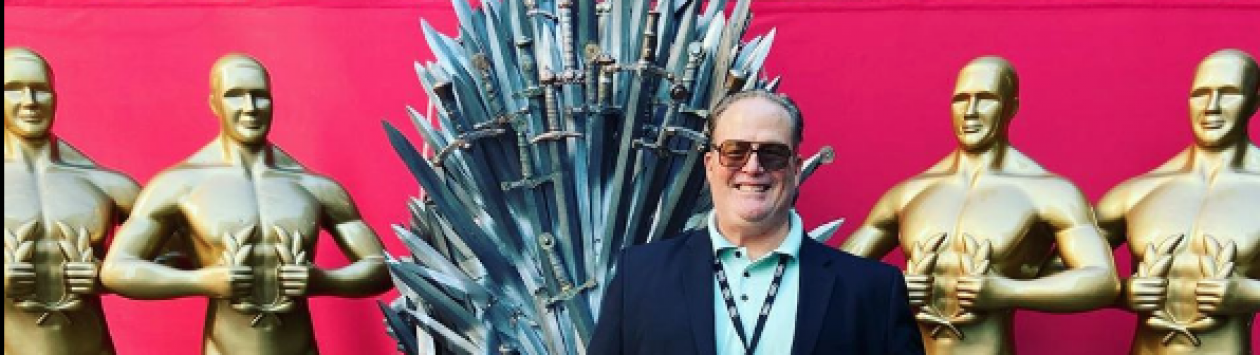
SBIFF Executive Director Roger Durling stated, “Denzel Washington directing, producing and acting in Fences defines the Modern Master for the 21st Century.”
The Modern Master Award was established in 1995 and is the highest accolade presented by SBIFF. Created to honor an individual who has enriched our culture through accomplishments in the motion picture industry, it was re-named the Maltin Modern Master Award in 2015 in honor of long-time SBIFF moderator and renowned film critic Leonard Maltin. Past recipients include Michael Keaton, Bruce Dern, Ben Affleck, Christopher Plummer, Christopher Nolan, James Cameron, Clint Eastwood, Cate Blanchett, Will Smith, George Clooney and Peter Jackson.
AFI FEST 2016 presented by Audi has jumped on the virtual reality (VR) bandwagon in a big way on Saturday, November 12th, with its State of the Art Technology Showcase Presented by Google Spotlight Stories. Keynote Speaker, Anthony Blatt, Co-Founder of Wevr, kicked off the Showcase at 11:00 A.M inside the Hollywood Roosevelt Hotel’s AFI FEST Cinema Lounge.
Blatt spoke extensively on where VR is today as behemoths Google and Microsoft are investing billions of dollars in an uncertain VR future. Nevertheless, VR filmmaking is presently bringing together filmmakers as they explore emerging VR technologies including 360 degree VR. It is Blatt’s hope these new technologies will continue to bring together filmmakers, introduce them to what is possible and that they will collaborate to present stories in years to come.
Some Hollywood directors have been outspoken and semi-critical of the new VR
Hollywood Director Steven Spielberg at 2016 Cannes Film Festival (Photo: The Guardian)
filmmaking that attempts to arrange circumstances with bits of code that give the viewer agency. This differs from traditional filmmaking where one view is presented by the director. At the 2106 Cannes Film Festival, veteran Hollywood Director Steven Spielberg was quoted saying, “I think we’re moving into a dangerous medium with virtual reality,” he said. “The only reason I say it is dangerous is because it gives the viewer a lot of latitude not to take direction from the storytellers but make their own choices of where to look. ” (The Guardian)
While Spielberg may have a point, most legitimate VR filmmakers have techniques to gently guide the viewer in a linear or specifically designed narrative through either sound, color schematic or lighting. One intriguing aspect of VR viewing is its capacity to immerse a viewer in the presentation. Once a headset or goggle are in place, peripheral vision that occurs in a theatrical experience is removed. Blatt stipulates this will create a more “real” experience and, in addition, will stimulate lucid dreaming about the experience.
To illustrate and to help substantiate his claims on the VR experience, Blatt related a story of Jon Favreau‘s first VR viewing experience. Favreau was so overwhelmed after donning the VR goggles that upon their removal he stated he had to make a story and began sketching right away.
VR stories are similar to traditional film stories as both initially start in the writing process in script format, proceed to story-boarding and then to analysis. However, as noted earlier, the VR viewer has some agency. So, the VR experience is still a narrative story. However, VR also adds additional aspects of gamesmanship and puzzles. Another aspect under development in VR is the introduction of artificial intelligence (AI). The introduction of AI turns a viewing experience into an interactive experience potentially. Here again, is where production design aids the filmmaker in gently leading the viewer towards the pre-defined narrative. Blatt refers to the process as story to puzzle, puzzle to story. And, he strongly asserted that the focus for VR filmmaking needs to be on the story versus the technology or the medium.
In addition to storytelling and production design, Blatt discussed issues in editing VR and some of the challenges filmmakers are facing. He also mentioned the various uses of photogrammetry in storytelling. Ultimately, Mr. Blatt believes VR is a better experience. When asked why a viewer would want to choose VR rather than the traditional theatrical experience in the brief Q & A following the presentation, Blatt cited curiosity. Blatt culminated his remarks saying VR has the power to transform and change lives with its immersive storytelling techniques much like his 1977 Saturday afternoon matinee viewing of George Lucas’s first installment of the Star Wars saga.
VR Viewing Room at the 2016 Venice International Film Festival (Photo credit: Larry Gleeson/HollywoodGlee)
Recently, I attended a 40-minute segment viewing of what is being marketed as the first feature-length VR film with human actors, Jesus VR, set for release on Christmas Day. The portion I viewed contained a scene where a parable was used to illustrate a teaching point. To me, I believe the application of VR for storytelling and teaching is astounding. The issue seems to be how to get there. Currently, the technology costs associated with VR filmmaking are prohibitively high.
Nevertheless, in my opinion, VR is here to stay. So lace up your boots and hop on. You’ll be glad you did. It’s going to be quite a ride!
Viewed during AFIFEST 2016 presented by Audi, Mifune: The Last Samurai, directed by Steven Okazaki, is a feature-length documentary about the life and films of legendary Japanese actor Toshiro Mifune. Okazaki utilizes archival clips, photographic stills and interviews with those who worked with Mifune. The film is narrated by Keanu Reeves.
Interestingly, the film is more of a creative interpretation of specific formative elements, both personal and cultural, that led to Mifune’s distinct personality. Okazaki presents Mifune is a non-linear fashion. He opens the film with the infamous rape scene from Rashomon. From there he discusses Mifune’s approach to some of his Rashomon scenes. Apparently, to embody the untamed animal instinct of his character, Mifune studied the movements and behavior of a lion. To add substance to such a claim, Okazaki shows, much to the audience’s delight, Mifune closing in on his samurai opponent in a lion-like fashion.
Iconic Japanese Director Akira Kurasaw, left, and legendary Japanese Actor Toshiro Mifune, during a set break.
The 1950’s and 60’s were a Golden Age for Japanese Film. Iconic Japanese Director Akira Kurasawa had won the Golden Lion at Venice with Rashomon in 1951 putting Japanese films on the world scene. Kurasawa and Mifune would go on to collaborate on 16 films over an eighteen year period including renowned, classic films such of Rashomon (1950), Seven Samurai (1954), Throne of Blood (1957) and Yojimbo (1961).
Telling interviews from Kyoko Kagawa, Takeshi Kato, Haruo Nakajima, Yosuke Natsoki and Sadao Nakajima reveal Mifune’s ardent preparation for roles, painstakingly researching and laborious rehearsal processes. Kurasawa rarely, if ever, gave Mifune specific direction on creating characters. Other interviews came from American directors Martin Scorcese and Steven Spielberg revealing the admiration and respect Mifune garnered not only in Japan but in Hollywood as well.
With the advent of war in 1931 and Japan invading Manchuria every able-bodied Japanese male was conscripted into service including Mifune. Mifune and his parents were Japanese Nationalists living in China at the time. Mifune’s early experiences in the war consisted of a lot of beatings as his superior officers found his tone of voice off-putting and insubordination charges followed. By war’s end males as young as eleven years old were brought into the army and referred to as Little Citizens and Children of the Emperor. Mifune’s role became training the young men as Kamakazi’s. Both of Mifune’s parents were casualties of the war.
After the war, time were tough for the Japanese. Men sold their suits and women sold their socks just to have enough to eat. Mifune made himself a pair of trousers and a matching coat from his army blanket. Such a look, coupled with his strong voice, gave Mifune a big presence. He applied for a camera assistant position with a film studio and got the position. However, in 1947, Mifune made his entrance as an actor in Kurasawa’s Snow Trail. Kurasawa was impressed with Mifune’s work and began writing bigger and better roles for Mifune. Mifune would not go back to being a camera assistant.
Kurasawa was a well-known director in Japan before the war and continued filmmaking during the war years with propaganda films. The US banned swordplay films after the war for seven years. When the ban was lifted Kurasawa was ready with one of the great films in cinematic history, Seven Samurai, with Mifune playing a often humorous, wanna-be Samurai. Mifune’s father had been a photographer and young Toshiro often posed as a Samurai for photos.
Mifune became an inspiration for young actors who found his minimalist approach accessible. Often referred to as the John Wayne of Japan, Toshiro Mifune is The Last Samurai. Warmly recommended…a cinephile’s dream!
The Palm Springs International Film Festival (PSIFF) has announced the hiring of Michael Lerman as Artistic Director. Currently, Lerman serves as Acting Head of Programming and Primetime Programmer for the Toronto Film Festival, which concludes its 11-day run on September 18, as well as the Artistic Director for the Philadelphia Film Society, where he has worked since 2005.
Lerman will oversee all artistic decisions for the 28th annual Palm Springs International Film Festival that runs from January 2-16, 2017.
“Michael Lerman is a young but very seasoned film festival veteran who brings a keen eye for identifying and curating remarkable films and filmmaker talent. He is an exemplary match for the Palm Springs International Film Festival,” said Festival Chairman Harold Matzner. “We were very impressed with his programming work at the Toronto International Film Festival and are honored to have him join our Palm Springs team.”
About The Palm Springs International Film Festival
The 28th Annual Palm Springs International Film Festival (PSIFF), will hold its Film Awards Gala at the Palm Springs Convention Center on Monday, January 2, 2017 hosted by Mary Hart. Considered an important stop on the Oscar campaign trail, the Film Awards Gala honors individuals in the film industry with awards for acting, directing and lifetime achievement. Honorees will be presented with either the John Kennedy “The Entertainer” statue or a Chihuly Glass Sculpture. In the past 4 years, 40 of the 44 honorees have been nominated for the Academy Awards. Amazingly, all honorees have attended for the past 14 years. The Palm Springs International Film Festival (PSIFF) is one of the largest film festivals in North America, welcoming 135,000 attendees last year for its lineup of new and celebrated international features and documentaries.
For more information, call 760-322-2930 or 800-898-7256 or visit www.psfilmfest.org.
Nowhere to Hide by Zaradasht Ahmed won the IDFA Award for Best Feature-Length Documentary and Still Tomorrow by Jian Fan won the IDFA Special Jury Award for Feature-Length Documentary.
The award for best Dutch documentary went to Reber Dosky for Radio Kobanî. Guido Hendrikx’s Stranger in Paradise, which opened the festival, received the IDFA Special Jury Award for Dutch Documentary.
At the beginning of the evening, Heddy Honigmann presented the Prins Bernhard Cultuurfonds Documentary Award (€ 50,000) to filmmaker Ester Gould.
A total of 16 awards were presented, following last night’s presentation of the IDFA Alliance of Women Film Journalists’ EDA Award for Best Female-Directed Documentary to Maite Alberdi for The Grown-Ups.
The festival continues through Sunday, when the winner of the VPRO IDFA Audience Award will be announced.
Zaradasht Ahmed won the IDFA Award for Best Feature-Length Documentary (€ 12,500) for Nowhere to Hide (Norway/Sweden). The film is an eyewitness report by an Iraqi nurse forced to flee when his home falls into the hands of IS.
From the jury report: There are those films which are wonderful to see and there are films that the world needs to see. The film we choose is both of these things. The experience was immersive and left us deeply touched. The director respected the unique perspective that only the subject could have and in doing so he gave us an unprecedented window into the real life lasting consequences of war.
In addition, the jury presented the IDFA Special Jury Award for Feature-Length Documentary (€ 2,500) to Still Tomorrow (China) by Jian Fan. The documentary is a portrait of Chinese poet Xiuhua Yu, who blossoms from a disabled farmer caught in a loveless marriage into an internet sensation and Chinese media darling.
The jury of the IDFA Competition for Feature-Length Documentary consisted of chair Tom Paul (USA), Yuri Ancarini (Italy), Jordana Berg (Brazil), Ingrid van Tol (the Netherlands) and Debra Zimmerman (USA). Jury report VPRO IDFA Award for Best Feature-Length Documentary
The IDFA DocLab Award for Digital Storytelling (€ 5,000) went to DeathTolls Experience (Iran) by Ali Eslami.
Mia Donovan received the Scenic IDFA DocLab Immersive Non-Fiction Award (€ 2,500) for Deprogrammed (Canada).
The IDFA Award for First Appearance (€ 7,500) was presented to Sine Skibsholt for Who We Were(Denmark).
The Special Jury Award for First Appearance (€ 2,500), dedicated to the memory of Peter Wintonick, was presented toPlastic China (China) by Jiu-liang Wang. Plastic China was made with financial support from the IDFA Bertha Fund.
The jury of the IDFA Competition for First Appearance was made up of Marjoleine Boonstra (the Netherlands), Uldis Cekulis (Latvia), Kahane Cooperman (USA), Samir Mehanovic (Scotland) and Bob Moore (Canada). Jury report IDFA Award for First Appearance
Tali Shemesh and Asaf Sudry won the IDFA Award for Best Mid-Length Documentary (€ 10,000) for Death in the Terminal (Israel).
Ksenia Okhapkina won de IDFA Special Jury Award for Mid-Length Documentary (€ 2,500) for Come Back Free (Estonia).
The jury of the IDFA Competition for Mid-Length Documentary consisted of Ryan Harrington (USA), Noe Mendelle (Scotland), Jake Perlin (USA), Andrea Prenghyová (Czech Republic) and Digna Sinke (the Netherlands). Jury report IDFA Award for Best Mid-Length Documentary
The Beeld en Geluid IDFA Award for Dutch Documentary (€ 7,500) went to Radio Kobanî by Reber Dosky.
Guido Hendrikx received the IDFA Special Jury Award for Dutch Documentary (€ 2,500) for Stranger in Paradise.
The jury of the IDFA Competition for Dutch Documentary was made up of Tine Fischer (Denmark), Maureen Gosling (USA), Ester Gould (the Netherlands), Nilotpal Majumdar (India) and Qi Zhao (China). Jury report Beeld en Geluid IDFA Award for Dutch Documentary
The ARRI IDFA Award for Best Student Documentary (€ 5,000) was awarded to When Will This Wind Stop (Poland) by Aniela Astrid Gabryel. Close Ties (Poland) by Zofia Kowalewska won the IDFA Special Jury Award for Student Documentary (€ 2,500). Alongside the cash prize, both winners were given an Amira camera, made available by ARRI for the makers’ next productions.
The jury of the IDFA Competition for Student Documentary was made up of Judy Kibinge (Kenya), Salome Machaidze (Georgia) and Daan Veldhuizen (the Netherlands). Jury report IDFA Award for Student Competition
The IDFA Award for Best Children’s Documentary (€ 2,500) was awarded to Rocknrollers (the Netherlands) by Daan Bol.
Saskia Gubbels won the IDFA Special Jury Award for Children’s Documentary (€ 1,000) for Naomi’s Secret (the Netherlands).
Other awards
At the beginning of the evening, Heddy Honigmann presented the Prins Bernhard Cultuurfonds Documentary Award to filmmaker Ester Gould (A Strange Love Affair with Ego, Strike a Pose). This bursary is made available by an anonymous donor and was set up by the Cultuurfonds. It consists of an amount of € 50,000 for the production of a new documentary.
The 28th annual Palm Springs International Film Festival (PSIFF) will present Tom Hanks with the Icon Award at its annual FilmAwards Gala for his performance in Sully. The Film Awards Gala will be held Monday, January 2 at the Palm Springs Convention Center and hosted by Mary Hart. The Festival runs January 2-16.
“Tom Hanks delivers yet another career-defining performance bringing to life the heroism of airline pilot Captain Chesley ‘Sully’ Sullenberger,” said Festival Chairman Harold Matzner. “This is sure to be remembered in his long list of iconic character roles, including those in Forrest Gump, Captain Phillips, Castaway, Philadelphia, Saving Private Ryan, the Toy Story films and so many others. The Palm Springs International Film Festival is honored to present this year’s Icon Award to Tom Hanks.”
Past recipients of the Icon Award include Michael Douglas, Robert Duvall and Meryl Streep. In 2014, Hanks received the Festival’s Chairman’s Award.
The film Sully is from Oscar-winning director Clint Eastwood, starring Oscar winner Tom Hanks as Captain Chesley “Sully” Sullenberger. On January 15, 2009, the world witnessed the “Miracle on the Hudson” when Sullenberger glided his disabled plane onto the frigid waters of the Hudson River, saving the lives of all 155 aboard. However, even as he was being heralded by the public and the media for his unprecedented feat of aviation skill, an investigation was unfolding that threatened to destroy his reputation and his career. The film also stars Aaron Eckhart and Laura Linney.
Tom Hanks is an award-winning actor, producer and director. He won back-to-back Best Actor Academy Awards® for his work in Jonathan Demme’sPhiladelphia and the title role in Robert Zemeckis’ Forrest Gump. He also won Golden Globe Awards for both films, as well as a Screen Actors Guild (SAG) Award® for the latter. His other feature credits include Bridge of Spies, A Hologram for the King, Captain Phillips, Saving Mr. Banks, Cloud Atlas, Extremely Loud & Incredibly Close, Larry Crowne, The Ladykillers, The Terminal, Catch Me If You Can, Saving Private Ryan, Road to Perdition, That Thing You Do, The Green Mile, You’ve Got Mail, Sleepless in Seattle, A League of Their Own, Apollo 13, The Da Vinci Code, Angels & Demons, Inferno, Splash and the animated Toy Story, Toy Story 2, Toy Story 3, Cars and The Polar Express. His next film will be James Ponsoldt’s The Circle.
About The Palm Springs International Film Festival
The Palm Springs International Film Festival (PSIFF) is one of the largest film festivals in North America, welcoming 135,000 attendees last year for its lineup of new and celebrated international features and documentaries. The Festival is also known for its annual Film Awards Gala, an upscale black-tie event attended by 2,500, honoring the best achievements of the filmic year by a celebrated list of talents who, in recent years, have included Ben Affleck, Javier Bardem, Cate Blanchett, Sandra Bullock, Bradley Cooper, George Clooney, Daniel Day-Lewis, Leonardo DiCaprio, Clint Eastwood, Tom Hanks, Matthew McConaughey, Julianne Moore, Brad Pitt, Eddie Redmayne, Julia Roberts, David O. Russell, Meryl Streep, and Reese Witherspoon.
For more information, call 760-322-2930 or 800-898-7256 or visit www.psfilmfest.org.
DIVINES, one of the most critically acclaimed and talked-about films at this year’s Cannes film festival and recent awards winner at the American Film Institute’s AFIFEST 2016 presented by Audi, will be available to Netflix subscribers exclusively today, November 18th. Get a first look below!
The funny, suspenseful and often emotional drama tells the story of Dounia, a tough, but naive teenager who sees getting rich or dying trying as her most viable option in life. Set in a ghetto near Paris where drugs and religion reign supreme, Dounia is hungry for her share of power and success. Enlisting the help of her best friend she decides to follow the footsteps of a respected and successful neighborhood dealer. But when Dounia meets a strong-willed and sensual dancer, her life takes a surprising turn.
Houda Benyamina’s energetic directorial debut was awarded the Caméra d’Or at the Cannes Film Festival for the best first feature film presented in one of the event’s selections. Most recently, the film received multiple accolades yesterday AFIFEST. Benyamina, Oulaya Amamra, and Divines were winners of the New Auteurs Audience Award, Breakthrough Audience Award and the Special Jury Mention for Acting.
Emma Stone and Ryan Gosling will be presented with the 2017 Outstanding Performers of the Year award on Friday, February 3rd, 2017for their performances in La La Land, directed by Damien Chazelle (Whiplash). This is Stone’s first time being honored by the Santa Barbara International Film Festival (SBIFF). Gosling was the inaugural recipient of the Cinema Vanguard Award in 2008.
Actress Emma Stone will be the Santa Barbara International Film Festival’s Outstanding Performer Award recipient along with her La La Land co-star Ryan Gosling on February 3rd, 2017 at the historic Arlington Theater in Santa Barbara Calif.
The tribute, which will take place at Santa Barbara’s historic Arlington Theatre, will be moderated by SBIFF’s Executive Director Roger Durling. The 32nd annual Santa Barbara International Film Festival will take place from Wednesday, February 1 through Saturday, February 11. Click here to attend.
Santa Barbara International Film Festival Executive Director Roger Durling
Durling stated, “Ryan and Emma’s luminous performances in La La Land remind us of the transformative and magical role of cinema. We are so proud to celebrate them and this incredible film and its nod to the classic love stories of Old Hollywood with a contemporary twist.”
Gosling and Stone will join a recognized group of previous Outstanding Performer Award recipients, including Brie Larson and Saoirse Ronan, Steve Carell, Cate Blanchett, Jennifer Lawrence, Viola Davis, James Franco, Colin Firth, Penelope Cruz, Angelina Jolie, Helen Mirren, Heath Ledger, Kate Winslet and Charlize Theron.
Written and directed by Academy Award® nominee Damien Chazelle, La La Land, set in modern day Los Angeles, tells the story of Mia (Stone), an aspiring actress, and Sebastian (Gosling), a dedicated jazz musician, who are struggling to make ends meet in a city known for crushing hopes and breaking hearts. (Source: sbiff.org)
AFI FEST 2016 presented by Audi has announced the features and short films that received this year’s Jury and Audience Awards. Select award-winning films will screened again on November 17, 2016, at the TCL Chinese 6 Theatres.
New Auteurs Grand Jury Award: THE FUTURE PERFECT
New Auteurs Special Jury Mention for Acting: Oulaya Amamra for DIVINES
Grand Jury Award – Live Action Short: ICEBOX
Grand Jury Award – Animated Short: PUSSY
Live Action Short Special Mention for Comedic Narrative: HOUNDS
Live Action Short Special Mention for Documentary: THE SEND-OFF
Live Action Short Special Mention for Acting: DREAMING OF BALTIMORE
Live Action Short Special Mention for Cinematography: A THOUSAND MIDNIGHTS
Live Action Short Special Mention: SPEAKING IS DIFFICULT
Animated Short Special Jury Mention: SUMMER CAMP ISLAND
Animated Short Special Jury Mention for Mixed Media: DEER FLOWER
Animated Short Special Jury Mention for Visual Aesthetics: SUPERBIA
World Cinema Audience Award: LAND OF MINE
New Auteurs Audience Award: DIVINES
American Independents Audience Award: DONALD CRIED
Breakthrough Audience Award: DIVINES
Breakthrough Audience Award First Runner-Up: ONE WEEK AND A DAY
Breakthrough Audience Award Second Runner-Up: THE RED TURTLE
Sophia Takal’s sophomore feature follows two friends, Anna and Beth, both actresses with varying degrees of success, as they travel to Big Sur for a weekend getaway in hopes of reconnecting and reestablishing a bond broken by years of competitiveness and jealousy. Once away, tension bubbles to the surface, forcing them to finally confront their issues — and to lose grasp of their own identities in the process. Building on the theme of jealousy that permeated her debut feature GREEN, Takal explores the nature of female friendships and what it means to be feminine in the eyes of others. Mackenzie Davis and Caitlin FitzGerald sink their teeth into the roles of Anna and Beth, straddling a delicate line between melodrama and realism. Reminiscent of films like Robert Altman’s 3 WOMEN (1977) and other films about “psychotic women” from the 1970s, ALWAYS SHINE is a modern take that marks Takal as an important filmmaker to watch.
AFI spoke with Takal about the film, her second at AFI FEST after 2011’s GREEN.
AFI: Did ALWAYS SHINE come out of wanting to explore the theme of jealousy — which you examined in your previous film GREEN — further?
Sophia Takal: Sort of. GREEN was a very personal exploration of my own issues around jealousy, friendship and sexuality. I worked through those issues with GREEN, and they no longer have the same stranglehold on me. But new issues cropped up. Instead of feeling threatened in my romantic partnership, I felt very threatened by other women’s career successes. Right around when GREEN came out, a lot of my friends started working more as actors and directors and I got very, very competitive.
The idea for the film came from this insane competitiveness that took over me. I became obsessed with my career and felt an insane pressure to be “feminine” — shy, deferential. I traced all of those fears back to early memories of childhood where I felt that I’d been shamed for not embodying these stifling notions of what it was to be a woman.
I started talking more about my feelings of inadequacy as a woman with friends and realized that no one I knew felt like a “woman” in the way we were taught to feel, either. ALWAYS SHINE began as a desire to examine the negative impact that these very confining ideas can have on a woman’s psychology.
ALWAYS SHINE
AFI: This film is reminiscent of the “psychotic women” films of the 1970s. Did you have any of those films in mind when making this? What influenced you while making the film?
ST: Definitely! Robert Altman’s 3 WOMEN was a huge inspiration as was his film IMAGES — as were Ingmar Bergman’s PERSONA, John Cassavetes’ A WOMAN UNDER THE INFLUENCE and Lynn Ramsay’s MORVERN CALLAR.
Lawrence Levine, the screenwriter, read a number of books about celebrity obsession, narcissism and feminism. Books we referenced frequently were “Down from the Pedestal” by by Maxine Harris and “Fame Junkies” by Jake Halpern.
AFI: While you played one of the leads in GREEN, here you stayed behind the camera. Talk about that decision, and how you found Mackenzie Davis and Caitlin FitzGerald.
ST: Deciding not to be in the film was something that I thought about for a long time. Ultimately, I didn’t feel like I would be making the film better by acting and directing. To me, the joy of acting is losing myself in a character; being a director makes that an impossibility. I’m always worried about the camera, or the other actors’ performances. When Mackenzie said she wanted to be in the film, I knew that I found someone who would be infinitely better at bringing Anna to life than I would have been.
I cast Mackenzie and Caitlin the “traditional” way, through agents and casting directors. It was important to me to work with actors I had never worked with before. I wanted to challenge myself to be a sharper communicator and better director and I thought that by casting such talented actors, whom I didn’t know, I would be encouraged to do the best I could.
AFI: As someone who has worked both in front of and behind the camera, how do you approach your actors? Does being an actress yourself help with this process?
ST: Being an actor definitely helps with this process. I can’t imagine knowing how to direct actors without experience as an actor myself. Acting is such a vulnerable, exposing process. I think all directors should learn acting as part of their training.
This was a very intimate shoot with a lot of intense, emotionally complex scenes, so it was important to me to create a very relaxed, collaborative environment. We did meditation and acting warm-ups with the cast and crew. Breaking the barrier between the cast and crew was especially important. I wanted the actors to feel free to fail and to explore and play and I felt that by bringing the crew into the process (with warm-ups), the actors would feel safer. We did a week of rehearsals, too, which helped Mackenzie and Caitlin get to know each other.
ALWAYS SHINE screens Tuesday, November 15 as part of New Auteurs.

SBIFF Executive Director Roger Durling stated, “Denzel Washington directing, producing and acting in Fences defines the Modern Master for the 21st Century.”


 bandwagon in a big way on Saturday, November 12th, with its State of the Art Technology Showcase Presented by Google Spotlight Stories. Keynote Speaker, Anthony Blatt, Co-Founder of


 The funny, suspenseful and often emotional drama tells the story of Dounia, a tough, but naive teenager who sees getting rich or dying trying as her most viable option in life. Set in a ghetto near Paris where drugs and religion reign supreme, Dounia is hungry for her share of power and success. Enlisting the help of her best friend she decides to follow the footsteps of a respected and successful neighborhood dealer. But when Dounia meets a strong-willed and sensual dancer, her life takes a surprising turn.


