Category Archives: #AFIDOCS

THE AMERICAN FILM INSTITUTE ANNOUNCES AFI DOCS 2016 AUDIENCE AWARD WINNERS

Best Feature Goes to MAYA ANGELOU: AND STILL I RISE

Best Short Goes to SNAILS

Festival Connects International Filmmakers with U.S. and Global Leaders


Judd Apatow, Werner Herzog, Norman Lear,
Members of Congress and More Join Industry’s

Top Documentarians for 14th Edition of AFI DOCS

FOR IMMEDIATE RELEASE — JUNE 27, 2016, WASHINGTON, DCThe American Film Institute announced today the AFI DOCS 2016 Audience Award winners, concluding the five-day festival in Washington, DC, and Silver Spring, MD.  This year’s Audience Award for Best Feature went to MAYA ANGELOU: AND STILL I RISE, directed by Rita Coburn Whack and Bob Hercules (U.S.).  This year’s Audience Award for Best Short went to SNAILS, directed by Grzegorz Szczepaniak (Poland).  With 93 films from 30 countries, the festival brought together filmmakers, industry, national policy and opinion leaders.


The 2016 festival provided unique opportunities for audiences, filmmakers and policymakers to meet in our nation’s capital as news unfolded.  U.S. Representatives Jim Himes and Nita Lowey addressed the NEWTOWN Spotlight Screening audience at the Newseum just hours after Democrats concluded their sit-in on the floor of the House of Representatives.  AFI DOCS filmmakers convened with policymakers at the White House, while AFI DOCS Impact Lab-participating filmmakers met with U.S. Representatives Ted Lieu, Jim McGovern and David Price.


As part of AFI DOCS 2016, the Annenberg Retreat at Sunnylands and the U.S. State Department conducted a gathering and roundtable of international filmmakers from Pakistan.  The meeting focused on how international filmmakers can make the leap into the established western film community, along with private conversations on how to handle issues such as funding, distribution and censorship.  This is the third year AFI DOCS and the Annenberg Retreat at Sunnylands have partnered to organize programs to advance the art and impact of documentary film.


This year’s AFI DOCS attendees included renowned filmmakers Judd Apatow, Ramin Bahrani, Heidi Ewing, Alex Gibney, Rachel Grady, Werner Herzog (this year’s AFI DOCS Charles Guggenheim Symposium honoree) and Barbara Kopple, along with acclaimed singer Sharon Jones and television icon Norman Lear.  Global, national and local leaders in attendance included U.S. Representatives Jim Himes and Nita Lowey and German Ambassador Peter Wittig.


Joining the opinion leaders were distinguished journalists:  PBS NewsHour’s Chief Arts Correspondent Jeffrey Brown and Political Director Lisa Desjardins; The Undefeated’s Editor-in-Chief Kevin Merida and Culture Writer Soraya Nadia McDonald; and The Washington Post’s Chief Film Critic Ann Hornaday, Editor Josh Freedom du Lac and Opinion Writer Alyssa Rosenberg.


MORE ABOUT THE WINNING FILMS:


MAYA ANGELOU: AND STILL I RISE

Co-directors Bob Hercules and Rita Coburn Whack present a lovingly crafted and comprehensive portrait of the esteemed Dr. Maya Angelou.  The story is told by Angelou herself, along with a cast of contemporaries from her careers as actress, writer, poet and activist.  In chronicling Angelou’s life from her youth in the Depression-era South through her rise to international prominence, the film is a vital document about the importance of grace, dignity and the quest for peace.


SNAILS

Best friends with a shared goal of becoming millionaires believe they’ve found the answer to their dreams in an unlikely profession: snail farming.


AT&T is the presenting sponsor of AFI DOCS 2016.  AFI’s official airline, American Airlines, returned as an Official Sponsor of the festival.  Official Sponsors included the Corporation for Public Broadcasting, NBCUniversal and VIZIO.  Major Sponsors included The Annenberg Retreat at Sunnylands, BRICKTOWN, Catapult Film Fund, CrossCurrents Foundation, CYM Media & Entertainment, DC Office of Cable Television, Film, Music and Entertainment, the Fledgling Fund, Google, Harbers Studios and the Maryland Film Office.


About AT&T
AT&T Inc. (NYSE:T) helps millions around the globe connect with leading entertainment, mobile, high speed Internet and voice services. We’re the world’s largest provider of pay TV. We have TV customers in the U.S. and 11 Latin American countries. We offer the best global coverage of any U.S. wireless provider*. And we help businesses worldwide serve their customers better with our mobility and highly secure cloud solutions.


Additional information about AT&T products and services is available at http://about.att.com. Follow our news on Twitter at @ATT, on Facebook at http://www.facebook.com/att and YouTube at http://www.youtube.com/att.


© 2016 AT&T Intellectual Property. All rights reserved. AT&T, the Globe logo and other marks are trademarks and service marks of AT&T Intellectual Property and/or AT&T affiliated companies. All other marks contained herein are the property of their respective owners.


*Global coverage claim based on offering discounted voice and data roaming; LTE roaming; voice roaming; and world-capable smartphone and tablets in more countries than any other U.S. based carrier. International service required.  Coverage not available in all areas. Coverage may vary per country and be limited/restricted in some countries.


About AFI DOCS

AFI DOCS is the American Film Institute’s annual documentary festival in the Washington, DC area.  Presenting the year’s best documentaries, AFI DOCS is the premier festival in the U.S. dedicated to screenings and events that connect audiences, filmmakers and policy leaders in the seat of our nation’s government.  The AFI DOCS advisory board includes Ken Burns, Davis Guggenheim, Chris Hegedus, Werner Herzog, Rory Kennedy, Barbara Kopple, Spike Lee, Errol Morris, Stanley Nelson, D A Pennebaker, Agnès Varda and Frederick Wiseman.  Now in its 14th year, the festival will be held June 22­–26, 2016 in landmark Washington, DC venues and the historic AFI Silver Theatre in Silver Spring, MD.  Visit AFI.com/afidocs and connect on twitter.com/afidocs, facebook.com/afidocs and youtube.com/AFI.


About the American Film Institute

AFI is America’s promise to preserve the heritage of the motion picture, to honor the artists and their work and to educate the next generation of storytellers.  AFI programs include the AFI Catalog of Feature Films and the AFI Archive, which preserve film heritage for future generations; the AFI Life Achievement Award, the highest honor for a career in film; AFI AWARDS, honoring the most outstanding movies and TV series of the year; AFI’s 100 Years…100 Movies television events and movie reference lists, which have introduced and reintroduced classic American movies to millions of film lovers; year-round and special event exhibition through AFI FEST presented by Audi, AFI DOCS and the AFI Silver Theatre and Cultural Center; and educating the next generation of storytellers at the world-renowned AFI Conservatory.  For more information about AFI, visit AFI.com or connect with AFI at twitter.com/AmericanFilm, facebook.com/AmericanFilmInstitute, instagram.com/AmericanFilmInstitute and youtube.com/AFI.


# # #

CONTACT:

Gabrielle Flamand, AFI DOCS PR, 202.339.9598 or gabrielle@prcollaborative.com

Liza Ameen, American Film Institute, 323.856.7885 or LAmeen@AFI.com

The AFI DOCS Interview: TRAIN SURFERS Director Adrien Cothier

June 21, 2016

In Adrien Cothier’s short film TRAIN SURFERS, thrill-seeking young men tempt fate doing stunts on Mumbai’s high-speed trains. AFI spoke to director Adrien Cothier ahead of the film’s AFI DOCS premiere. He is a New York-based filmmaker who cut his teeth working on the set of Wes Anderson’s FANTASTIC MR. FOX.

kh05m4jw

Adrien Cothier on Twitter: “Very proud to have TRAIN SURFERS premiere at this year’s @AFIDOCS festival. <3 https://t.co/aeK67ooI4X&#8221;


What led you to documentary filmmaking?

My background is in narrative filmmaking and advertising. In both, I always try to recreate a certain reality whereas in documentaries, you have to use reality in order to create a narrative. This organic creative process led me to docs. There is definitely something pure about a documentary. The goal with TRAIN SURFERS was not to make a commercial film, clearly, but rather, to expose a certain truth about the world we live in.

What inspired you to tell this story?

I was finishing my first semester of grad school and had decided that I needed to get out of my comfort zone and explore a part of the world I had never seen. India seemed like a perfect mix of spiritual and adventurous journey. While I was researching where to go, I ended up on a viral video of a “train surfer” in Mumbai. I had never seen anything like it. It was a strange mix of absolute beauty and danger. I instantly called my friend and producer. I told him that if there’s a chance we can meet somebody like this, we had to document it, no matter the cost. That’s how it all started.

How did you find your subjects?

It wasn’t as hard as I expected it to be. I started researching local news stories of teenagers getting arrested for train-surfing. The more I accumulated information, the closer I came to understanding that this phenomenon happened in a few specific areas of Mumbai. Then, I hired a local translator in order to get in touch with the surfers in case we encountered them. After two days of waiting in train stations, we saw a teenager on the roof of a speeding train. We chased him down and convinced him to let us meet him again with his friends. The next day we went to visit him in his home.

What was a particular obstacle you faced while making the film?

Filming on the trains or outside the tracks is completely forbidden in India. I think this phobia came from the terrorist attacks in south Mumbai in 2008. Since then the police have been extremely weary, especially with tourists like myself. We had to hide the camera as much as we could and shoot without any permits. At the end, I think that our gorilla approach gave us incredible footage in which the audience can really feel taken on a forbidden ride in the world of the kids.

What do you want audiences to walk away with after screening your film?

I’d like them to realize that all around world, the exact same human dynamics are happening but under very different social circumstances. Whether in the rugged outskirts of Mumbai, these kids are in many ways behaving in the same way that New York kids would. In this way it’s a story about friendship and I’d like people to feel it. But I cannot deny that it’s also a story about how being trapped in a life of poverty with very few chances of changing your life and how this will impact the decisions you make as a young person.

Why do you think Washington, DC, is a valuable location to screen your film?

This doc is definitely not political but its intrinsic message deals with the notions of freedom, poverty and the pursuit of happiness, which to me are clear American values emanating from the declaration of independence displayed in DC.

TRAIN SURFERS plays before the feature film VISITOR’S DAY on Thursday, June 23 and Sunday, June 26. Buy tickets here.

(Source: American Film Institute Magazine/AFI Blog)

THE AMERICAN FILM INSTITUTE ANNOUNCES AFI DOCS 2016 FILMMAKER FORUM AND IMPACT LAB

Filmmakers Will Connect With Industry Professionals and

National Opinion Leaders for a Series of Professional Development Events

FOR IMMEDIATE RELEASE — JUNE 17, 2016, WASHINGTON, DC — Today, the American Film Institute (AFI) announced the AFI DOCS 2016 Filmmaker Forum program and Impact Lab participants.  The four-day Filmmaker Forum will take place June 23–26 at the AFI DOCS Festival Hub — located at the District Architecture Center, 421 7th St., NW in Washington, DC — and is open to AFI DOCS Priority and Industry passholders as well as festival filmmakers.  Filmmakers and industry professionals will meet for a series of professional development and networking events focused on diversity in documentary filmmaking, new technologies and the expanding world of documentary short filmmaking.


Sponsored by the Corporation for Public Broadcasting, days one and two of the Filmmaker Forum will connect attendees with independent producers, leaders in public media and cultural critics as they examine the issues of diversity and equality within the documentary community.  Additional Forum highlights include a panel discussion with award-winning filmmakers on the advantages of short-format documentary filmmaking; and a panel discussion on the Virtual Reality revolution featuring VR makers, journalists, academics and industry insiders.  The Filmmaker Forum is presented in association with the International Documentary Association and Women Make Movies.


The second edition of the AFI DOCS Impact Lab, produced in partnership with Picture Motion and in collaboration with NBC Universal, will take place June 21–22.  The intensive program provides filmmakers with issue-driven films with unique training opportunities in the areas of advocacy, grassroots communication and engagement.  After completion of the Lab, participating projects are eligible to apply for the AFI DOCS/NBCUniversal Impact Grants, which support the outreach and social action campaigns of select Lab participants.  Other supporters of the Impact Lab include CrossCurrents Foundation and The Fledgling Fund.


Selected from films screening at AFI DOCS 2016, the 10 films participating in the 2016 Impact Lab are ALMOST SUNRISE (DIR Michael Collins, USA), AMERICAN BAGHDAD (DIR Ron Najor, USA), CARE (DIR Deirdre Fishel, USA), CHECK IT (DIRS Toby Oppenheimer, Dana Flor, USA), FAREWELL FERRIS WHEEL (DIRS:  Jamie Sisley, Miguel “M.i.G.” Martinez, USA), THE ISLANDS AND THE WHALES (DIRS Mike Day, DENMARK, USA, UK), NEWTOWN (DIR Kim A. Snyder, USA), THE OPPOSITION (DIR Hollie Fifer, AUSTRALIA), RAISING BERTIE (DIR Margaret Byrne, USA) and THEY CALL US MONSTERS (DIR Ben Lear, USA).


“Both the AFI DOCS Filmmaker Forum and Impact Lab provide unique opportunities to convene documentary filmmakers with policymakers and industry professionals in our nation’s capital,” said Michael Lumpkin, Director of AFI DOCS.  “Through the Filmmaker Forum’s conversations with experts and the Impact Lab’s advocacy training, we hope to inspire documentarians to leverage the power of nonfiction storytelling and create meaningful change.”

michael-lumpkin

(Michael Lumpkin, AFI DOCS  Director)

The 14th edition of AFI DOCS will run June 22–26 in Washington, DC, and Silver Spring, Maryland.  For more information about the Impact Lab and Filmmaker Forum, please visit AFI.com/afidocs.


About AFI DOCS

AFI DOCS is the American Film Institute’s annual documentary festival in the Washington, DC area.  Presenting the year’s best documentaries, AFI DOCS is the premier festival in the U.S. dedicated to screenings and events that connect audiences, filmmakers and policy leaders in the seat of our nation’s government.  The AFI DOCS advisory board includes Ken Burns, Davis Guggenheim, Chris Hegedus, Werner Herzog, Rory Kennedy, Barbara Kopple, Spike Lee, Errol Morris, Stanley Nelson, D A Pennebaker, Agnès Varda and Frederick Wiseman.  Now in its 14th year, the festival will be held June 22­–26, 2016 in landmark Washington, DC venues and the historic AFI Silver Theatre in Silver Spring, MD.  Visit AFI.com/afidocs and connect on twitter.com/afidocs, facebook.com/afidocs and youtube.com/AFI.

About the American Film Institute

AFI is America’s promise to preserve the heritage of the motion picture, to honor the artists and their work and to educate the next generation of storytellers.  AFI programs include the AFI Catalog of Feature Films and the AFI Archive, which preserve film heritage for future generations; the AFI Life Achievement Award, the highest honor for a career in film; AFI AWARDS, honoring the most outstanding movies and TV series of the year; AFI’s 100 Years…100 Movies television events and movie reference lists, which have introduced and reintroduced classic American movies to millions of film lovers; year-round and special event exhibition through AFI FEST presented by Audi, AFI DOCS and the AFI Silver Theatre and Cultural Center; and educating the next generation of storytellers at the world-renowned AFI Conservatory.  For more information about AFI, visit AFI.com or connect with AFI at twitter.com/AmericanFilm, facebook.com/AmericanFilmInstitute, instagram.com/AmericanFilmInstitute and youtube.com/AFI.

# # #

CONTACT:

Gabrielle Flamand, AFI DOCS PR, 202.339.9598 or gabrielle@prcollaborative.com

Liza Ameen, American Film Institute, 323.856.7885 or LAmeen@AFI.com

World Premiere of “Visitor’s Day” set for AFI DOCS

FOR IMMEDIATE RELEASE:                                                             

Date: June 15, 2016

Visitor’s Day, the latest feature documentary by acclaimed filmmaker Nicole Opper, will premiere on Thursday, June 23, 2016 at 6:45pm at the AFI DOCS international documentary film festival at the AFI Silver Theatre and Cultural Center located at 8633 Colesville Rd., Silver Spring, MD.

unnamed

Visitor’s Day, set at IPODERAC, a home for 72 abandoned boys, tells the story of Juan Carlos, a runaway at age 10 who struggles for self-acceptance in the face of abandonment by his father. Founded in 1966, IPODERAC will celebrate it’s 50th anniversary this month, the month of our world premiere. This is also the year they break ground on the first home of it’s kind for girls and young women, a fact revealed in the film. The founder and various leaders of IPODERAC will be flying in from Mexico for this premiere.

theyareallmybros_still3_pepe3

For 50 years, IPODERAC (www.ipoderac.org) has helped homeless boys become self-sufficient, productive citizens of Mexico. It embodies the values of education, work and sustainability it teaches the children by operating as a social enterprise that generates 75% of its revenues from the sale of 28 varieties of artisan goat cheese.

Opper directed and produced the Emmy® Award-nominated feature documentary “Off and Running” which was an Audience Favorite at Tribeca, won ten international festival awards (including Outfest) and aired on P.O.V. in 2010. Visitor’s Day, is supported by a Fulbright Fellowship, New York State Council on the Arts (NYSCA), Chicken & Egg Pictures and The Independent Television Service (ITVS).  Nicole has produced films for The Discovery Channel and a documentary series for Here TV, and was selected for Filmmaker Magazine’s annual “25 New Faces of Independent Film.”

nicoleopper-cbfd826b
Filmmaker Nicole Opper


Director’s Statement:

I first encountered the IPODERAC boys as an eighteen year old volunteer, and I knew I was witnessing something extraordinary. Eleven years later, I unearthed the journal I kept during my time there. In it, I read that I had vowed to come back and make a documentary about this place. I returned to IPODERAC to fulfill this promise and lived on the premises for a year. While this film is an intimate verite portrait of one young man growing up at IPODERAC, I see this story as a beacon of hope, a tale of redemption and a positive depiction of our neighboring country in the midst of a storm of mainstream media that continues to focus almost exclusively on drug violence and “illegal” immigration.

Visitor’s Day also will show at the AFI DOCS festival on Sunday, June 25th at 5:30pm at the Landmark E Street Cinema at 555 11th St., NW, Washington, DC.


Tickets are available at www.afi.com and additional information about the film is available at www.visitorsdaythefilm.com.


“VISITOR’S DAY is an affecting portrait of a neglected boy striving for self-acceptance and maturity.” – AFI DOCS Film Festival

(Press release provided by Stephanie Strong)

THE MAN WHO SAW TOO MUCH

The AFI DOCS Interview: THE MAN WHO SAW TOO MUCH Director Trisha Ziff

For more than five decades, photojournalist Enrique Metinides risked his life to photograph tragedy — and the human emotion that accompanies it — in Mexico City. From crime scenes shot in black and white to explosions captured in full color, Metinides’ hauntingly beautiful pictures reveal the drama of disaster in a single frame as captured in THE MAN WHO SAW TOO MUCH.

AFI spoke to director Trisha Ziff ahead of the film’s AFI DOCS premiere. Also, check out the trailer below.

What led you to documentary filmmaking?

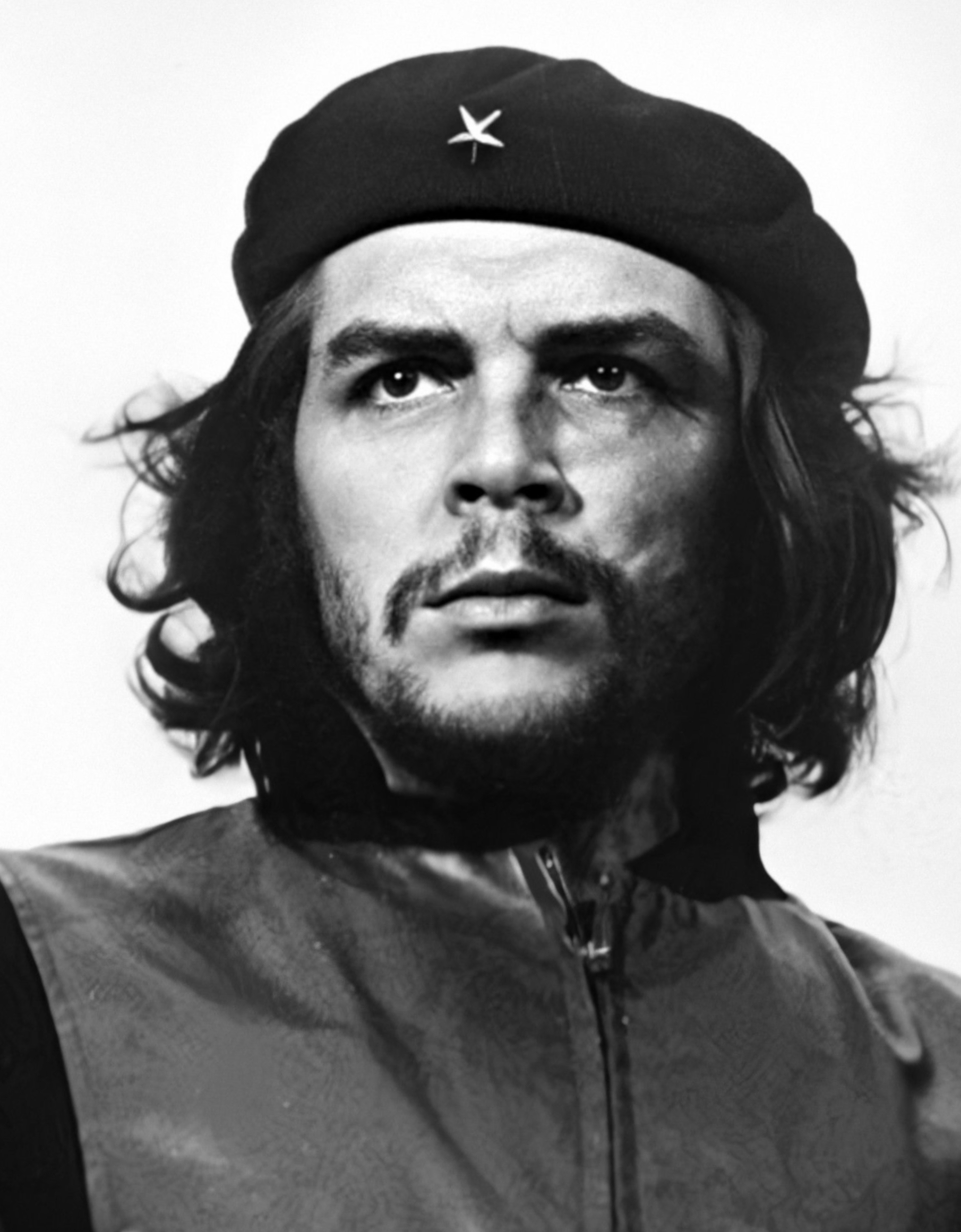
I come from a world of photography. My first film was based on an exhibition I curated about the famous photo of Che Guevara. It was a show about one single image and all its incarnations and hybrids. I saw the doc HELVETICA and I thought if you could make a film about a font, you could make a feature doc about a single image, a 60th of a second. I was fortunate enough to encounter amazing people to work with.

Coming from curation, I loved the world of documentary. It’s a different way of storytelling and the collectivity of filmmaking was a huge attraction. I grew up in England and spent my formative years watching Channel 4 docs and working with wonderful documentary filmmakers there. So to make my own film, with the support of Netflix, was a huge challenge and an amazing opportunity. I still curate and love the different ways of working with walls and with the moving image.

What inspired you to tell the story of Enrique Metinides?

I live in Mexico City and at every traffic light, we are confronted with tabloid images of the violence that took place the night before; we can never escape it. The frequency of the images assaulting us daily also makes them, ironically, feel mundane; they paralyze us. This is a film about a photographer who spent his life taking those images. I wanted to explore why we want to look at the image as much as he wants to take the photograph — the layers of looking, the voyeurism, the seduction. For me, it was about diving into a very dark world, understanding the sensationalism and meeting the photographers who do this work today. The film grew out of a seven-year relationship with my protagonist Enrique Metinides, three major exhibitions and a book.

How did you find your subject?

We had been working together for five years before we began to work on the film. I seem to have got into this pattern of a book, then an exhibition, followed by a film. It’s the third project with this model. I like it because each medium impacts and enriches the other . I was invited to curate a show of Enrique’s work at a big photo festival in Arles in the south of France; out of that grew our book, and later came the film. But my films grow from my curatorial work .

What was a particular obstacle you faced while making the film?

I think all of us might say funding! Despite the changes in how people see documentaries today and their popularity, it is still hard to make a film, and even harder to make a doc with a cultural theme. People tend to want Latin American films to address themes of victimhood and poverty, films that fit into a stereotype of sorts. So making a film about photography and a world of photography — which has the complexity of not being considered of cultural value — falls between two stools. The real challenge, however, was to find the contemporary photographers willing to work with me and to have us go out at night with them, documenting what they do. It took time to win their confidence but being at a crime scene with a cadaver is not something I will soon forget.

What do you want audiences to take away from your film?

My main concern in showing this film in the U.S. is: does this film, which addresses the depiction of violence in photography in Mexico, somehow contribute to a Trump-like stereotype of Mexico? Obviously that idea could not be further from my intention. But what I hope in the most modest of ways is that the audience leaves the cinema thinking about their own fragility — that they should check their seat belts are fastened! Understanding your own fragility is also about living each moment to the fullest. So I guess I want the audience to leave the theater recognizing how fragile it all is. It’s a theme that goes beyond the Mexican content; it applies to all of us.

Why is Washington, DC, a valuable location to screen your film?

DC has an extraordinary mix of people. It is a Mecca for people from all over the world. It also has a significant Mexican and Latin American population today. It’s a city with a strong photographic tradition thanks to the Corcoran and a museum dedicated to media, which is also a dominant theme in my film.

I think DC is an important Mecca for documentary; it is a city embroiled with sensationalism, with gossip, with drama about news. The news in my film may be different, but the culture of sensationalism is a different version of the same.

What documentary films or documentarians have been the most influential to you?

I have two favorite documentary filmmakers: Agnès Varda and Patricio Guzman. They both take documentary filmmaking to a lyrical place and yet through their storytelling, we confront important issues and narratives. They are so different but they both understand the media of cinema, which has always inspired me. I work and make films in Mexico and today the strength of young women documentary filmmakers is especially inspiring. Maya Goded, Viviana Garcia Besne, Maria José Cuevas and Tatiana Hueso all challenge the boundaries of documentary. They are an amazing energy in Mexican contemporary filmmaking.

THE MAN WHO SAW TOO MUCH plays AFI DOCS on Thursday, June 23, at 9:00 p.m., and Friday, June 24, at 2:00 p.m. Buy tickets here.

unnamed

[Source: American Film Magazine (blog)]

AUDRIE & DAISY

Spotlight Screening
AUDRIE & DAISY tells the story of two teenage girls who went to parties, drank alcohol, passed out, and were sexually assaulted by guys they thought were their friends.  In the aftermath, both girls discovered that the crimes were documented on cell phones.  Video and pictures were passed around.  Their lives were changed forever.

audriedaisy

A riveting examination of the frightening consequences of social media gone out of control, AUDRIE & DAISY focuses on the traumatic aftermath for two teenage girls who were sexually assaulted in 2012. As evidence of the crimes went viral, the victims were scorned by their communities and cyber-bullied by their peers — to tragic ends. This heartbreaking film makes a powerful plea to end the cultures of shame and silence surrounding rape in the digital age. — Chuck Willett


Director’s Statement

As directors and parents of teenagers, we are struck by the frequency of sexual assaults in high schools across the country and have been even more shocked by the pictures and videos, posted online – almost as trophies – by teens that have committed these crimes.  This has become the new public square of shame for our adolescents.   Unfortunately, the story of drunken high school parties and sexual assault is not new.  But today, the events of the night are recorded on smartphones and disseminated to an entire community and, sometimes, the nation.  Such was the case for Audrie Pott and Daisy Coleman, two teenage girls, living thousands of miles apart but experiencing the same shame from their communities.  While the subject matter is dark, we are inspired by these stories to make a film that captures these truths but can also help audiences digest the complexities of the world teenagers live in today.

As we began our research, the Steubenville, Ohio High School rape case was underway.  At the time, there was wide criticism directed at national news outlets for their lack of focus on the victim and perceived sympathy for the perpetrators.  As more cases have come to light since then, this damaging attitude – stemming from what many refer to as pervasive “rape culture” in American society – has remained largely in tact.  However, journalists need stories and stories require characters.  As is the norm in underage rape cases, in Steubenville, the survivor chose (understandably) to maintain her anonymity as a “Jane Doe.” We decided then that a genuinely emotional, meaningful film about teenage sexual assault required the affirmative on- camera participation of the survivor.  Our main subjects, Daisy Coleman and Audrie Pott, involuntarily lost their anonymity when rumors, insults and photos about their assaults circulated around school and on social media.  Identified by name and subjected to online character assassination, Daisy decided with great courage to speak out publicly.  Audrie’s parents chose to go public with their daughter’s story after the unspeakable tragedy of Audrie’s suicide, as well. Thus, using their deeply personal – and, now public – stories as a starting point, we launched into production of our film.

AUDRIE & DAISY, directed by Bonni Cohen and Joe Shenk is screening Thursday, June 23rd, 2016, at the Newseum at 8:15 P.M. Click here for tickets.

eje02wbx

Trailer: MAYA ANGELOU: AND STILL I RISE

Co-directors Bob Hercules and Rita Coburn Whack present a lovingly crafted and comprehensive portrait of the esteemed Dr. Maya Angelou. The story is told by Angelou herself, along with a cast of contemporaries from her careers as actress, writer, poet and activist. In chronicling Angelou’s life from her youth in the Depression-era South through her rise to international prominence, the film is a vital document about the importance of grace, dignity and the quest for peace. — Chad Eberle

This clip from MAYA ANGELOU: AND STILL I RISE features footage from Maya Angelou’s days as a calypso singer/dancer and interviews with Diahann Carroll and Don Martin.

The film screens as part of AFI DOCS June 22-26, 2016 in Washington, DC. Get Tickets Here.

(Source: AFI DOCS 2016)

The AFI DOCS Interview: #NEWTOWN Director Kim A. Snyder

June 1, 2016

On December 14, 2012, a 20-year-old gunman forced his way into Sandy Hook Elementary School in Newtown, Connecticut, and murdered 20 schoolchildren and six educators. In the aftermath of the killings, filmmaker Kim Snyder traveled to Newtown and trained her lens on a grieving community, following several families who came face to face with tragedy. NEWTOWN reveals both the indelible scars gun violence leaves behind and the resilience of people who come together to heal.

16605_newtownworkingtitle_still1_newtownflagpole__byderekwiesehahn

AFI spoke to director Snyder ahead of the film’s AFI DOCS premiere.

What led you to documentary filmmaking?

I was working on the production side of narrative filmmaking when a turn in my personal life compelled me to direct my first documentary. I have been doing it ever since.

What inspired you to tell this story?

I was drawn to the profound effects of collective trauma and the need for many people in Newtown to be heard on their own terms in an effort to make meaning out of the unthinkable. I wanted to pierce through a growing desensitization to these escalating incidents of mass gun violence through creating an emotional experience that humanizes the issue in a universal way.

How did your subjects?

It was like peeling an onion. In that first year, I did not feel comfortable penetrating the privacy of those most affected. My first connections were with the Interfaith community, which informed an intimacy and framing that was at once philosophic, existential and spiritual to some extent; it lent a holistic approach to a community wrestling with the darkest of journeys. Friar Bob, the priest who buried eight of the 20 children, was among those severely affected in terms of trauma. As I organically developed relationships with others through careful trust building, I began to develop a story of a town through a number of prisms, including that of parents of loss, educators, first responders, neighbors, youth — faces that render a portrait of any town and one that would redefine what it means to be a victim, while exploring the profound effects of survivor guilt and the resilience required to repair the social fabric of the entire community in the wake of the tragedy.

What was a particular obstacle you faced while making the film?

I faced a profound sense of responsibility in not wanting the process of the film to add to the ongoing trauma of those who participated, and in keeping my own psychological and emotion reactions to the material in check.

What do you want audiences to walk away with?

I want them to take away a profoundly emotional but rewarding journey to experience in their own community. I want them to experience perspective, anger and uplift from a community that offers profound truth and life perspective. Most importantly, I want them to leave with the conviction to participate in effecting change.

Why is Washington, DC, a valuable location to screen your film?

It is perhaps the most essential place for us to screen. Presenting an intimate exploration of the aftermath of the deadliest mass shooting of schoolchildren in American history in the seat of government and policymaking will be extremely powerful. We hope to maximize this potential.

NEWTOWN plays AFI DOCS on Thursday, June 23 at 5:45. Buy tickets here.

eje02wbx

[Source: American Film Magazine (blog)]

ZERO DAYS: Opening Night Gala @AFIDOCS

North American Premiere

ZERO DAYS, directed by Alex Gibney is slated for Opening Night Film for the 2016 American Film Institute’s AFI DOCS. The film will be making its North American Premiere on Wednesday, June 22, 2016, 7:30 P.M., at the Newseum in Washington, D.C.

unnamed

When independent Internet technicians discovered a chillingly powerful computer virus unlike anything they’d seen before, signs pointed not merely to recreational or criminal hackers, but to a high-stakes game of cyber warfare between nations. Academy Award®-winning filmmaker Alex Gibney returns to the festival with ZERO DAYS, a fascinating exposé of American and Israeli covert operations aimed at Iran’s nuclear program. Gibney (TAXI TO THE DARK SIDE, GOING CLEAR: SCIENTOLOGY AND THE PRISON OF BELIEF) is a master of investigative documentary filmmaking, shining a light on institutions as diverse as WikiLeaks, the Church of Scientology, Apple Inc., Enron and the U.S. military. His latest work poses compelling and critically important questions about the role of technology in war and foreign policy, and its worldwide implications. — Mimi Brody

For more details click here.

OBIT: Celebrating Life @nytimes

How do you remember a life? OBIT takes us into the world of the legendary obituaries desk at The New York Times where the writers and editors ask themselves this question daily. The film eloquently reveals the art and craft of writing obituaries and shares the journeys of extraordinary individuals to show us why writing obits is not about death, but about celebrating lives. — Silvina Fernandez-Duque


Obit is screening on Saturday, June 25th, 2016 at 6:00 P.M. at the Landmark 6 in Washington, D.C. as part of the 2016 AFI DOCS. For more details visit Obit.


unnamed


Film Review and Marketing