Tag Archives: Society

FILM REVIEW: Citizen Kane (Welles, 1941): USA

Viewed by Larry Gleeson as part of the American Film Institute’s (AFI) AFIFEST 2016 presented by Audi. Citizen Kane, directed by Orson Welles, was first on AFI’s first 100 Greatest American Movies Movies of All Time in 1998. Ten years later, a 10th Anniversary Edition of AFI’s 100 Greatest American Movies found Citizen Kane still perched in the top spot.

Loosely based on newspaper tycoon, William Randolph Hearst, Citizen Kane was the first feature film by Welles. Hearst forbad any mention of the film in his newspapers upon the film’s release.

After signing his contract, Welles had been green-lighted for his film with a directorial final cut by RKO Pictures after his string of successes on Broadway with his Mercury Theater, including the thrilling radio broadcast of ‘The War Of The Worlds.’ Welles also brought several of his Mercury Theater actors on board for the project, several of whom would go on to have substantial Hollywood film careers including Joseph Cotton, Agnes Moorehead, Everett Sloane and Ruth Warrick.

Welles shared writing credits for Citizen Kane with Herman Mankiewicz and the two won the Academy Award for Best Screenplay in 1942. The film received a total of nine Oscar nominations in 1942 including Best Picture, Best Director (Welles), Best Actor in a Leading Role (Welles), Best Cinematography (Gregg Toland), Best Sound, Recording (John Aalberg), Best Music, Scoring of a Dramatic Picture (Bernard Herrmann), Best Film Editing (Robert Wise), and Best Art Direction-Interior Decoration, Black-and-White (Perry Ferguson, Van Ness Polglase, A. Roland Fields, Darrell Silvera).

The film opens in what appears to be a surreal reflection with a Bengali Tiger and ominous non-diagetic music with snow falling inside a crystal with an utterance of “Rosebud.” A strong, deep-toned, narrative voice-over begins informing the viewer with wartime newsreel clips from “News on The March,” mentioning among others Khubla Khan. After a series of quick edits, a low-angle shot of a large, stone-built castle the narrator refers to as “Xanadu, a pleasure dome,” is held for a moment.

Without missing much of a beat the narration continues with quick frames of paintings, pictures and statues that have been “looted” from the finest European museums. Not stopping, the narration intensifies as the narrator projects powerfully about animals of the land, foul of the air – two of each – in creation of the world’s largest private zoo since Noah and the largest monument a man has built to himself since the pyramids using 100,000 tons of concrete and 200,00 tons of marble in its construction culminating in a crescendo as the narrator introduces by name only the film’s protagonist, Charles Foster Kane, the great yellow journalist and heir of the Colorado Lode. News stories and the biography of the his life and death are flashed on screen as the story begins with a smoke-filled room of newsmen trying to determine the significance of the last word the newspaper tycoon uttered, ‘rosebud.’

Told primarily through flashbacks as the mystery of rosebud is explored, Citizen Kane contains a highly structured narrative coupled with revolutionary deep focus cinematography, mostly unseen before in mainstream cinema. Cinematographer Gregg Toland provided the deep focus effect with his specially treated lenses and light-sensitive film stock. The deep focus cinematography allowed the entire scene being shot to have primary focus and thus allowing the subjects to have equal importance visually. In addition, Welles and Toland removed floorboards in another groundbreaking scene to create ultra low-angle shots of the newspaper men following Kane’s unsuccessful pursuit of the American Presidency. The effect visually is stunning as rather ordinary, though influential, men are now seen as overly large, powerful titans squaring off.

In its essence, Citizen Kane, is the tragic tale of a man who has high ideals to be the people’s voice, the voice of the common everyday man. Slowly, however, the benevolence of the man becomes consumed with a passionate pursuit for power.

Tellingly, Citizen Kane’s message is still pertinent today. After Kane is defeated at the ballot box by the ‘sleaze factor’ (a decidedly distasteful tactic that can skewer even the most accurate polling data) he uses his newspapers to declare “Fraud at the Polls” in large-type newsprint headlines. Historians often cite Welles’ depiction of Susan Alexander Kane (a character purportedly representative of Hurst’s long-time, close intimate, Marion Davies) as the basis for Hurst strong negative reaction to Citizen Kane. More recently, several news outlets cite President Obama’s infamous roasting of President-elect Donald Trump at a 2011 White House Correspondents’ Dinner as the catalyst for Trump’s headlong dive into the 2016 race for the White House. Interestingly, even before Election Day, Trump declared fraud on the election. Interesting indeed. Citizen Kane is a must-see film for any serious cinephile and is highly recommended for all filmgoers.

Film Capsule: The Art of Conflict (Vaughn, 2012): USA

The Art of Conflict, reviewed by Larry Gleeson during the Santa Barbara International Film Festival, is a well-researched documentary directed by Valeri Vaughn and narrated by younger brother, comedic actor, Vince Vaughn. The Art of Conflict tells the acrimonious story of the conflict in Northern Ireland with large wall-sized building murals scattered throughout the various neighborhoods in Northern Ireland. The conflict originated from the territory’s religious, social and economic struggles of the mid to late nineteenth century. Vaughn focuses her storytelling on the period known as “The Troubles” (the early 1970’s) and thereafter brings the conflict into present day.

art-of-conflict-vince-vaughn-600x450

During the Q & A following the viewing, both Vaughns presented and fielded questions from the audience. Vince tended to dominate the conversation as he began by providing the background to the film’s birth. He happened to be in Ireland and decided to partake in a Black Cab taxi tour. Along the way he began noticing several murals as the cabbie showed him the sights while filling his ears with some local history. As the Vaughns are of Irish heritage Vince became intrigued. This was in 2005.

Without missing a beat, he claims he immediately telephoned Valeri about the possibility of her undertaking the subject matter of the murals as a project knowing Valeri’s early penchant for making documentaries. Valeri acquiesced and agreed to do it.

The Art of Conflict was seven years in the making including several visits to the Emerald Isle. Numerous interviews and many hours of footage later, a very real piece of art began to emerge as the peace process undertaken at the time began showing aspects of progress evidenced by thematic changes in the mural landscape.

Some of the changes were a concerted effort by the two primary opposing groups, the Catholics and the Protestants, as they tried to peacefully co-exist and to allow the peace process to provide some relief from the tensions of an existing war carried out in their respective neighborhoods and business establishments.

It seemed that the Irish Nationalists, predominantly Catholic, wanted peace a bit more. I don’t believe the Vaughn’s depiction of the conflict was tilted towards either side. A point was made during the Q & A that every effort was made to ensure the piece was as balanced as possible.

With the long history of repression, to me it stands to reason, that the Catholic Nationalists would want peace more as they have fought for rights historically back to the Land Use Agreement.

Literally, Vaughn very well could have produced a Burnsian-style documentary detailing the conflict and its origin. On one hand it’s remarkable she didn’t. While on the other hand, it’s remarkable what she did do.

She captured a very unique time in history using wall murals as an impetus for further inquiry. She delved into the major events and characters of the times and bars no holds eschewing historical photographs, archival footage and present day interviews in telling the story of a bloody, soulless conflict pounded home by the murals and their shapelessness and faceless depictions.

It appears Ms. Vaughn has embarked on a journey of storytelling here that is just beginning. Wholeheartedly recommended.

PSIFF Announces 2017 Dates

The Palm Springs International Film Festival (PSIFF) has announced the dates of the 28th edition. The Awards Gala will take place on Monday, January 2, 2017, followed by the screening portion of the festival, which will open on January 5 and run through January 16, 2017.

psfilmfest-event-dalp

The festival’s Awards Gala will be held on Monday, January 2 at the Palm Springs Convention Center. This past year’s star-studded event, hosted by Mary Hart, honored Cate Blanchett, Bryan Cranston, Matt Damon, Johnny Depp, Michael Fassbender, Brie Larson, Rooney Mara, Tom McCarthy, Saoirse Ronan, Alicia Vikander and the cast of The Big Short.

The festival will begin on Thursday, January 5 with an Opening Night screening followed by a reception at the Palm Springs Art Museum. Closing Night will take place on Sunday, January 15 with the Best of the Fest screenings on Monday, January 16.

The festival will begin accepting film submissions on July 1, 2016. Awards gala tickets and screening passes will go on sale August 1, 2016.

For additional information visit http://www.psfilmfest.org.

About The Palm Springs International Film Festival
The Palm Springs International Film Festival (PSIFF) is one of the largest film festivals in North America, welcoming 135,000 attendees last year for its lineup of new and celebrated international features and documentaries.  The Festival is also known for its annual Black Tie Awards Gala, honoring the best achievements of the filmic year by a celebrated list of talents who, in recent years, have included Ben Affleck, Javier Bardem, Cate Blanchett, Sandra Bullock, Bradley Cooper, George Clooney, Daniel Day-Lewis, Leonardo DiCaprio, Clint Eastwood, Tom Hanks, Matthew McConaughey, Julianne Moore, Brad Pitt, Eddie Redmayne, Julia Roberts, David O. Russell, Meryl Streep, and Reese Witherspoon.

For more information, call 760-322-2930 or 800-898-7256 or visit http://www.psfilmfest.org .

MEDIA CONTACT:
Steve Wilson
B|W|R Public Relations
212-901-3954 / 310-248-6126
Steven.Wilson@bwr-pr.com

David Lee
PSIFF
760-322-2930
david@psfilmfest.org

(Source: http://www.psfilmfest.org)

Revolution of new Egyptian cinema at Cairo film fest

Posted by Larry Gleeson

By Cristiana Missori

CAIRO – Eight square meters for 25 prisoners – American journalists, Muslim Brothers, common citizens – who were arrested by Egyptian police during violent demonstrations following the ouster of Brotherhood President Mohamed Morsi in the summer of 2013 star in the opening film of the International film festival in Cairo.

These characters, detained together for a whole day, are featured in Eshtebak (Clash) by Egyptian director Mohamed Diab, that opened the section ‘Un certain regard’ at the latest Cannes Film Festival.

The movie will be presented on Friday night at the Cairo event, which runs until November 24.

It was greenlighted by censors in July and hit movie theaters. However, the film was pulled out a few days later, as denounced by the filmmaker.

And the festival’s artistic director, Youssef Rizkallah, has decided to screen other controversial movies.

Several films focusing on key issues of the 2011 revolution and 2013 protests will be screened in the section dedicated to new Egyptian cinema (eight films have been produced between 2015 and 2016).

They focus on the violence of those terrible days of Raba’a Al Adaweya – when over 600 civilians were killed and thousands wounded – as well as human and sentimental relations during those events with the uprising on the background.

One of them is Sins of the Flesh by Haram El Gasad, which is set in a remote farm in the Egyptian countryside where echoes of the uprising impact the lives of protagonists, and Out of Order by Mahmoud Kamel and Bitter Moon by Hany Khalifa. A box-office hit to be screened is also Hepta: the Last Lecture by Hadi El-Bagoury, a movie based on the best seller by the same name.

There are lighter stories that talk about sex (never explicitly), food and betrayal, like the latest work by Yousry Nasrallah, Books, Meadows and Lovely Faces, presented a few days ago at the Medfilm festival in Rome. Another is the latest movie by Mohamed Khan, Before the Summer Crowds, and Nawara by Hala Khalil focusing on social inequality in the country.

(Source: http://www.ansamed.info)

The AFI FEST Interview: ALWAYS SHINE Director Sophia Takal

Sophia Takal’s sophomore feature follows two friends, Anna and Beth, both actresses with varying degrees of success, as they travel to Big Sur for a weekend getaway in hopes of reconnecting and reestablishing a bond broken by years of competitiveness and jealousy. Once away, tension bubbles to the surface, forcing them to finally confront their issues — and to lose grasp of their own identities in the process. Building on the theme of jealousy that permeated her debut feature GREEN, Takal explores the nature of female friendships and what it means to be feminine in the eyes of others. Mackenzie Davis and Caitlin FitzGerald sink their teeth into the roles of Anna and Beth, straddling a delicate line between melodrama and realism. Reminiscent of films like Robert Altman’s 3 WOMEN (1977) and other films about “psychotic women” from the 1970s, ALWAYS SHINE is a modern take that marks Takal as an important filmmaker to watch.

AFI spoke with Takal about the film, her second at AFI FEST after 2011’s GREEN.

AFI: Did ALWAYS SHINE come out of wanting to explore the theme of jealousy — which you examined in your previous film GREEN — further?

Sophia Takal: Sort of. GREEN was a very personal exploration of my own issues around jealousy, friendship and sexuality. I worked through those issues with GREEN, and they no longer have the same stranglehold on me. But new issues cropped up. Instead of feeling threatened in my romantic partnership, I felt very threatened by other women’s career successes. Right around when GREEN came out, a lot of my friends started working more as actors and directors and I got very, very competitive. 

The idea for the film came from this insane competitiveness that took over me. I became obsessed with my career and felt an insane pressure to be “feminine” — shy, deferential. I traced all of those fears back to early memories of childhood where I felt that I’d been shamed for not embodying these stifling notions of what it was to be a woman. 

I started talking more about my feelings of inadequacy as a woman with friends and realized that no one I knew felt like a “woman” in the way we were taught to feel, either. ALWAYS SHINE began as a desire to examine the negative impact that these very confining ideas can have on a woman’s psychology.  

ALWAYS SHINE
ALWAYS SHINE

AFI: This film is reminiscent of the “psychotic women” films of the 1970s. Did you have any of those films in mind when making this? What influenced you while making the film?

ST: Definitely! Robert Altman’s 3 WOMEN was a huge inspiration as was his film IMAGES — as were Ingmar Bergman’s PERSONA, John Cassavetes’ A WOMAN UNDER THE INFLUENCE and Lynn Ramsay’s MORVERN CALLAR.

Lawrence Levine, the screenwriter, read a number of books about celebrity obsession, narcissism and feminism. Books we referenced frequently were “Down from the Pedestal” by by Maxine Harris and “Fame Junkies” by Jake Halpern. 

AFI: While you played one of the leads in GREEN, here you stayed behind the camera. Talk about that decision, and how you found Mackenzie Davis and Caitlin FitzGerald.

ST: Deciding not to be in the film was something that I thought about for a long time. Ultimately, I didn’t feel like I would be making the film better by acting and directing. To me, the joy of acting is losing myself in a character; being a director makes that an impossibility. I’m always worried about the camera, or the other actors’ performances. When Mackenzie said she wanted to be in the film, I knew that I found someone who would be infinitely better at bringing Anna to life than I would have been.

I cast Mackenzie and Caitlin the “traditional” way, through agents and casting directors. It was important to me to work with actors I had never worked with before. I wanted to challenge myself to be a sharper communicator and better director and I thought that by casting such talented actors, whom I didn’t know, I would be encouraged to do the best I could.

ALWAYSSHINE_web_3

AFI: As someone who has worked both in front of and behind the camera, how do you approach your actors? Does being an actress yourself help with this process?

ST: Being an actor definitely helps with this process. I can’t imagine knowing how to direct actors without experience as an actor myself. Acting is such a vulnerable, exposing process. I think all directors should learn acting as part of their training.

This was a very intimate shoot with a lot of intense, emotionally complex scenes, so it was important to me to create a very relaxed, collaborative environment. We did meditation and acting warm-ups with the cast and crew. Breaking the barrier between the cast and crew was especially important. I wanted the actors to feel free to fail and to explore and play and I felt that by bringing the crew into the process (with warm-ups), the actors would feel safer. We did a week of rehearsals, too, which helped Mackenzie and Caitlin get to know each other.

ALWAYS SHINE screens  Tuesday, November 15 as part of New Auteurs.

Anna Biller’s ‘The Love Witch’ Screens Tonight

Posted by Larry Gleeson

Come see the Love Witch and a Q & A  with Director Anna Biller at the Los Angeles Nuart Theater!

screen-shot-2016-11-11-at-10-15-51-am

THE LOVE WITCH

Actress Samantha Robinson
Plus Principal Cast Members
Fri Nov 11, 7:00pm show w/Q&A*
Sat Nov 12, 7:00pm show w/Q&A
Sun Nov 13, 4:00pm show w/Q&A
*With Filmmaker Anna Biller

Viewed by Larry Gleeson.

The Love Witch is the second feature film from Anna Biller and it recently received distribution from Oscilloscope Laboratories. Biller’s first feature was Viva(2007), a dramedy about two Los Angeles suburbanites who experiment with drugs, sex and bohemia in the 1970’s. Both films are shot in 35mm. Biller wrote, directed and produced The Love Witch and also made many of the props and paintings and is credited with Costuming and Production Design. Biller also devoted time and efforts to the film’s musical score and composition and has quickly become known for using classic and outdated film genres to communicate the feminine role within contemporary culture. Interestingly, with The Love Witch Biller creates a visual style that pays tribute to the Technicolor thrillers of the 1960’s while exploring aspects of female fantasy along with the repercussions of pathological narcissism.

elaine_red

In the film’s opening, blood-red, gothic text provides introductory credits. Soon we see the film’s protagonist Elaine, a stunningly, good-looking young witch, played by the svelte Samantha Robinson, driving in a mint-condition, red mustang convertible from the mid-to-late 1960’s. An inner voice-over narration informs the viewer Elaine is leaving the city (San Francisco) driving into the redwoods where no one will know her. A flashback to the scene of her former husband Jerry’s death and more voice-over indicate Elaine suffered a nervous breakdown after he “left her” and she’s under suspicion.

screen-shot-2016-11-11-at-10-20-14-am

As Elaine is driving the Mustang convertible in the first scene Biller appears to pay homage to Hitchcock’s Psycho  with some nice camera work from cinematographer M. David Mullen with a police cruiser appearing in the rear view mirror coupled with a closeup of an eyeball. Other closeups are provided in this sequence of a Tarot deck and a heart card with swords through it as well as an opened pack of cigarettes. It becomes quite clear Elaine is hell-bent on having a man to love her.

Without much adieu, Elaine moves into a small-town (presumably in or near Eureka, California) and holes up in a three-story, royal purple Victorian home. Her friend Barbara, another witch, played by Jennifer Ingrum, has made available an apartment space within. The apartment décor seemed rather peculiar to the interior decorator, Trish, played by Laura Waddell, who welcomed Elaine and showed her the place. Trish commented she had decorated the apartment with the peculiar color scheme from a soft tarot deck while Barbara and “her students” provided the occult paintings and other similarly styled wiccan décor adornments.

The costuming and visual colors are alluring and highly feminine complete with a golden-haired harpist maiden and large pastel-colored hats in a Victorian Tea Room for ‘Ladies Only.’ Here Elaine reveals she has fairy princess fantasies and that all women are just little girls underneath with dreams of a prince carrying them off on a white horse. Trish agrees she has those fantasies too – commenting about how ridiculous it all is. After a slight pause Elaine confides she doesn’t think she’s found her Prince Charming yet. However, she believes she’s discovered the formula as she’s been studying parapsychology and now knows everything there is to know about men.

Her “formula” are spells and potions she conjures up in her apartment. She then proceeds to pick up her unsuspecting male victims, seduce them and leaves them forlorn and hapless. Finally, she at last meets her Prince Charming. However, her overriding and desperate need to be loved drives her to the edge of insanity and to murder.

elaine_knife

The Love Witch is a beautifully lush film with its lavish, fetish costuming and meticulous set designs. It also has a 1960’s look and feel despite its contemporary setting and it makes extensive use of high-key lighting as it delves into female culturally defined roles with entrancing scene work. These filmmaking techniques and production design attributes allow Biller to encode feminist ideas within the frames of cinematic aesthetics and visual pleasure. And even though Biller was making a film for women, I can tell you after seeing this film, it’s a film made for men, too, with what could arguably have the longest running female tampon joke. The Love Witch is wholeheartedly recommended and dare I say…. “a film to die for.” It’s intriguing and, in my opinion, it’s fun!

ritual_gahan

Again, the film will be screening in Los Angeles at the Landmark Nuart on November 11th and in New York on November 18th, with additional screenings in select theaters across the country. Hope to see you there!

(Press materials provided courtesy of Marina Bailey PR)

The AFI FEST Interview: Peter Bogdanovich on Orson Welles’ CITIZEN KANE

Ranked at the top of AFI’s list of the greatest films of all time, Orson Welles’ portrait of newspaper tycoon Charles Foster Kane (a thinly veiled stand-in for William Randolph Hearst) is brilliant, blistering and beautiful. The story moves through the tragedies and triumphs of Kane’s life, from a happy childhood in snowy Colorado cut short; to a towering ascendance in the newspaper industry; a dysfunctional marriage with a tone-deaf wife he tries desperately to mold into a great opera singer; and a cloistered existence in his palatial home, Xanadu. Welles’ superb cast, many from his own Mercury Theatre, is made up of some of the most vibrant stars of the 1940s, including Joseph Cotten, Agnes Moorehead, Everett Sloane and, of course, Welles himself, who perfectly captures the aging Kane with a deft mix of sensitivity and ferocity. Gregg Toland’s innovative cinematography is now the stuff of legend, putting the deep focus technique on the map with shot after shot of crisply layered foreground and background images. If this is your first or 100th time seeing this landmark film, make sure to catch it at AFI FEST 2016 in a restored DCP, courtesy of Warner Bros. Classics.

The screening will be followed by an AFI Master Class with Welles expert Peter Bogdanovich, who spoke to AFI about CITIZEN KANE ahead of AFI FEST.

AFI: CITIZEN KANE turns 75 this year. Why do we still talk about it today?screen-shot-2016-11-09-at-9-33-57-pm

Peter Bogdanovich: It’s a landmark film, not just Orson Welles’ best film but a masterpiece. It was a masterpiece then in 1941 and still is. It’s a brilliant symphony, and is exciting to watch. Everything about it is dynamic, and that very dynamism is the camouflage for the extremely sad story Welles tells. You’re not moved to tears by CITIZEN KANE really, except as a kind of thrillingly done film.

AFI: What was it like seeing the film for the first time, in 1955?

PB: I was 16, and I was quite bowled over by it. I thought it was brilliant. I’ve seen it, I think, 10 or 12 times since then. I saw it the other day on television briefly. You can’t resist it. Everything about it is brilliant. The performances are amazing, and Orson himself, his performance is extraordinary. People spend so much time talking about the direction that they don’t notice how brilliant that performance is. It was everybody’s first film, which makes it even more extraordinary. It’s amazing to realize that all those people had never made a movie before.

AFI: Would you say that much of contemporary cinema is indebted to the style and direction of CITIZEN KANE?

PB: It’s funny because it’s not that extraordinary in terms of the technique. He used a pretty simple technique in many ways. A lot of long takes. The scene goes on, and you don’t notice how long it goes without a cut. That wasn’t that common, though a lot of filmmakers in that period did do shots like that, but not to the degree that Orson did. Years later, I said to him, “What do you think is the difference between doing a scene in one shot or in many cuts?” He said, “Well, we used to say that’s what distinguished the men from the boys.” The whole thing, the construction of the story, the flashback structure — it wasn’t any one thing that was unusual. It was the whole production. It’s a very depressing story. There’s not a shred of hope at the end. It’s all very downbeat, but the style of the film, the way he made it, the overlapping dialogue, the flashback structure, some surprising camera angles — the whole thing made a tremendous impression if you were sensitive to what he was doing.

AFI: How was the film received in 1941, versus years later when you first saw it?

It got great reviews in its original release, except in The New York Times. [Critic] Bosley Crowther didn’t care for it much. He thought the central character was shallow. It couldn’t play in a lot of theaters because the Hearst organization had blacklisted it. So, as Orson said, they couldn’t make money if they couldn’t get a theater. That’s why it failed. Orson suggested they open it in tents around the country. It was not shown for many years, but it was brought back to New York in 1955, to a small art house, and that’s where I first saw it. That’s when it started to gain this reputation.

READ MORE: 15 Facts About Orson Welles’ CITIZEN KANE — America’s Greatest Film Turns 75

screen-shot-2016-11-09-at-9-32-51-pm

AFI: You had a close relationship with Welles for many years. How did he feel about the film?

PB: He didn’t want to talk about it much. Orson did THE DAVID FROST SHOW [as guest host] in 1970  and I was there. He had a guest, [author] Norman Mailer, and after the show they went to Frankie and Johnnie’s in Manhattan and I joined them for dinner. We sat down and Norman said to Orson, “There’s a great shot in CITIZEN KANE…” and Orson said, “Oh, no, Norman, not CITIZEN KANE.” Norman looked perplexed for a minute and then said, “Oh, yeah, I guess it’s like me and ‘The Naked and the Dead,’” meaning that both Norman and Orson were plagued by the notoriety of their first effort. It was the only picture that anybody ever talked to him about, and he was irritated about it because he’d made other pictures that nobody saw. It depressed him actually. It was a struggle to get him to talk about KANE. Reluctantly he talked about it; I would trick him into it sometimes.

AFI: When Welles began CITIZEN KANE, did he know he was making a masterpiece?

PB: I couldn’t say. I think he thought he was making a pretty good picture. The thing about CITIZEN KANE is it’s very cold, and there are moments that are touching, but they’re few and far between. It’s not an emotional picture. KANE is relentlessly negative, but what makes it exciting is the way it’s told, and the way it’s acted and the way it’s done, really. It’s almost as though he’s saying that it’s only through art that we can really survive. The artistry of the picture is what gives it its lift, because if you examine the story, it’s pretty bleak.

AFI: How has CITIZEN KANE influenced your own seminal work?

PB: I can’t say I was influenced by CITIZEN KANE directly. I was influenced by Orson’s thinking, and things he said to me. But I wasn’t particularly influenced by the film. I wasn’t influenced by the technique of it as much as by the youthful spirit of it. I was influenced by a general feeling of fearlessness. CITIZEN KANE was nominated for Best Picture, but what won was HOW GREEN WAS MY VALLEY by John Ford, an emotional film about the dissolution of a family. CITIZEN KANE is a cold film about the dissolution and tragedy of a man who loses everything, including his soul.

CITIZEN KANE screens AFI FEST on Sunday, November 13, at 1:30 p.m.

screen-shot-2016-09-24-at-3-54-58-pm

(Source: http://www.blog.afi.com)

The AFI FEST Interview: DIVINES Director Houda Benyamina

Disenchanted and unimpressed by the parameters of life in the slums of Paris, a fearless and ferocious teenager named Dounia unabashedly dreams of prosperity, not only for herself but also for her charismatic best friend and alcoholic mother. In her audacious pursuit of money, power and respect, she aligns herself with a ruthless gangster who uses her as a pawn to exact revenge on a rival drug lord. When their plan goes off the rails and escalates into violent territory, Dounia is forced to reconcile the allure of quietly escaping to the life of her dreams with the reality of the ramifications of her actions. Shot in a style that is at once melodic and discordant, DIVINES is a cinematic haiku of empowerment, youthful angst, racial inequality and the consequences of poverty.

Winner of the Camera d’Or prize at the 2016 Cannes Film Festival, DIVINES is the feature film debut of director Houda Benyamina.

AFI: Oulaya Amamra gives an intense performance as the raw and uninhibited protagonist Dounia.  How did you develop that character?

Houda Benyamina: One year of physical training was necessary. Dounia is a fighter whoscreen-shot-2016-11-06-at-10-20-16-am develops an incredible lust for life and you had to feel it through Oulaya’s body. Her body had to embody this strength and this lust for surpassing herself; that is why Oulaya took boxing and parkour lessons. Apart from that, the character had to be in peak physical condition to keep up with the pace of the rehearsals and of the shooting. This was long and intense, and needed stamina.

Dounia has a cat-like side, she slides in and out of underpasses, passageways; she is at the same time deep down and high up. So Oulaya’s task was to watch documentaries on felines to grasp their way of being and moving. She also viewed a lot of gangster films and films in which the hero is transforming. We were looking for an organic transformation and this required an important identifying process. Oulaya suggested lots of ideas of clothing. During a whole year she wore Dounia’s clothes, she ate, slept and lived like Dounia. She even went sleeping in a gypsy camp because she had to understand her character’s rage due to a feeling of injustice, and to be able to find in herself Dounia’s anger for being ostracized.

AFI: What was your rehearsal process?

HB: During the shooting I developed a sort of safety line around the actors to protect them from any lapse in concentration. The camera, for instance, was on all the time so that the crew did not have to care about it and could keep focused on the actors. To me the film set is like a sanctuary, a holy place. I ask everybody to be extremely concentrated, full of solemnity toward the actors acting. And it is very important to me.

AFI: Questions of race and class inequality come up in the script. How did those themes shape the characters and plot?

HB: DIVINES is a film on spirituality and holiness. What was important to me was the apocalyptic ending. How does one rise from the ashes? How does one learn [that] there are so many things which shape us: family, social class, education, politics — but through these primary determinisms, I wanted to raise the question of free will and how it appeared in these characters looking for appreciation and dignity. Injustice is my driving force to creation. I feel close to my characters, who oscillate between darkness and light; I like exploring the two sides of human beings. Social inequality and the hunger to overcome are present for sure, but they are elements of the characters and not their essence. The essence centers on them and their inner lives.

Most important was to arouse emotion, because it makes us think and allows us to understand and question society. I intended to make a universal film with universal issues of love, friendship, the quest for recognition and dignity, and ambition.

AFI: You’re a celebrated short filmmaker. What made you want to make the transition to feature film?

HB: It was important to find someone who understands me and has the same artistic and human values, and I found him: my producer, Marc-Benoît Créancier. Once we had made my medium-length film SUR LA ROUTE DU PARADIS together, it was obvious to me to make a feature film. As a film director and a great believer I have lots of doubts and I ask myself lots of questions. My producer helps me overcome them; he encourages and guides me and he trusts me so much that making a feature film with him was a foregone conclusion.

AFI: In one sentence, what statement or question would like to linger with the audience following the screening?

HB: What do I really need to succeed?

DIVINES screens at AFI FEST 2016 on Saturday, November 12, and Monday, November 14, as part of the New Auteurs section of the festival.

screen-shot-2016-09-24-at-3-54-58-pm

(Source: afi.blog.com)

FILM REVIEW: The Wind Rises (Miyazaki, 2013): Japan

Reviewed by Larry Gleeson. Viewed during AFI Filmfest 2013.

The Wind Rises, is a new animated, full-length, feature film from legendary Japanese animation director, Hayao Miyazaki. Miyazaki announced at this year’s Venice Film Festival this will be his last film. In 1997 his Princess Mononoke, was the highest revenue grossing film in the history of Japan at the time of its release and it also received the Japanese equivalent of an Academy Award for Best Film. Miyazaki is also well known for the films Spirited Away, (2001) and Howl’s Moving Castle, (2004) In 2003 Miyazaki received an Oscar for Best Animated Feature for the film Spirited Away.

His films have garnered international acclaim from critics and have provided Miyazaki public recognition within Japan. His films are known for compelling characters, engaging plots and eye-catching animation. Remarkable by today’s standards his films allow no more than 10% of the footage to come from computer animation.

In The Wind Rises, Miyazaki tells the story of Jiro Horikoshi, a real-life aeronautical engineer who designed fighter aircraft in Japan during WWII. The film opens with the young Jiro fantasizing of his plane flying above his hometown. As I watched the scene unfold, a rather powerful ominous feeling surfaced as I was reminded of Leni Riefenstahl’s opening scene from the Nazi propaganda documentary, Triumph of the Will. Nevertheless the early moments of the film are very heartwarming as Miyazaki chooses to highlight Jiro’s youth as an older brother to a delightfully spirited younger sister in a single parented household run by their kind and caring mother.

windrises-master675

Jiro’s passion throughout the film is making good airplanes. Jiro’s daydreaming, which he does a few times during the story’s arc. Admittedly, several of my favorite moments are Jiro’s imaginings with Count Caproni, a larger-than-life mustachioed Italian airplane designer who mentors Jiro with playful and good-natured ribbing, that provide insight into  Jiro’s creative passion. Jiro finds his inspiration through such moments and Miyazaki makes space for them throughout the film.

The story is partially based on Tatsuo Hori’s 1938 novelette, “The Wind Has Risen.” Miyazaki’s animation provides beautiful plush scenery with Monet-like backdrops and landscapes providing striking visuals while creating a powerful nostalgia for a simpler time lightly brushing over the complications of war and economic depression. With such a breathtaking mise-en-scene it’s no wonder a young Jiro falls in love with the  young woman he saved during a traumatic, historic earthquake a few years before (the 1923 Great Kanto Earthquake).

In direct juxtaposition to this frantic and rather manic scenario in the aftermath of the earthquake, young Jiro finds himself vacationing in a rural setting enjoying the greenery and the soft “rising” winds complete with majestic and billowing, flowery clouds when he coincidentally crosses paths with the beautiful girl he saved from the earthquake as she paints poetically on a hillside overlooking the spectacular countryside.

The Wind Rises, is a very light-hearted, entertaining film. The film focuses pretty much exclusively on the protagonist, Jiro, as an idealistic engineer whose primary purpose in life is to make planes. Granted, he falls in love and rubs elbows with German plane builders during WWII. Yet, WWII and the social unrest after the  Great Kanto Earthquake are left virtually untouched. Tellingly, Jiro’s concern at the end of the war was over the planes that didn’t come back. Nevertheless, I wholeheartedly recommend the film for children and for adults with a penchant for Monet-esque visuals.

maxresdefault1

Chattanooga-produced film ‘Hunter Gatherer’ lands national distribution deal

Posted by Larry Gleeson

By Sean Phipps

A film produced in Chattanooga will receive a national theatrical release following a distribution deal.

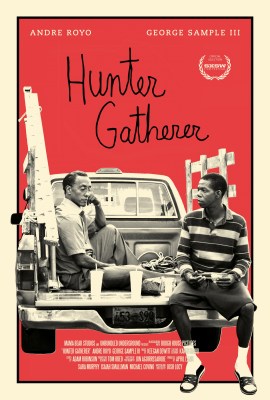
hunter-gatherer-posterHunter Gatherer starring Andre Royo (The Wire, Empire) debuted at the 2016 South by Southwest Film Conference and Festival to rave reviews. The film was written and directed by Josh Locy—a Bryan College grad—and Chattanooga’s Mama Bear Studios served as the executive producer, along with Unbundled Underground in association with Rough House Pictures.

National distributors The Orchard acquired digital rights for the film. Rough House Pictures will release the film in New York City and Los Angeles beginning Nov. 18, with a theatrical rollout to follow.

Hunter Gatherer follows Royo in his portrayal of Ashley Douglas, a man recently released from prison who finds out that everyone and everything has moved on without him. He attempts to win back his girlfriend, enlisting the aid of a fellow loner (George Sample III) as a business partner.

Royo garnered the Jury Award at SXSW for Best Actor.

Read a previous Nooga.com story on Hunter Gatherer here.

Isaiah Smallman, a producer of the film and co-founder of Chattanooga’s Mama Bear Studios, said a screening of the film in Chattanooga will take place near the beginning of 2017. In the meantime, he said the deal with The Orchard will open the door to new possibilities for the company.

“Since winning the award at SXSW, we’ve been playing lots of different festivals around the country, but we still didn’t know exactly what the next step was for distribution,” he said. “We had several small offers, but none of them were really all that enticing because you often end up sacrificing a huge percentage of the upside without much upfront money or hustle from the distributor to justify it.”

Smallman said he and the other producers—April Lamb, Sara Murphy, Michael Covino and Locy—thought about self-distributing the film, but that would take an enormous amount of time and relationship building to pull off.

“We couldn’t be more thrilled about landing distribution with an awesome company like The Orchard,” Smallman said. “They have all the right relationships with places like Netflix, Amazon, iTunes, cable VOD and all the other buyers that we will be targeting. And they know a lot about getting great small films like ours to the audiences who will love them.”

The film will be released on digital platforms in January. Hunter Gatherer is the first film produced by Mama Bear Studios from start to finish. Smallman said he hopes to continue championing Chattanooga as a film town.

“Cine-Rama and the Chattanooga Film Festival are doing an amazing job of creating a place for independent films to be screened, but we’re hoping in the next few years to make Chattanooga a destination for super-successful writers, directors and producers as well,” he said. “We’re constantly repping Chattanooga to people … and encouraging them to make their home base here, even if they might still have to produce their films elsewhere from time to time.”

Mama Bear Studios currently has 15 projects in various stages of completion, according to Smallman. Projects include two small indie drama films, a comedy TV pilot, two thriller features, two romantic comedies and more.

The studio previously released Low and Behold, a partnership with the Sundance Institute’s #ArtistServices program. The film follows the story of a young insurance claims adjuster in post-Katrina New Orleans who risks his job to help a local man find his dog.

Mama Bear Studios was founded by Smallman and his business partner, Drew Belz.

aaeaaqaaaaaaaaqlaaaajdm5zjyxzdbjlwy0yzytngfmzi1imgnklwnmzdzlyznjmdling

(Source: http://www.nooga.com)