Tag Archives: marketing

VIZIO and the American Film Institute Collaborate to Showcase the Intersection of Art and Technology at AFI FEST 2016

RVINE, Calif., Nov. 11, 2016 /PRNewswire/ — VIZIO, Inc. announced today its third-year of collaboration with the American Film Institute, highlighted by a sponsorship of AFI FEST 2016 presented by Audi. With a joint mission to celebrate the art of filmmaking, the partnership between AFI and VIZIO connects cinema and technology to enhance the home entertainment experience. This year, VIZIO will showcase its complete VIZIO SmartCast line-up, including the VIZIO SmartCast™ P-Series™ Ultra HD HDR Home Theater Display collection, in the VIZIO Lounge at The Hollywood Roosevelt during the festival. The displays feature High Dynamic Range with Dolby Vision™ and HDR10 content support, culminating in a cinema-like entertainment experience at home.

VIZIO will host the Special Closing Night Gala Presentation of AFI FEST, featuring a red carpet celebration and screening of Patriots Day, directed by Peter Berg.  The film stars Mark Wahlberg, Melissa Benoist and Michelle Monaghan and depicts an account of Boston Police Commissioner Ed Davis’ actions in the events leading up to the 2013 Boston Marathon bombing and the aftermath, which includes a city-wide manhunt to find the terrorists behind it. The Special Closing Night Gala Presentation of Patriots Day will take place at the TCL Chinese Theatre in Hollywood on Thursday, November 17 at 7:00pm.

(Excerpt from release http://www.prnewswire.com)

The AFI FEST Interview: Peter Bogdanovich on Orson Welles’ CITIZEN KANE

Ranked at the top of AFI’s list of the greatest films of all time, Orson Welles’ portrait of newspaper tycoon Charles Foster Kane (a thinly veiled stand-in for William Randolph Hearst) is brilliant, blistering and beautiful. The story moves through the tragedies and triumphs of Kane’s life, from a happy childhood in snowy Colorado cut short; to a towering ascendance in the newspaper industry; a dysfunctional marriage with a tone-deaf wife he tries desperately to mold into a great opera singer; and a cloistered existence in his palatial home, Xanadu. Welles’ superb cast, many from his own Mercury Theatre, is made up of some of the most vibrant stars of the 1940s, including Joseph Cotten, Agnes Moorehead, Everett Sloane and, of course, Welles himself, who perfectly captures the aging Kane with a deft mix of sensitivity and ferocity. Gregg Toland’s innovative cinematography is now the stuff of legend, putting the deep focus technique on the map with shot after shot of crisply layered foreground and background images. If this is your first or 100th time seeing this landmark film, make sure to catch it at AFI FEST 2016 in a restored DCP, courtesy of Warner Bros. Classics.

The screening will be followed by an AFI Master Class with Welles expert Peter Bogdanovich, who spoke to AFI about CITIZEN KANE ahead of AFI FEST.

AFI: CITIZEN KANE turns 75 this year. Why do we still talk about it today?screen-shot-2016-11-09-at-9-33-57-pm

Peter Bogdanovich: It’s a landmark film, not just Orson Welles’ best film but a masterpiece. It was a masterpiece then in 1941 and still is. It’s a brilliant symphony, and is exciting to watch. Everything about it is dynamic, and that very dynamism is the camouflage for the extremely sad story Welles tells. You’re not moved to tears by CITIZEN KANE really, except as a kind of thrillingly done film.

AFI: What was it like seeing the film for the first time, in 1955?

PB: I was 16, and I was quite bowled over by it. I thought it was brilliant. I’ve seen it, I think, 10 or 12 times since then. I saw it the other day on television briefly. You can’t resist it. Everything about it is brilliant. The performances are amazing, and Orson himself, his performance is extraordinary. People spend so much time talking about the direction that they don’t notice how brilliant that performance is. It was everybody’s first film, which makes it even more extraordinary. It’s amazing to realize that all those people had never made a movie before.

AFI: Would you say that much of contemporary cinema is indebted to the style and direction of CITIZEN KANE?

PB: It’s funny because it’s not that extraordinary in terms of the technique. He used a pretty simple technique in many ways. A lot of long takes. The scene goes on, and you don’t notice how long it goes without a cut. That wasn’t that common, though a lot of filmmakers in that period did do shots like that, but not to the degree that Orson did. Years later, I said to him, “What do you think is the difference between doing a scene in one shot or in many cuts?” He said, “Well, we used to say that’s what distinguished the men from the boys.” The whole thing, the construction of the story, the flashback structure — it wasn’t any one thing that was unusual. It was the whole production. It’s a very depressing story. There’s not a shred of hope at the end. It’s all very downbeat, but the style of the film, the way he made it, the overlapping dialogue, the flashback structure, some surprising camera angles — the whole thing made a tremendous impression if you were sensitive to what he was doing.

AFI: How was the film received in 1941, versus years later when you first saw it?

It got great reviews in its original release, except in The New York Times. [Critic] Bosley Crowther didn’t care for it much. He thought the central character was shallow. It couldn’t play in a lot of theaters because the Hearst organization had blacklisted it. So, as Orson said, they couldn’t make money if they couldn’t get a theater. That’s why it failed. Orson suggested they open it in tents around the country. It was not shown for many years, but it was brought back to New York in 1955, to a small art house, and that’s where I first saw it. That’s when it started to gain this reputation.

READ MORE: 15 Facts About Orson Welles’ CITIZEN KANE — America’s Greatest Film Turns 75

screen-shot-2016-11-09-at-9-32-51-pm

AFI: You had a close relationship with Welles for many years. How did he feel about the film?

PB: He didn’t want to talk about it much. Orson did THE DAVID FROST SHOW [as guest host] in 1970  and I was there. He had a guest, [author] Norman Mailer, and after the show they went to Frankie and Johnnie’s in Manhattan and I joined them for dinner. We sat down and Norman said to Orson, “There’s a great shot in CITIZEN KANE…” and Orson said, “Oh, no, Norman, not CITIZEN KANE.” Norman looked perplexed for a minute and then said, “Oh, yeah, I guess it’s like me and ‘The Naked and the Dead,’” meaning that both Norman and Orson were plagued by the notoriety of their first effort. It was the only picture that anybody ever talked to him about, and he was irritated about it because he’d made other pictures that nobody saw. It depressed him actually. It was a struggle to get him to talk about KANE. Reluctantly he talked about it; I would trick him into it sometimes.

AFI: When Welles began CITIZEN KANE, did he know he was making a masterpiece?

PB: I couldn’t say. I think he thought he was making a pretty good picture. The thing about CITIZEN KANE is it’s very cold, and there are moments that are touching, but they’re few and far between. It’s not an emotional picture. KANE is relentlessly negative, but what makes it exciting is the way it’s told, and the way it’s acted and the way it’s done, really. It’s almost as though he’s saying that it’s only through art that we can really survive. The artistry of the picture is what gives it its lift, because if you examine the story, it’s pretty bleak.

AFI: How has CITIZEN KANE influenced your own seminal work?

PB: I can’t say I was influenced by CITIZEN KANE directly. I was influenced by Orson’s thinking, and things he said to me. But I wasn’t particularly influenced by the film. I wasn’t influenced by the technique of it as much as by the youthful spirit of it. I was influenced by a general feeling of fearlessness. CITIZEN KANE was nominated for Best Picture, but what won was HOW GREEN WAS MY VALLEY by John Ford, an emotional film about the dissolution of a family. CITIZEN KANE is a cold film about the dissolution and tragedy of a man who loses everything, including his soul.

CITIZEN KANE screens AFI FEST on Sunday, November 13, at 1:30 p.m.

screen-shot-2016-09-24-at-3-54-58-pm

(Source: http://www.blog.afi.com)

Broad variety of films in annual Boston Jewish Film Festival

Posted by Larry Gleeson

On a day that honors Veterans, the Boston Jewish Film Festival will screen an inspirational documentary about fighters pursing peace.

“I often ask myself where are the peacemakers,” said Jaymie Saks, executive director of the film festival. “This film celebrates people on both sides of the Israeli-Palestinian conflict who are able to overcome their differences to come together for peace.”

Featuring former Israeli soldiers and former Palestinian political prisoners, “Disturbing the Peace” is one of 38 documentary, feature and short films that will be shown through Nov. 21 at theatres in Boston, Cambridge and the suburbs.

In its 28th year, this year’s film festival has a strong focus on films about prejudice, anti-Semitism and justice, thanks to a $100,000 grant from the Cummings Foundation. Identified as part of the Cummings Social Justice Film Series, these films reveal personal, social and political change in a troubled world.

Films on these topics have always been a crucial piece of our festival, but this time we had our eye out specifically for films that touch on these subjects,” Saks said.

Selecting films from Israel, Argentina, Hungary, Poland, France, Germany and other counties, the festival gives audiences opportunities to hear directors and actors speak and answer questions at screenings. About 12,000 people are expected to attend.Many films have a lighter focus, such as “On the Map,” the story of the 1977 Israeli basketball team that beat the Soviets and won the European Cup. It’s appropriately shown just outside Gillette Stadium at Showcase Cinema in Patriot Place.

“It’s called the “Miracle on Hardwood,” Israel’s version of the “Miracle on Ice,” Saks said. “They were the underdog and it’s an exciting story not just about basketball but about Israel.”

Winning awards at the 2016 Cannes Film Festival and the Jerusalem Film Festival, the comedy “One Week and A Day” is about a father who copes with the death of his son by smoking his medical marijuana.

And the film “The Last Laugh” features Mel Brooks, Sarah Silverman and other comedians exploring the Jewish sense of humor and will be followed by a conversation with the director and Robert Edwards, author of “The Big Book of Jewish Humor.”

The festival also has series on family friendly films, Israeli television hits, and short works about innovative risk-takers.

screen-shot-2016-11-09-at-2-05-44-pm
A scene from Freedom to Marry

In the Cummings Social Justice Film Series, the documentary “Freedom to Marry” tells the story of the long fight for marriage equality, specifically in Massachusetts. In another film on inequality, “Sand Storm,” a young Bedouin woman in Israel struggles to define herself within her traditional family.

Many feature and documentary films offer a new look at the Holocaust. “Cloudy Sunday” tells the little-known story of what happened in Greece, through a fictionalized love story, and another, “A Grain of Truth” is a murder-mystery that reveals the history of Polish anti-Semitism.

“It’s important to keep talking about the Holocaust and anti-Semitism in new ways with a contemporary lens,” Saks said.

That is literally what happens in “Germans and Jews,” a documentary about the evolution of facing the truth about the Holocaust.

Other films reveal unexpected heroes and villains, as truths get revealed about the roles people played in the Holocaust.

In the feature “Origin of Violence,” a young French professor has his world turned upside down when he discovers a truth about his father while on a research trip to Buchenwald. In the documentary, “Keep Quiet,” an anti-Semitic Holocaust denier radically changes when he discovers his grandmother was an Auschwitz survivor. And in the documentary “Kozalchic Affair,” a Jewish collaborator turns out to be more complicated than he seems.

Revealing deep courage and conviction, the documentary “Karski and the Lords of Humanity” is the story of a Polish underground courier, who risked his life to visit the Warsaw Ghetto and a Nazi transit camp in order to deliver eyewitness accounts to the Allied powers. As described in the festival program guide, “His testimonies are some of the most important accounts we have today – and his efforts stand as an example of heroism in the face of atrocity.”

(Source:www.milforddailynews.com)

Jackie Chan reflects on 50-year career and honorary Oscar

Posted by Larry Gleeson

By Sandy Cohen, Ap Entertainment Writer

LOS ANGELES (AP) — As an action star, Jackie Chan never expected to get an Oscar.

So he considers receiving an honorary Academy Award from the film academy’s Board of Governors his proudest professional achievement.

Chan will accept his Oscar statuette Saturday at the eighth annual Governors Awards. Film editor Anne Coates, casting director Lynn Stalmaster and documentarian Frederick Wiseman are also receiving honorary Academy Awards, which recognize lifetime achievement and contributions to the film industry.

“I never imagined that I’d receive such an award,” Chan said. “I still remember my very first proudest moment was when I received an award for stunt choreography. At that time, I didn’t know much about directing, I just knew how to do action and fighting sequences and stunts. Receiving this honorary award has raised my feelings to another level.”

The 62-year-old writer, director, producer and actor reflected on his career in an email interview with The Associated Press from his home base in Hong Kong. He plans to be in Los Angeles to accept his award in person.

AP: What was your most challenging film to make and why?

Chan: “Rumble in the Bronx” had a lot of action choreography, fighting sequences, and dangerous stunts. In “Operation Condor” I filmed in extreme temperatures of over 40 degrees Celsius in the desert. I had a near-death accident while doing a stunt in “Armor of God.” In “Rush Hour,” I found the English dialogue most challenging.

AP: How does making movies in Hong Kong differ from Hollywood’s approach to film?

Chan: I find Hollywood’s approach to film production very systematic and organized. Of course, being organized is a good thing, but sometimes I feel restrained within set rules. Hong Kong filmmaking is more dynamic because things can be changed on the set while we’re still filming. It’s more flexible and encourages creativity, and if we think of something that might work, we try it right away.

AP: What changes in the industry have been most surprising to you?

Chan: Because I’ve been in the film industry for over 50 years, the most significant change I’ve noticed is the change from using 35mm film to digital technology, and even 3D filming. The improvement of technology has changed how films are now made. What we used to use back then is now part of history. I’m still fascinated by digital technology and the amount of work that can be done in post-production with CG (computer-generated) effects.

AP: What has been was your most exciting Hollywood experience?

Chan: All my experiences in Hollywood have been interesting and exciting. I’ve learned so many new things in Hollywood, made new friends and family, such as my American Chinese brother Brett Ratner. I’ve had many great memorable moments while working in Hollywood. I guess the most fun was making the “Rush Hour” series.

*Featured photo: Photo: Lai Seng Sin, AP

(Source: http://www.thehour.com)


FILM REVIEW: R100 (Matsumoto, 2013): Japan

Reviewed by Larry Gleeson. Viewed during the AFI Filmfest 2013.

“R100,” directed by Hitoshi Matsumoto, half of the Japanese comedic phenomenon, Downtown, is an absurdist Japanese comedy about an average, everyday family man, Takafumi Katayama, played by Nao Ohmori, leading an average everyday hum-drum, existence who decides one day to join a rather unusual club, a BDSM (Bondage and Discipline Sadism and Masochism) club surreptitiously named “Bondage.” Bondage has some rather interesting rules. For example, all activities must take place outside the club in real life settings, the customers must be submissive at all times and no touching allowed. The “masochist manifesto” promises to lead to “a revelation of the self.” Furthermore, the club” membership is for one year and once entered into cannot be cancelled under any circumstances.

True to its original roots, the club and its employees, a slew  of dominatrices known as “Queens” begin a wide range of orchestrated hi-jinks  upon an unwitting Mr. Takafumi Katayama. He is punched, kicked, whipped until achieving an erotic release visualized by a rippling effect upon Mr. Katayama’s aural body.

At first the practices and the situations have a fairly unobtrusive element but it doesn’t take long before they penetrate Mr. Katayama’s inner circle of family and employer.  The public humiliations and the physical abuse wear heavily on Mr. Katayama as his employer witnesses a particularly offensive restroom scene against the submissive Katayama. The line is crossed when the Bondage bounds Mr. Katayama’s young son.

Deciding enough is enough, Katayama makes the call to terminate his membership. The club, however, has other ideas and begins sending very dangerous and bizarre characters to eliminate Katayama. Here the storyline goes into warp drive with characters and situations passing through absurdity into irrationality. One character, Queen Big Mouth, devours another human being in a snake-like fashion. Another scene shows a group of businessmen producers exiting the theater discussing what they’ve just seen trying to make sense of the director’s over-the-top choices. The film the audience is seeing becomes a rough cut film in post-production. All the while, the screen depiction of a filmmaker director at age 100 exploring his sexual fantasies in a movie theater through a film underscores the absurdity of the  Japanese social mores of acceptable behavior. Point in case, when Mr. Katayama tries to report the club’s unlawful sexual activities to the police, he’s mocked and dismissed handily for getting what seems to be too much of a good thing.

In my opinion, Matsumoto is just throwing the kitchen sink at the audience landing bits and pieces trying to hit the mark with as many patrons as possible. He blends aspects of film noir, slapstick, zen and S&M. It’s not so much quality as it is quantity. Seemingly, being present and in the moment is a requirement for enjoying Matsumoto’s midnight submission, “R100.” Admittedly, I found many of the scenes quite funny and found myself laughing joyously. I also found many scenes that weren’t so funny and found myself scratching my head. So I guess it stands to reason (or does it?) why the show won the Midnight Category at the Toronto International Film Festival. Unfortunately for me, I saw the film on a Monday afternoon, Veterans Day to be more specific. Warmly recommended for mature audiences.

The AFI FEST Interview: THE EYES OF MY MOTHER Director Nicolas Pesce

Beautifully lensed in black and white, Nicolas Pesce’s debut feature THE EYES OF MY MOTHER immediately immerses the viewer in its Gothic atmosphere with a jarring act of violence that disrupts the seemingly bucolic life of a Midwestern Portuguese-American family. Francisca, the young daughter of a farmer and his surgeon wife, carries the effects of witnessing this terrible event into adulthood and perpetuates the cycle of violence to a chilling degree. Played with magnetic intensity by Kika Magalhães, the character of Francisca provides an uncommonly personal look at psychosis. While Pesce never pretends to understand or explain the roots of her actions, by planting the film squarely in Francisca’s point of view, he gives us an uncomfortable yet enthralling experience with this unique horror film.

AFI spoke with Pesce about the film.

Nicolas Pesce
Nicolas Pesce

AFI: This is an austere, minimalist horror movie fable told from the point of view of an increasingly extreme serial murderer. How did you make your protagonist sympathetic?

Nicolas Pesce: There was a constant balance we all had to maintain to tread this line between sympathy and disgust. For us, it was all about showing the audience every aspect of the character’s life, good and bad. You may not agree with Francisca’s actions, but a glimpse of understanding helps to make the character more sympathetic. The film is not about an evil woman. It’s about a lonely woman, and that’s how we always handled it.

AFI: Why shoot in black and white? It’s interesting that, though there are period elements in the film, the time and place are never immediately clear. 

NP: The black and white instantly tells the audience what type of horror movie is in store for them. It puts the film into a different lexicon of movies, and whether you’re familiar with American Gothic or not, the visual style creates a moody atmosphere that’s an extension of the main character’s psyche.

AFI: While THE EYES OF MY MOTHER is indeed disturbing, much of the violence takes place off-screen. Why?

NP: If I showed the violence on screen, you could look away and protect yourself from the imagery. But if I only give you a hint as to what’s happening, you’re mind fills in all the gaps, and suddenly without even trying, you’ve got this horrible image in your mind’s eye, and you can’t look away from that. It’s about making the audience scare themselves rather than me doing it for them. We’re all the best at scaring ourselves in exactly the way that scares us. I set up the scare, and you do the rest.

AFI: You wear your influences on your sleeve — David Lynch, David Cronenberg, Takashi Miike and even Michael Haneke. What attracts you to this kind of extreme filmmaking? 

NP: All those filmmakers have one very important thing in common. They have the ability to make the most banal, ordinary thing frightening. Whether it’s the actor’s performance or the music or the movement of the camera work, these filmmakers manage to unsettle in really abstract ways, manipulating the audience’s mood unknowingly and in oddly ordinary ways.

AFI: THE EYES OF MY MOTHER was the first project of Borderline Presents, the collective of established indie directors Josh Mond, Sean Durkin and Antonio Campos. How did this collaboration begin?

NP: I met Josh Mond while he was in post on his film JAMES WHITE. I helped him edit for a few weeks, but we became fast friends. I was soon welcomed into the family and they helped me put this film together. They saw a like-minded collaborator in me, but also a filmmaker who had a different voice than the three of them. They oversaw the project every step of the way from prep to production to post. Their experience, advice and opinions were invaluable. To have such brilliant filmmakers, whom I respect so much, looking out for the good of the film was more than I could ever ask for. They did everything in their power to help me make the best possible movie I could make, always trying to find the core of what I was trying to do, and getting the best version of it out of me.

THE EYES OF MY MOTHER screens at AFI FEST 2016 on Tuesday, November 15 and Wednesday, November 16 as part of the festival’s American Independents section.

(Source:www.blog.afi.com)

FILM CAPSULE: Nebraska (Alexander Payne, 2013): USA

By Larry Gleeson.

Viewed during the AFI Filmfest 2013.

Nebraska, written by Bob Nelson, is the latest film from two-time Oscar winning screenwriter and acclaimed director, Alexander Payne (The Descendants, Sideways, About Schmidt, Election, Citizen Ruth). Nebraska, takes us on a 750-mile black and white journey from Billings, Montana to Lincoln, Nebraska. Along the way, an emotional healing occurs amid some exceptional dialogue and strong character development.

The character arc of the protagonist, Woody Grant, an elderly man with a touch of dementia, played by veteran journeyman and Hollywood legend, Actor Bruce Dern, an elderly man with a touch of dementia, is fully realized, in my opinion, as we see his willingness to fight for what is his and his ultimate acceptance of his lot in life.  And, much like his 2004 Sideways,  Payne utilizes the road trip structure to bond the two main characters and he also revisits the cantankerousness of character eccentricities as in his 2002 film About Schmidt. 

Nevertheless, it’s the performance of Dern as Woody Grant that makes the film what it is. Throughout his career, Dern has played a plethora of despicable characters and lays a claim to being the only actor to kill Hollywood legend, John Wayne on screen  in The Cowboys, (1972). Before the screening at the Graumann’s Chinese TCL Theater Mr. Dern was given a Hollywood tribute. Quentin Tarantino gave an introduction to the “acting national treasure.”

The film opens with Woody walking on the shoulder of a well-traveled highway. He tromps up towards  the camera and before long the police arrive and escort Woody home to his antagonistic wife Kate, played by June Squibb. She’s at wits end with Woody’s antics and his adamant, persistent posture in going to Lincoln to get his million dollar prize money which turns out to be nothing more than a Publisher’s Clearinghouse type of sweepstakes notification enticing the recipient to order magazine subscriptions. Kate unable to deal with her husband calls upon her sons, David, a local electronics salesman played very convincingly by Will Forte,  and Ross, a back-up local newscaster, played by Bob Odenkirk. As siblings often do, the two disagree on their father’s situation with David, recently put off by his girlfriend who decided to move out leaving David by his lonesome, seizing the moment to spend time with his dad by driving him to Lincoln so Woody can collect his million dollars but also so he can get to know his dad again.

Along the way the two make a stop after an accident in the town where Woody grew up complete with the relatives and locals who stayed and who believe Woody has become a millionaire. Mr. Payne born in Omaha, Nebraska paints quite a caricature of the local populace. The small town is believable enough. Yet, the characters that inhabit the town might be a stretch. For example, Woody’s two nephews draw a strong resemblance to Disney’s Tweedle Dee and Tweedle Dum. Adding into the mix is Kate Grant’s full on personality, an overly harsh, yet comedic, belittling better-than-thou Catholic, in a most memorable graveyard scene. On the other hand, Stacy Keach who plays Woody’s former business partner, Ed Pegram delivers with the utmost believability the dark side of a partnership/friendship when he believes Woody’s come into some easy money.

Overall, Alexander Payne delivers a film in black and white that not only entertains but also delivers a visual portrait of a small Midwestern town in an economic downturn, bypassed by mainstream America while showcasing the sense of loneliness and the eccentricities it has caused.

FILM REVIEW: The Wind Rises (Miyazaki, 2013): Japan

Reviewed by Larry Gleeson. Viewed during AFI Filmfest 2013.

The Wind Rises, is a new animated, full-length, feature film from legendary Japanese animation director, Hayao Miyazaki. Miyazaki announced at this year’s Venice Film Festival this will be his last film. In 1997 his Princess Mononoke, was the highest revenue grossing film in the history of Japan at the time of its release and it also received the Japanese equivalent of an Academy Award for Best Film. Miyazaki is also well known for the films Spirited Away, (2001) and Howl’s Moving Castle, (2004) In 2003 Miyazaki received an Oscar for Best Animated Feature for the film Spirited Away.

His films have garnered international acclaim from critics and have provided Miyazaki public recognition within Japan. His films are known for compelling characters, engaging plots and eye-catching animation. Remarkable by today’s standards his films allow no more than 10% of the footage to come from computer animation.

In The Wind Rises, Miyazaki tells the story of Jiro Horikoshi, a real-life aeronautical engineer who designed fighter aircraft in Japan during WWII. The film opens with the young Jiro fantasizing of his plane flying above his hometown. As I watched the scene unfold, a rather powerful ominous feeling surfaced as I was reminded of Leni Riefenstahl’s opening scene from the Nazi propaganda documentary, Triumph of the Will. Nevertheless the early moments of the film are very heartwarming as Miyazaki chooses to highlight Jiro’s youth as an older brother to a delightfully spirited younger sister in a single parented household run by their kind and caring mother.

windrises-master675

Jiro’s passion throughout the film is making good airplanes. Jiro’s daydreaming, which he does a few times during the story’s arc. Admittedly, several of my favorite moments are Jiro’s imaginings with Count Caproni, a larger-than-life mustachioed Italian airplane designer who mentors Jiro with playful and good-natured ribbing, that provide insight into  Jiro’s creative passion. Jiro finds his inspiration through such moments and Miyazaki makes space for them throughout the film.

The story is partially based on Tatsuo Hori’s 1938 novelette, “The Wind Has Risen.” Miyazaki’s animation provides beautiful plush scenery with Monet-like backdrops and landscapes providing striking visuals while creating a powerful nostalgia for a simpler time lightly brushing over the complications of war and economic depression. With such a breathtaking mise-en-scene it’s no wonder a young Jiro falls in love with the  young woman he saved during a traumatic, historic earthquake a few years before (the 1923 Great Kanto Earthquake).

In direct juxtaposition to this frantic and rather manic scenario in the aftermath of the earthquake, young Jiro finds himself vacationing in a rural setting enjoying the greenery and the soft “rising” winds complete with majestic and billowing, flowery clouds when he coincidentally crosses paths with the beautiful girl he saved from the earthquake as she paints poetically on a hillside overlooking the spectacular countryside.

The Wind Rises, is a very light-hearted, entertaining film. The film focuses pretty much exclusively on the protagonist, Jiro, as an idealistic engineer whose primary purpose in life is to make planes. Granted, he falls in love and rubs elbows with German plane builders during WWII. Yet, WWII and the social unrest after the  Great Kanto Earthquake are left virtually untouched. Tellingly, Jiro’s concern at the end of the war was over the planes that didn’t come back. Nevertheless, I wholeheartedly recommend the film for children and for adults with a penchant for Monet-esque visuals.

maxresdefault1

Chattanooga-produced film ‘Hunter Gatherer’ lands national distribution deal

Posted by Larry Gleeson

By Sean Phipps

A film produced in Chattanooga will receive a national theatrical release following a distribution deal.

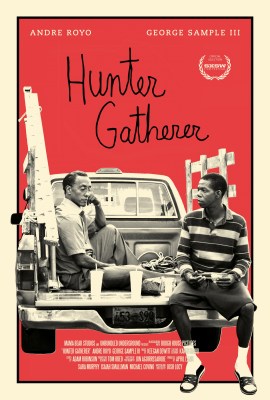
hunter-gatherer-posterHunter Gatherer starring Andre Royo (The Wire, Empire) debuted at the 2016 South by Southwest Film Conference and Festival to rave reviews. The film was written and directed by Josh Locy—a Bryan College grad—and Chattanooga’s Mama Bear Studios served as the executive producer, along with Unbundled Underground in association with Rough House Pictures.

National distributors The Orchard acquired digital rights for the film. Rough House Pictures will release the film in New York City and Los Angeles beginning Nov. 18, with a theatrical rollout to follow.

Hunter Gatherer follows Royo in his portrayal of Ashley Douglas, a man recently released from prison who finds out that everyone and everything has moved on without him. He attempts to win back his girlfriend, enlisting the aid of a fellow loner (George Sample III) as a business partner.

Royo garnered the Jury Award at SXSW for Best Actor.

Read a previous Nooga.com story on Hunter Gatherer here.

Isaiah Smallman, a producer of the film and co-founder of Chattanooga’s Mama Bear Studios, said a screening of the film in Chattanooga will take place near the beginning of 2017. In the meantime, he said the deal with The Orchard will open the door to new possibilities for the company.

“Since winning the award at SXSW, we’ve been playing lots of different festivals around the country, but we still didn’t know exactly what the next step was for distribution,” he said. “We had several small offers, but none of them were really all that enticing because you often end up sacrificing a huge percentage of the upside without much upfront money or hustle from the distributor to justify it.”

Smallman said he and the other producers—April Lamb, Sara Murphy, Michael Covino and Locy—thought about self-distributing the film, but that would take an enormous amount of time and relationship building to pull off.

“We couldn’t be more thrilled about landing distribution with an awesome company like The Orchard,” Smallman said. “They have all the right relationships with places like Netflix, Amazon, iTunes, cable VOD and all the other buyers that we will be targeting. And they know a lot about getting great small films like ours to the audiences who will love them.”

The film will be released on digital platforms in January. Hunter Gatherer is the first film produced by Mama Bear Studios from start to finish. Smallman said he hopes to continue championing Chattanooga as a film town.

“Cine-Rama and the Chattanooga Film Festival are doing an amazing job of creating a place for independent films to be screened, but we’re hoping in the next few years to make Chattanooga a destination for super-successful writers, directors and producers as well,” he said. “We’re constantly repping Chattanooga to people … and encouraging them to make their home base here, even if they might still have to produce their films elsewhere from time to time.”

Mama Bear Studios currently has 15 projects in various stages of completion, according to Smallman. Projects include two small indie drama films, a comedy TV pilot, two thriller features, two romantic comedies and more.

The studio previously released Low and Behold, a partnership with the Sundance Institute’s #ArtistServices program. The film follows the story of a young insurance claims adjuster in post-Katrina New Orleans who risks his job to help a local man find his dog.

Mama Bear Studios was founded by Smallman and his business partner, Drew Belz.

aaeaaqaaaaaaaaqlaaaajdm5zjyxzdbjlwy0yzytngfmzi1imgnklwnmzdzlyznjmdling

(Source: http://www.nooga.com)

La La Land ‘Dreamers’ trailer released

If there’s only one movie you can see this year make it La La Land. With an early limited release scheduled for December 9th in Los Angeles and New York followed up by a nation-wide roll-out, put on your seat belts for this emotional roller-coaster.

Brilliantly conceptualized from the Damien Chazelle team, La La Land tells the story of two young Los Angeleans, Mia and Sebastian seeking fulfillment through the entertainment industry. Mia is an aspiring actress and Sebastian is a classical jazz pianist who doesn’t believe in compromising his convictions for anyone or anything. Mia, on the other hand, can’t seem to finish an audition without being interrupted. It’s only when their paths cross and the stars align do these two traverse the path of fulfillment.

As performances go, Emma Stone as Mia delivers an all-encompassing performance delicately balancing the drama of her personal life with an expressiveness she’s honed over the last twelve years as an actress in Hollywood.  Ryan Gosling as Sebastian delivers an understated performance that matches his character. Together, the two have made cinematic magic in the spirit and image of Ginger Rogers and Fred Astair, Gene Kelly and Debbie Reynolds.

La La Land is a film for the ages. Exceptional camera work, ardent choreography, exquisite production design, catchy, melodic musical score, strong direction and over-the-top performances catapult La La Land to the top of the year’s best films. La La Land is the stuff dreams are made of.