Tag Archives: Filmmaking

QCinema fest off to good start with controversial drama

Posted by Larry Gleeson

By Marinel R. Cruz

The screening of Park Chan-wook’s controversial film, The Handmaiden, about a fragile heiress who falls in love with her maid, opened on Thursday the 2016 QCinema International Film Festival, which will run until Oct. 22.

“I’ve watched the film before, but it has a different effect when seen on the big screen,” QCinema festival director Ed Lejano told the Inquirer shortly after the opening gala at the Gateway Mall

Korean director Park is known for making films with dark humor.
The Handmaiden (Agassi) is set in Korea during the Japanese occupation in the 1930s. Sookee (Kim Tae-ri) is hired by a conman, also called the Count (Ha Jung-woo), to become the maid of Lady Hideko (Kim Min-hee), a Japanese heiress living in a secluded estate with her uncle (Cho Jin-woong), who is plotting to marry her for her wealth.
The Count also wants to marry the heiress for her money, but his plan is foiled when Lady Hideko falls for Sookee.

The erotic thriller premiered at the 2016 Cannes Film Festival, where it was nominated for Palme d’Or and won for Ryu Seong-hie the Vulcan Award for best production design.

“Director Park is no stranger to QCinema,” said Lejano when he introduced the film. In the 2015 QCinema, Park’s “vengeance trilogy,” consisting of Sympathy for Mr. Vengeance (2002), Oldboy (2003) and Lady Vengeance (2005), was screened.

This year’s closing film is Louie Ignacio’s award-wining drama Area, starring Ai-Ai de las Alas.

screen-shot-2016-10-17-at-7-44-03-pm

“We provide opportunities for more artists to showcase their talent through this annual festival,” said Quezon City Vice Mayor Joy Belmonte in her welcome address.

The finalists in the Circle Competition include Prime Cruz’s Ang Manananggal sa Unit 23B, Howard “HF” Yambao’s Best. Partee. Ever, Bagane Fiola’s Baboy Halas: Wailings in the Forest, Kristian Cordero’s Hinulid (The Sorrows of Sita), Victor Villanueva’s Patay na si Hesus (God is Dead), Roderick Cabrido’s Purgatoryo and Sheron Dayoc’s Women of the Weeping River.
screen-shot-2016-10-17-at-7-42-47-pm
The entries for #QCShorts are Joshua Joven and Kaj Palanca’s Contestant #4, Aedrian Araojo’s Hondo (Deep), Eduardo Dayao’s If You Leave, Gabrielle Tayag’s Pagdating, Inshallah Montero’s Papa’s Shadow, Victor Nierva’s Sayaw sa Butal (Coin Dance) and Janus Victoria’s Viva, Viva Escolta.
screen-shot-2016-10-17-at-7-41-15-pm

QCinema is paying tribute to Filipino director Mike de Leon by screening some of his works (at Robinsons Galleria) and Polish auteur Krzysztof Kieslowski (at Trinoma and UP Town Center). Other venues are Robinsons Galleria and Gateway Mall.

When to speak and when to shut up: the art of a Japanese ‘benshi’

Posted by Larry Gleeson

By Alisa Yamasaki

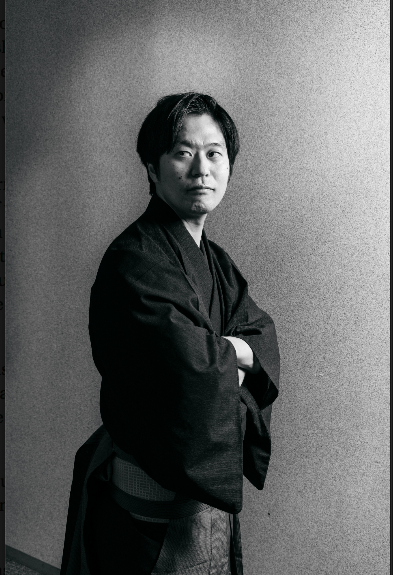
The silent films screened in Japan from the 1920s to ’40s were never completely silent. Katsudo-shashin benshi, or benshi for short, delivered live narration that provided everything an audience might need to appreciate a film — from commentary to translation. Derived from Japan’s many narrative art forms, benshi were an effective way to introduce cinema to Japanese audiences.

Though the era of silent films is gone, the art of narration lives on through a handful of professionals. Ichiro Kataoka is one of the country’s few active benshi, and he will provide narration for Tomiyasu Ikeda’s 1926 classic “Chushingura” at the Tokyo International Film Festival’s Special Night Event at Kabukiza Theatre. The event will also feature narration by guest benshi Ichiro Furutachi and a special performance by kabuki actor Onoe Kikunosuke.

screen-shot-2016-10-17-at-4-33-49-pm
Modern day benshi, Ichiro Kataoka (Photo credit: Dan Szpara)

“I had known about benshi but I thought that it was a long lost profession,” Kataoka tells The Japan Times. “When I was 18, I happened to attend a benshi performance by Midori Sawato and it made me want to learn about being one.”

At age 38, Kataoka has built an impressive career out of the art. The professional benshi has narrated more than 300 films and has been invited to perform at events around the world.

“When I perform overseas, I’m asked to narrate classic Japanese films, but I do films from any country: Japanese, European, American, Chinese, anything,” Kataoka explains. Are non-Japanese films more challenging to narrate than domestic ones?

“There’s a specific pacing with classic Japanese films that makes it easier for benshi, since Japanese silent film directors were aware of the benshi and filmed their work with them in mind. With foreign cinema, mostly European, the director tries to convey as much as possible through the cinematography,” he says.

“At the end of the day whether it’s Japanese or not, the film I’m narrating is old. But I’m a modern person and my audience comprises modern people, so I need to constantly think about how to communicate the old film from one modern person to another — what themes to bring up and what scenes to emphasize — in order to present it as a terrific piece.”

While Kataoka has a compelling tone and presence to him, he says it’s crucial for benshi to understand they don’t have the leading role.

“A good benshi always remembers when to shut up and let the images do the talking,” he says. “Silence can be more powerful than words.”

TICKET GIVEAWAY

Special Night Event at Kabukiza Theatre will be held on Oct. 27 and is sold out. However, The Japan Times has two pairs of tickets to give away to readers. To apply, send a postcard by Oct. 23 with your name, address, postal code, phone number and the word “TIFF” to the Life & Culture section of The Japan Times, 4-5-4 Shibaura, Minato-ku, Tokyo 108-0023. To apply online, visit jtimes.jp/film.

(Source: http://www.japantimes.co.jp)

Jio Mami Mumbai Film Festival draws NGO’s ire for screening Pakistani classic

A complaint has been registered at Amboli police station against the Jio MAMI 18th Mumbai Film Festival with Star, where a Pakistani film will be screened later this month.

The Jio MAMI 18th Mumbai Film Festival with Star, which will begin from 20 October, will showcase the 1959 Pakistani film titled Jago Hua Savera, directed by AJ Kardar. The film is being screened in the fest’s ‘Restored Classics’ section, which is headed by Dhobi Ghat director Kiran Rao.

Prithvi Mhaske, who filed the complaint on Saturday, told IANS: “We have filed a complaint at Amboli police station against MAMI film festival which has plans to showcase a Pakistani film at the festival. Our intentions are very clear. We will protest against the festival if they showcase this film. We will be protesting outside Infinity Mall, where the event is taking place.”

Mhaske is the president of Sangharsh Foundation, an NGO in Mumbai.

In his letter to the police, Mhaske said: “The organisers of this event are more likely to flare outrage among people by screening this Pakistani film in their festival. This will just not be acceptable as it will give rise to more tension among the people. Moreover, IMPPA has also decided to ban Pakistani actors from working in Bollywood and also almost all single screen theatres have decided to boycott movies of Pakistani actors. So, why (are) the organisers of the Mumbai Film Festival pouring so much love towards Pakistani actors?”

Mhaske also told PTI, “If the organisers do not stop the film’s screening, my workers will stall (it).”

Senior PI with the Amboli Police Station Bharat Gaikwad said that he had received the complain from Mhaske, and had “summoned both the parties to go into the merits of the application”.

Over 180 films from 54 countries, including features, documentaries, short films are to be showcased at the Mumbai Film Festival.

screen-shot-2016-10-17-at-9-58-00-amJago Hua Savera (Day Shall Dawn) depicts life in a small fishing village in East Bengal (now Bangladesh; then part of Pakistan). It was written by the poet Faiz Ahmad Faiz, and recently restored, with a screening at the Cannes Film Festival.

After the 18 September terrorist attack at the Uri army camp, relations between India and Pakistan have been strained. The Maharashtra Navnirman Sena had issued an ultimatum to Pakistani artistes to leave India and said the party would not let their movies release in India.

The Indian Motion Picture Producers Association passed a resolution banning Pakistanis from working in films being made in India as they were upset that many Pakistani artistes did not condemn the incident.

In retaliation, some Pakistani theatre chain owners banned the screening of Indian films.

(Source: http://www.firstpost.com)

MUMBAI FILM FESTIVAL TO PROMOTE CULTURAL EXCHANGE WITH BHUTAN

Dasho Karma W Penjor, Hon’ble Secretary of Ministry of Information and Communications, Bhutan to lead a nine-member delegation to the Mumbai Film Festival. Jio MAMI with Star Film Festival, in its latest edition, will play host to a 9-member contingent from Bhutan. A versatile team comprising of important members of Department of Information and Media and members from the Bhutan Film Association will represent ‘The Land of the Thunder Dragon’ at the Festival. The objective of this invitation is to help enhance film industry in Bhutan and to engage with film makers, producers and directors to build-up collaborative arrangement and long-term professional working relationships.

Read more here..

Bhutan will also be represented at the festival by Khyentse Norbu’s newest film, ‘Hema Hema: Sing Me a Song While I Wait’. It will be screened as part of the World Cinema category. In this Buddhist-themed, intriguing Bhutanese drama, a group of people don masks and come together in the woods for fifteen days of liberating and transgressive anonymity.

image

‘Hema Hema: Sing Me a Song While I Wait’ by Khyentse Norbu

Khyentse Norbu is a Bhutanese Buddhist teacher and filmmaker who received worldwide fame in 1999 with his first film, ‘The Cup’.

The Jio MAMI with Star Film Festival has grown strongly with the collaboration from movie fanatics in Southeast Asia and Western filmmakers. It has an excellent mix of award-winning directors, emerging film-makers, experimental shorts, and documentaries. The festival will provide an opportunity for Bhutan to highlight the imaginative work of its filmmakers and resonating performances of its actors.

15oct_anupamachopra-01Festival Director, Jio MAMI with Star Film Festival, Anupama Chopra said, “Bhutan is one of my favorite places on the planet and it gives me great pleasure to have the Bhutanese delegation at our festival.  It’s an honor for us.  I hope this is the beginning of an enduring cultural exchange.”


The contingent will comprise of:

  1. Mr. Dasho Karma W Penjor- The Honorable Secretary of Ministry of Information and Communications
  2. Mr. Thinley Dorji- Librarian, Department of Information and Media
  3. Mr. Phub Wangdi- Assistant Information and Media, Department of Information and Media

And members from the Bhutan Film Association:

  1. Mr. Tashi Gyeltshen- Filmmaker
  2. Mr. Thukten Yeshi- Film Writer & Director/ Consultant
  3. Mr. Pema Rinzin- Filmmaker, Sound Designer, Editor, Cinematographer & Archer
  4. Mr. Chencho Dorji- Actor/Producer
  5. Ms. Tsokye Tsomo Karchung- Actor
  6. Ms. Lhaki Dolma- Actor, writer


(Sources: http://www.dumkhum.com, http://www.mumbaifilmfestival.com0

My Life as a Courgette, The Salesman: Films to watch out for at 18th Jio MAMI Mumbai Film Festival 2016

Posted by Larry Gleeson

By Mihir Fadnavis

If you are by any chance a film buff you’d be aware of your favourite time of the year – the 18th Jio MAMI Mumbai Film Festival. You’d also no doubt be really confused about what films to watch considering the sheer volume of amazing films put together by the lovely people of Jio MAMI.

Fret not. Listed below is a handy guide to make note of 15 films you should absolutely, under no circumstance, miss at the festival.

Under The Shadow

Director: Babak Anvari
Country: Iran

By far the most exciting film at the fest, Babak Anvari’s film contains a mysterious spooky entitypestering a mother and her daughter during the fag end of the Iran-Iraq war in 1988. The film has been gathering some serious buzz ever since it premiered in Sundance back in January. It’s also UIK’s official entry to the Oscars — which bodes well for fans of intelligent horror cinema.

The Lure

Director: Agnieszka Smoczynska
Country: Poland

Set in a Warsaw nightclub and full of weird lurid visuals, The Lure chronicles two mermaid sisters who arrive on land to explore the ‘human’ side of the world, and clash when they fall for the same human. Things get stranger when we discover the mermaids also have vampiric tendencies. The film created quite a buzz in Sundance where it won a Jury Prize.

Personal Shopper

Director: Oliver Assayas
Country: France

It seems like this year’s MAMI has turned into the Fantastic Fest (what could possibly be better than that) because this is the third acclaimed horror film to watch out for. Oliver Assayas who totally bowled us over two years ago with The Clouds of Sils Maria is back with a spooky story with an undercurrent of social commentary.

Assayas’ regular Kristen Stewart plays Maureen, an assistant to a fashion mogul in Paris who contacts a spirit of some sort. Festival darling Assayas picked up the Best Director award at Cannes earlier this year.

Old Stone

Director: Johnny Ma
Country: China

We know China can be a weird place, and debut director Johnny Ma explores yet another bizarre quirk of the country: if you help someone in a car accident and take him to the hospital, you are liable to pay their rehabilitation fees for the rest of their life. The protagonist of the film, a cab driver finds himself in such a scenario in a film that bagged Ma the award for the best debut film at the Toronto International Film Fest earlier this year.

Graduation

Director: Cristian Mungiu
Country: Romania

Graduation puts 4 Months 3 Weeks 2 Days director Mungiu back to his roots – in the underbelly of Cluj. The film follows a surgeon who for some reason is a target by unknown pranksters, and whose daughter is mugged and assaulted on her way to her exams.

With handheld cameras, bleak blue tones, and the exploration of grassroots corruption, Mungiu’s latest has been heralded as a return to form for a filmmaker whose previous film Beyond the Hills was criticized for being too self indulgent. Mungiu bagged the Directors trophy at Cannes for this film.

Things To Come

Director: Mia Hansen Love
Country:France

Fast emerging as one of the most exciting filmmakers of this generation, Hansen Love’s new film follows a 50 year old woman who needs to come to terms with dealing with life after a divorce. Hansen Love bagged the Silver Bear for Best Director in Berlin, but her amazing work in her previous film Eden is enough reason to be excited for this one.

My Life As A Courgette

Director: Claude Barras
Country: Switzerland

Celine Sciamma who earlier wrote the magnificent Girlhood teams up with director Barras for a stop motion animation about a 9-year-old boy who is put in an orphanage after his alcoholic mother dies — for which he may or may not be responsible.

Elle

Director: Paul Verhoeven
Country: France

The filmmaker behind some of the most nihilistic films of all time like Robocop, Total Recall and Starship Troopers returns after years with Elle, another nasty takedown of the society we live in. This time the story follows a rich video game honcho named Michelle (Isabelle Huppert) who is attacked by a masked man at her Parisian home.

Like all Verhoeven’s previous films, Elle is supposed to present moral dilemmas with a satirical bite and a layer of icily dark commentary on sex, violence and, in this case, video games. It’s France official entry to the Oscars.

Sand Storm

Director: Elite Zexer
Country: Israel

Winning the Grand Jury prize at Sundance, Elite Zexer’s film which is set in Southern Israel follows a Bedouin woman dealing with everyday sexism and not so casual misogyny of the region after her husband is about to be married to a second, much younger woman. That should be an interesting watch because it’s a topic that folks in India can unfortunately relate to all too well.

Hounds Of Love

Director: Ben Young
Country: Australia

In case you’re looking for a serial killer movie, debut filmmaker Ben Young presents a highly intriguing one with Hounds of Love, which introduces us to a serial killer couple whose latest kidnapping victim realizes that the only way to escape is by getting the two psychos to turn against each other.

One other little aspect to convince you to see this film is that the many audience members at the Venice Film Festival walked out because they couldn’t stomach what was happening on the screen.

The War Show

Director: Andreas Dalsgaard, Obaidah Zytoon
Country: Syria – Denmark

The War Show is supposed to be a blistering account of the Arab Spring seen through the eyes of radio host Obaidah Zytoon who began filming the state of things during and after the protests.

The Lovers And The Despot

Director: Rob Cannan and Ross Adam
Country: Britain

It’s pretty obvious how demented and scary North Korea is, and it seems there’s no dearth of bizarre stories to come out of the country. This documentary brings us the real life story of a filmmaker couple who was kidnapped by Kim Jong II and were forced to make films in the country because the great dictator was a film buff.

Lantouri

Director: Reza Dormishian
Country: Iran

Yet another fascinating film from Iran, we’re taken through three intertwining stories: one which follows a gang of thugs that attacks and kidnaps young children from families that gained their wealth through financial wrongdoings, another which chronicles a journalist who is not allowed to voice his opinion and the third which follows a prostitute who turns into a thug.

Clash

Director: Mohamed Diab
Country: Egypt

After garnering acclaim for his film Cairo 678, Egyptian filmmaker Mohamed Diab is back with another interesting story that puts various characters in a single location – a police riot car during the raging bloody streets of Cairo when the Muslim brotherhood president Morsi was overthrown and the country went nuts.

After The Storm

Director: Hirokazu Koreeda
Country: Japan

Like Father Like Son filmmaker Koreeda returns with another film with similar themes of isolation in the Japanese society. The film follows a writer struggling to live up to the success of his first novel and dealing with vices such as gambling and ego. While researching his next book he begins to spy on his ex wife who is now seeing another man. Reality hits him when he discovers that their son, in the custody of his mother is perfectly happy without him. The film has naturally received glowing reviews everywhere it’s screened.

The Salesman

Director: Asghar Farhadi
Country: Iran

It’s Farhadi’s new film — that’s all you need to know.

Other Notable Mentions:

Swiss Army Man: A delightful tale of a suicidal man whose life is saved by a farting corpse.

The Wailing: Yet another engrossing watch from Korean maestro Hong Jin Na about a Korean village going through a turmoil after a Japanese man encroaches their territory.

Neruda: The new film from Pablo Larrain which has been garnering some terrific buzz.

Madly: A short anthology featuring directorial works fromAnurag Kashyap,Gael Garcia Bernal, Mia Wasikowska, Natasha Khan, Sion Sono and Sebastian Silva.

Death in Sarajevo: Danis Tanovic’s new film.

I, Daniel Blake: Festival darling Ken Loach’s latest which is sure to have insanely long lines – make sure you get to the screening hall early.

(Source: http://www.firstpost.com)

Jio MAMI 18th Mumbai Film Festival with Star Full Schedule is Out

With the Opening of 18th Mami Mumbai Film Festival with Star beginning in just a few days, the full schedule is out!

Stay tuned! More to follow….

screen-shot-2016-10-16-at-10-42-37-am

(Source: Mumbai Film Festival Press Office)

MUMBAI FILM FESTIVAL CELEBRATES INNOVATION IN FILMMAKING WITH THE LAUNCH OF THE NEW MEDIUM

Jio MAMI 18th Mumbai Film Festival with Star introduces new programming this year called The New Medium. This section will feature the best in innovative filmmaking by scouring the living history of cinema – from its inception to the contemporary moment.
screen-shot-2016-10-15-at-10-10-35-am
The New Medium is formulated and programmed by artist, Shaina Anand who is co-founder of the artist studio CAMP, and the Indian Cinema Foundation. These films will be screened throughout the festival, between 20th to 27th October, 2016. The New Medium will bring together works that have shaped and transcended the language of cinema in both form and content. Powerful and relevant at the time they were made, they remain transformative as experiences. These movies challenge the preconceptions of standard methods of filmmaking.
Speaking about The New Medium, curator and artist Shaina Anand said, “This programme is not just about experimental avant-garde cinema. The moving image has a very short historical life. Its only 125 years old and its form and language is far from exhausted. Some of the films we present here are canons. Others are cult classics, known only in small circles. Here you will find assemblage, agitprop, a film about a film, an essay film, a reenactment, a faux documentary, a music video, a science fiction fantasy, a TV-series, a collectively-authored film, a pure formal interactive experience, and even one of the longest films ever made! The New Medium invites the audience to experience first- hand these remarkable trajectories from the chronicles of cinema.”
The New Medium opens with the restored version of Dziga Vertov’s audacious Man with the Movie Camera that was made in 1929. In2014, Sight and Sound Magazine named it as the greatest documentary of all time. The film will be accompanied by a live score performed by the Vitaly Tkachuk Quartet joining us from Ukraine.
Among the 14 titles that will screen throughout the festival is Uday Shankar’s fantastical dance film, Kalpana (1948) restored by the World Cinema Foundation, Mani Kaul’s unseen mini-series “Ahamaq” (Idiot), and an iconic work of expanded cinema, the two-screen Light Music (1975) by Lis Rhodes that will be installed inside the cinema hall.
Jio MAMI with Star, Festival Chairperson, Kiran Rao said, “We are truly excited to present this new section -my personal favourite section! – which showcases some of the more bold and seminal experiments in filmmaking. I hope film lovers will take this opportunity to experience works like the newly restored Man with a Movie Camera accompanied by live music, and Lav Diaz’ Evolution of a Filipino Family, among others.”
The 14 movies that will be featured as part of The New Medium are:
Man with A Movie Camera
Directed by Dziga Vertov (RUSSIA 1929)
Accompanied by live music from the Vitaly Tkachuk Quartet
Kalpana
Directed by Uday Shankar (INDIA 1948)
For a first (and only) film by a dancer who also plays the lead role, Kalpana shows an amazing grasp of cinematic form. Uday Shankar‟s accurate compositions and use of movement within them are breathtakingly original. Here dance is not a mere addition to the other attractions of the film but it is integrated into the very fabric of what is
almost a new cinematic form.
Now!
Directed by Santiago Alvarez (CUBA 1965)
Preceding the music video genre by 20 years, and made mostly with still photographs, it is a visceral and haunting document of racism and police brutality in the United States.
Far from Vietnam
Directed by Joris Ivens, William Klein, Claude Lelouch, Agnès Varda, Jean-Luc Godard, Chris Marker and Alain Resnais (FRANCE 1967)
Seven of French cinemas greats come together to collectively author this film. Passionately critical and self-critical, and as bold in form as it is in rhetoric, the film is a milestone in political documentary and in the French cinema.
Vampir Cuadecuc
Directed by Pere Portabella (SPAIN 1971)
A parasitical film. A cult classic. Christopher Lee lends his features to another vampire, General Franco, hoping to hasten his end in this political fable.
Space is The Place
Directed by Johan Coney (USA 1974)
Science fiction, blaxploitation, cosmic free jazz and radical race politics combine when the legendary Jazz musician Sun Ra returns to earth in his music-powered space ship to battle for the future of the black race and offer an ‘alter-destiny’ to those who would join him.
Chhatrabhang
Directed by Nina Shivdasani Rovshen (INDIA 1976)
With a simple narrative that unravels in a direct yet poetic manner, Chhatrabhang‟ explores the caste dynamics of a drought stricken villagein rural India.
Light Music
Directed by Lis Rhodes (UK 1975)
The space between the two screens turns the beams into airy sculptural forms consisting of light, shadow and smoke, which encourages the viewer to move around the room. This in turns destroys conventional film watching codes and turns the film into a collective practice where the audience is expected to intervene into the work and thus, become the
performer. 16 mm Black and White 2 screen projection, with sound and fog. In
collaboration with British Council Mumbai, with technical support from Max Meuller Bhavan, Delhi. Lis Rhodes ‘Light Music’ can be described but only in order to be experienced. We present this iconic work of expanded cinema inside the cinema as part of The New Mediums programming.
Agraaharathil Kazhuthai
Directed by John Abraham (INDIA 1977)
Made as a satire on the Brahminical bigotry and superstition, the surreal narrative style makes excellent use of repetitions for comic effect.
Evolution of a Filipino Family
Directed by Lav Diaz (PHILIPINES 2004)
A special film and an especially long film. Watch the first independent film of the prolific and mutl-award winning Pillipino auteur Lav Diaz. Ten years in the making, and just as long. Follows the adventures of a family against the backdrop of the social and political developments in Marcos regime’s state of siege in the Philippines between 1971-1987.
Ahmaq
Directed by Mani Kaul (INDIA 1991)
Mani Kaul explores Dostoevsky’s novel faithfully following the original plot transposed into a scathing depiction of a feudal elite, largely bypassed by history, located in Bombay and Goa. The unedited mini-series presented back to back as a four-hour film. To discuss the film and how it was to work with Mani Kaul, we bring together key members of Kaul’s original cast and crew. They are:
Piyush Shah: Cinematographer, alumnus of the Film and Television Institute of India
·
Vikram Joglekar: Sound artist, musician, alumnus of the Film and Television Institute of India
·
Meeta Vasisht: Actor, alumna of National School of Drama
·
Lalitha Krishna: Editor of all of Kaul’s films in the middle period, beginning with
Before My Eyes, and including The Cloud Door, Nazar, Siddheshwari and Ahamaq.
·
Ashish Rajadhyaksha: Film theorist and historian
·
D. Wood: multi-instrumentalist, composer, producer and educator
Ming of Harlem
Directed by Philip Warnell (UK 2014)
The film explores the relations between Antoine (a US citizen), Ming (400 pound Bengal tiger), and Al (a 7-foot long American alligator) and the high-rise dwelling they shared, presenting portraits of each of them as embedded in ethically fraught community and political concerns, accompanied by philosopher and collaborator Jean-Luc Nancy’s responses to their inter-species rapport in poetic form.
Goodbye to Language
Directed by Jean Luc Godard (FRANCE 2014)
Godard‟s Experimental 3-D film plays with the conventions of stereo vision using custom made DIY rigs.
Parallel I-IV
Directed by Harun Farocki (GERMANY 2014)
Tracing the evolution of video game graphics, the series continues the late filmmaker’s long-standing investigation into the rise of calculable, actionable images possessing a relationship to reality very different than that of the cinema before them.
Jio MAMI with Star VISION 2016
The Jio MAMI Mumbai Film Festival with Star is an inclusive movie feast. We showcase the latest cutting-edge, independent, cinema-art house fare alongside genre movies from Bollywood and Hollywood and cult international movies. We offer the best of world cinema to the people of Mumbai and we offer the best of Indian cinema to the world. The festival
is run by the Mumbai Academy of Moving Image popularly known as MAMI. This is a space where we revel in the sheer pleasure of cinema, the joy it gives us and how much it enhances our lives. The goal is to nurture and ignite a passion for movies. We want Jio MAMI with Star to be shorthand for excellence in cinema.

 

Santa Barbara Film Festival 2017 Virtuosos Announcement

Posted by Larry Gleeson

The Santa Barbara International Film Festival’s Virtuosos Award is going off tonight at the Arlington Theater in Santa Barbara at 8PM!

11162014-Roger-Durling_t479

SBIFF Executive Director Roger During noted,

“This year has been monumental in the breadth of talent breaking through in distinct and emotional roles. We are excited to honor both new and familiar faces, and look forward to celebrating them and their contribution to the craft.”

This year’s recipients include Aaron Taylor Johnson (Nocturnal Animals), Dev Patel (Lion), Janelle Monáe (Hidden Figures, Moonlight), Mahershala Ali (Moonlight), Naomie Harris (Moonlight), Ruth Negga (Loving), Simon Helberg (Florence Foster Jenkins), and Stephen Henderson (Fences).  The Award presentation, which will be moderated for the seventh year by Dave Karger, will take place February 4, 2017 at the Arlington Theatre at the 32nd edition of the festival, which runs February 1 to February 11, 2017.

virtuosos-12

The diverse group will be recognized for their breakthrough roles in 2016 and careers thus far. Aaron Taylor Johnson delivers a fearless and menacing performance as the villainous sociopath Ray Marcus in the psychological thriller Nocturnal Animals.  Based on the true story of Saroo Brierley, Dev Patel brings an emotional sentimentality and soulful depth to his role in Lion. Janelle Monáe has had a banner year with star-making performances as Mary Jackson in the biographical drama Hidden Figures along with the brilliantly crafted Moonlight, in which she brings sensitivity and sincerity to the role of Teresa. In Moonlight, Mahershala Ali gives a captivating and moving turn as Juan, a man struggling to find his place in the world, and Naomie Harris mesmerizes with her touching and harrowing performance as the mother of a young man navigating his sexuality.  Ruth Negga delivers a mesmerizing and resilient portrayal of Mildred Loving in the biographical drama, Loving.  Simon Helberg won critical raves and audiences’ hearts with his charming performance opposite Meryl Streep as Cosme McMoon – the very expressive pianist in Florence Foster Jenkins.  After decades on Broadway, renowned character actor Stephen Henderson reprises the role of Jim Bono in Denzel Washington’s upcoming Fences, which earned the actor a Tony nomination.

Virtuosos Award
honoring:
Aaron Taylor Johnson (Nocturnal Animals)
Dev Patel (Lion)
Janelle Monáe (Hidden Figures, Moonlight)
Mahershala Ali (Moonlight)
Naomie Harris (Moonlight)
Ruth Negga (Loving)
Simon Helberg (Florence Foster Jenkins)
and Stephen Henderson (Fences)

Moderated by Dave Karger
Saturday February 4, 2017
Arlington Theatre

Click Here To Attend

Prior recipients for the award include Alicia Vikander, Joel Edgerton, Elizabeth Banks, Paul Dano, O’Shea Jackson Jr., Géza Röhrig, Jacob Tremblay, Chadwick Boseman, Ellar Coltrane, Logan Lerman, David Oyelowo, Rosamund Pike, J.K. Simmons, Jenny Slate, Ann Dowd, Elle Fanning, Ezra Miller, Eddie Redmayne, Omar Sy, Quvenzhane Wallis, Demian Bichir, Rooney Mara, Melissa McCarthy, Shailene Woodley, Andy Serkis, Patton Oswalt, Andrew Garfield, John Hawkes, Lesley Manville, Hailee Steinfeld, Jacki Weaver, Emily Blunt, Carey Mulligan, Saoirse Ronan, Gabourey Sidibe, Michael Stuhlbarg, Casey Affleck, Marion Cotillard, Viola Davis, Rosemarie DeWitt, Sally Hawkins, Richard Jenkins, Melissa Leo, James McAvoy, Ellen Page, Amy Ryan, Michael Shannon, Michael B. Jordan, Brie Larson, Jared Leto, and June Squibb.
(Source: press release sbiff.org)

Andrea Arnold’s profound portrait of lost youth in American Honey

Posted by Larry Gleeson

By Barry Hertz

Quick, imagine the most insufferable movie you can. Would it be almost three hours long? Focus on barely recognizable teens engaged in barely legal activities? With lots of close-ups of insects and filth and general decay? Oh, and would Shia LaBeouf inexplicably be there, too, along with the worst rat-tail haircut in the history of rat-tail haircuts?

If so, then we have all just collectively imagined the new drama American Honey. But while the film does indeed feature all those queasy elements – plus copious nudity, enough racially tinged profanity to rival a Quentin Tarantino script and more, more, more – it is also something of a miracle: a hypnotizing work of profound artistry that paints an exquisitely devastating, emotionally exhausting portrait of America’s lost youth.

Of course, knowing that American Honey is an Andrea Arnold film makes all the difference – there is no other filmmaker working today who can spin such scenes of skeezy misery into high art. From her early short film Wasp to her features Red Road, Fish Tank and a bold retelling of Wuthering Heights, the British director has proved herself to be the reigning champion of what I’m going to haphazardly dub Squalor Cinema – films that aggressively explore the corners of society that most moviegoers would rather ignore, but are all the more mesmerizing for their ability to reveal intense slivers of overwhelming beauty between the cracks.

Four stars: American Honey a gritty, captivating look at a lost generation

Arnold’s work is a kind of controlled chaos – impulsive, raw and ultimately rewarding – which is no surprise given how the filmmaker tends to operate. “I remember I was at Sundance for Wuthering Heights in 2012, and I was supposed to go back home to start on making [American Honey]. The driver was taking me to the airport, and suddenly the sun came out over the mountains of Utah, and it was so staggering and I thought, ‘What the hell am I doing?’” Arnold says over the phone from London. “I was going to make a film about America and I hadn’t spent any time here, so how am I going to write about it if I don’t see it? So I got to the airport, rented a car and took a road trip.”

That impromptu road trip would be the first of many for Arnold as she crisscrossed the United States for several years, travelling up and down both coasts and through Middle America in an effort to flesh out an idea she had been sitting on since reading a 2007 New York Times article about “mag crews” – ragtag groups of itinerant teens who sold magazine subscriptions door to door, when not partying to excess in cheap motels.

“I tried to go to places where either the mag kids could come from – these small towns with endless horizons, a lot of space between them with nothing to do – and where they went to sell,” Arnold, 55, says. “And I started to experience what it was like for kids on those crews. I hung out with them, and then at some point, we started casting them.”

Although it was a slow process, it was an intense one, with Arnold and her crew eventually collecting a dozen or so mostly amateur actors to populate her crew of reckless, raging teens. Even the film’s lead actress, the spellbinding first-time performer Sasha Lane, was found by happy accident on a beach in Panama City, Fla.

“There was another girl who was cast for quite a long time, but about three weeks before production, she had personal reasons why she shouldn’t go through with it. So I got on an airplane, and just hung out on the beach,” Arnold says. “We found Sasha three or four days in, and it was complete luck. She turned out to be amazing, and I rewrote the part for her as we went along, every single day, just sitting in my hotel room with my laptop as we tried to keep going.”

The only experienced actors to appear in the film are Riley Keough (The Girlfriend Experience, Mad Max: Fury Road) as the mag crew’s conniving boss, and LaBeouf, as the group’s top salesman, a volatile charmer who takes an interest in Lane’s naive newcomer, Star. (On working with the notoriously erratic LaBeouf, Arnold is beyond diplomatic: “I’m somebody who likes people who have personality, and he’s got lots of personality. I make my own mind up about people when I meet them, so I didn’t have any qualms about that.”)

Despite their air of celebrity, though, Keough and LaBeouf are quickly stripped of any presumed marquee sheen by Arnold, with both actors expertly disappearing into the rest of the awkward and irrepressible ensemble. And together, under Arnold’s empathetic eye, the cast paints a devastating portrait of an oft-ignored generation, what might otherwise be dismissed as American trash.

Which is where the complications begin. Ever since American Honey premiered at the Cannes Film Festival this past spring, certain critical corners have worked hard to dismiss Arnold’s work as mere poverty porn, a fetishization of rural misery. But that argument ignores both Arnold’s own background and her artistic process.

Born to a 16-year-old single mother in the housing projects of Dartford, Kent, near London, Arnold grew up in much the same circumstances as the female protagonists across her filmography – isolated and desperate for an escape, of any sort. For Wasp’s Zoë, that exit plan comes in the form of a chance encounter with an old boyfriend. For Fish Tank’s Mia, it’s her mother’s charming new boyfriend. For American Honey’s Star, it’s LaBeouf’s charming predator. But for Arnold herself, it was, perhaps unbelievably, the dance floor: At 17, she won a spot at London’s Laban Dance Centre, which eventually led to her attending the American Film Institute in Los Angeles.

Simply put, Arnold knows just how important that rare combination of determination and luck are involved in escaping one’s lot, and as a result, her work never resorts to sentimentality or exploitation. It’s partly why she shoots in a 4:3 ratio, which looks like a square on the big screen: Arnold’s films emphasize only the people in the frame, rather than their surroundings – which make for intensely personal narratives that are rooted in respect and emotional autonomy. It’s a humanist method of filmmaking that separates the people from the societal clichés that might otherwise define them.

Plus, she does her research. “I had only spent time in New York and L.A., which seem like islands to the rest of America, so I knew I had to explore,” Arnold says of her various road trips. “It was kind of surprising, and one of the things that shocked me were the amount of drugs everywhere. I was going to areas looking for a certain kind of demographic, so it was a specific thing that I was doing, and I don’t want to say [drugs] were everywhere.

“But these areas have been decimated by industry closings, shops are all closed,” she continues. “It’s a kind of time gone by, and you can see it because the buildings are still there. There’s plenty of people still living in these towns, but there’s not much to do for work. Which is important – where do you go from there?”

It’s a question that Arnold must now face as well, as her responsibilities for promoting, and at times defending, American Honey wind down after so many years. Like a good deal of her big-screen colleagues, she has dabbled in the world of premium television, recently directing three episodes of Amazon’s hit series Transparent. But that doesn’t mean she’s abandoning the world of film, either.

“It was quite freeing and liberating, to be working on something that was already there, that was not totally my responsibility toward the cast and the crew,” she says. “But I still want to do my own work – I can’t help myself once one film is finished, I feel another gnawing away at me. I have to go after it. It’s like an addiction.”

*Featured Photo: Andrea Arnold, right, writer/director of American Honey and cast member Sasha Lane. Director Andrea Arnold discovered American Honey’s lead actress Sasha Lane by happy accident on a beach in Panama City, Fla.

(Source:www.theglobeandmail.com)

Annette Bening to Be Honored at AFI FEST 2016

The American Film Institute (AFI) announced that AFI FEST 2016 presented by Audi will honor actress Annette Bening with a Tribute and Centerpiece Gala screening at the festival.

The Tribute will celebrate her extraordinary career and will include a conversation with the actress followed by A24 and Annapurna Pictures’ 20TH CENTURY WOMEN (DIR Mike Mills) on Wednesday, November 16.

lyanga
Jacqueline Lyanga, AFI Fest President (Photo credit: Indiewire)

“Annette Bening is a modern-day icon of American cinema,” said Jacqueline Lyanga, AFI FEST Director. “She brings her characters to life with an emotional intelligence that is luminous and powerful. In 20TH CENTURY WOMEN, she finds one of her richest roles yet, delivering a strong performance that anchors the film’s terrific ensemble cast.”

Bening is a four-time Academy Award® nominee for her indelible performances in THE GRIFTERS (1990), AMERICAN BEAUTY (1999), BEING JULIA (2004) and THE KIDS ARE ALL RIGHT (2010). Her other credits include VALMONT (1989), BUGSY (1991), THE AMERICAN PRESIDENT (1995), GINGER & ROSA (2012) and AFI FEST 2016 Opening Night film RULES DON’T APPLY (2016). She has won BAFTA, Golden Globe and SAG Awards, and garnered Emmy® and Tony® nominations for her television and stage work, respectively.

Mike Mills’ 20TH CENTURY WOMEN, set in Santa Barbara 1979, follows Dorothea Fields (Annette Bening), a determined single mother in her mid-50s who is raising her adolescent son Jamie (Lucas Jade Zumann) at a moment brimming with cultural change and rebellion. When Dorothea enlists the help of two younger women in Jamie’s upbringing — free-spirited punk artist Abbie (Greta Gerwig) and savvy, provocative teen neighbor Julie (Elle Fanning) — a makeshift family forms that will mystify and inspire them for the rest of their lives.

The Opening Night Gala will be the World Premiere of RULES DON’T APPLY (DIR Warren Beatty) on Thursday, November 10. Isabelle Huppert will be honored with a Tribute on Sunday, November 13, followed by a Centerpiece Gala screening of ELLE (DIR Paul Verhoeven).

In celebration of the 30th edition of the festival, a trio of diverse female trailblazers are featured in both the festival’s 2016 key art and programming lineup. AFI FEST will spotlight Dorothy Dandridge, the first African American nominated for a Best Actress Academy Award®; Ida Lupino, a pioneering director, writer, producer and actress who became the first woman to direct a film noir; and Anna May Wong, the first Chinese-American actress to rise to international prominence.

(Source.www.blog.afi.com)