Category Archives: Documentary

Inspirational Ride: Mountainfilm 2020 Wrap-Up

Posted by Larry Gleeson                                                                                          June 2, 2020

My first Mountainfilm Film Festival also was the first virtual Mountainfilm! Exceptional documentary filmmaking about issues that matter. I count my lucky stars in crossing paths with Nora Bernard.
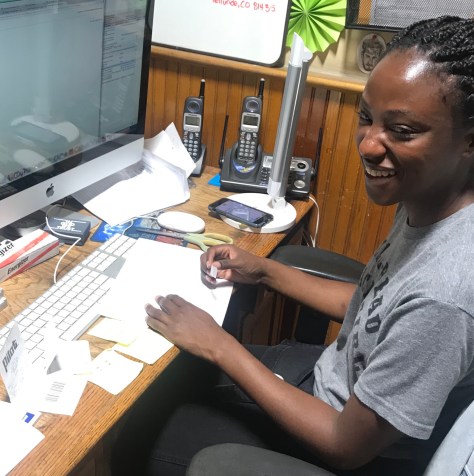
Nora
Nora Bernard, the 46th Telluride Film Festival’s Production Office Manager, wrapping up a travel and expense report on August 12, 2019, in Telluride, Colo. (Photo credit: Larry Gleeson)

I recall our first meeting at the 2019 Telluride Film Festival Production Office. We exchanged the usual introductory pleasantries and Nora asked if I’d been to Mountainfilm. I had not and asked her what it was. Anyone who knows Nora when she’s working, pleasantries are one thing – small talk is another. Time passed and we stayed friends on Facebook and I noticed her post in early May of this year regarding Monutainfilm and the new Bivvy Pass. Up to then, I was feeling blue as festival after festival was being canceled. A hundred-plus on-demand films with mesmerizing introductory clips, additional symposiums, events, and special presentations for $75 over a ten-day period sounded pretty awesome and my friend Nora was part of the Programming Team!

I bought it and spent the next ten days watching the best outdoor, political, social, cultural, and environmental films that matter including Watson, Current Sea, By Hand, Personhood, Apart, Big Fur, the Adrenaline Shorts Program w/ Fire On The Mountain and the award-winning short Origins, Mossville: When Great Trees Fall, Second Sight, Snow Wolf, Five Years North, and The Path of the Anaconda.

Baato
Baato, a sharply written, sharply executed documentary by Lucas Millard and Kate Stryker on life and modernization in the mountainous regions of Nepal. (Photo courtesy of Mountainfilm)

My first selection fell under the Limited Screening category – truthfully, I monitored this section closely. Baato, a sharply written, sharply executed documentary by Lucas Millard and Kate Stryker, chronicles a family that collects medicinal herbs in the mountainous region of Nepal. Each year the family treks 300 km to a low-lying urban market to sell the herbs to keep the home afloat. Along the way, the family faces shakedowns, a new roadway being cut into the terrain, and a ramshackle bus ride. Baato proved to be a cultural feast with some enlightening perspectives. Highly recommended viewing.

Public Trust
Public Trust, executively produced by Robert Redford, exposes a movement within the Trump Administration that allows public lands to be stripped for their profits without remediation. (Photo courtesy of Mountainfilm)

My next selection, Public Trust also a Limited Screening selection, was a Robert Redford executively produced exploration of the United States public lands, utilizing recent news footage, present-day interviews with tribal leaders, historians, government whistleblowers, journalists, of the United States public lands. The public land’s sacredness to indigenous tribes, ranchers and outdoor enthusiasts is revealed as is the Trump Administration’s overt push to privatize the lands for their profits. Public Trust received the 2020 Audience Choice Award. A must-see!

Lost on Everest
Lost on Everest, a National Geographic film made its World Premiere at the 2020 Virtual Mountainfilm Film Festival (Photo courtesy of Mountainfilm)

Lost On Everest, a National Geographic film about an expeditionary team tracking one of the early British attempts to stand on top of the world was making its World Premiere at the 2020 Virtual Mountainfilm Festival. I was ready for a mind-boggling extreme mountaineering experience. And, by golly, that’s exactly what I got. “Rising up to a peak of 29,035 vertical feet, Mount Everest has long captivated the imagination of climbers from all parts of the world.

Lost on Everest documents an elite group of research climbers who undertake a mission to locate and retrieve a camera from Andrew “Sandy” Irvine, a twenty-two-year-old climbing partner of the legendary British mountaineer, George Mallory. The two disappeared in 1924 just 800 vertical feet from the top of Mount Everest. Mallory’s body was found in 1999, approximately seventy-five feet from his last known location. Irvine’s body and the camera he was carrying have not been found to this day and have long been speculated about.” (excerpt from Lost On Everest)

Unsettled
Director Tom Shephard’s Unsettled follows asylum seekers transitioning into life in the United States of America. (Photo courtesy of Mountainfilm)


Just as I began setting in, I selected (yes, another Limited Screening film) Unsettled from Director Tom Shephard. Unsettled was screened with Eva Rendle’s short film, All That Remains – a sobering look at the undocumented workers in the Santa Rosa, Calif. area following the massive 2017 wildfire that devastated one of the world’s foremost wine-producing regions. All That Remains set the tone for what came next – a case manager’s reality as Unsettled tracked the transition of asylum seekers, Junior, Subhi, Cheyenne and Mari as they navigate new freedom realizing the streets of America are not paved with gold and learning to deal with their lives on life’s terms.

A Home Called Nebraska
A Home Called Nebraska, from filmmakers Beth and George Gage, highlights an anomaly inside the state of Nebraska. (Photo courtesy of Mountainfilm)

A Home Called Nebraska (Limited Screening) came next. Nebraska, a conservative state, provided many new homes for innocent victims of terrorism, civil war, rape, attempted murder, and persecution through the U.S. Refugee Resettlement Program. Unfortunately, the Trump administration’s policies have fueled a growing hatred of Muslims and refugees. 2019 saw the lowest number of refugees entering the US since the inception of the program in 1980. Notwithstanding, A Home Called Nebraska highlights a community welcoming newcomers, building bridges, and dispelling fear while combating the hatred of racist nationalism.

Charles Lindsay & Nicholas Paul Brysiewicz
Charles Lindsay, left, and Nicholas Paul Brysiewicz co-hosted the Magical Realism Meets Future Fiction Presentation at the 2020 Virtual Mountainfilm Film Fest.  (Photo courtesy of Mountainfilm)

Presentation. Magical Realism Meets Future Fiction. This had me at hello. I was excited before the presentation even began. Charles Lindsay and Nicholas Paul Brysiewicz co-hosted this presentation. Charlie was zooming in from Kyoto, Japan, sharing his cultural perspectives on the intersection of consciousness and enlightenment. Brysiewicz shared his insights on decoupling time/person experience. Both seemed to agree on the premise of alternative time-spaces as sacred. Now that’s what I’m talking about.

US kids
US Kids, directed by Kim S Snyder, received the Best Documentary Feature Award at 2020 Mountainfilm, Mountainfilm uses the power of film, art, and ideas to inspire audiences to create a better world. (Photo courtesy of Mountainfilm)

One of the most exceptional films, US Kids, a direct cinema-style, full-length feature followed the classmates from Marjory Stoneman Douglas School in Parkland, Fla., as they launched a nation-wide, gun control crusade for a safe learning environment and to effect the 2018 elections. Stops in cities strife with gun violence and a National Rifle Association presence like St. Louis, El Paso, Dallas, Houston, Sioux City, Milwaukee, San Antonio, Las Vegas, and Orange County are made. Along the way, a bond and mutual respect developed among the peers.

They also experienced the rigors of campaigning for a just cause as they questioned the National Rifle Association’s lobbying efforts and the politicians who fill their coffers with dubious contributions. The NRA fights back sending nefarious characters in cowboy attire with red mirror-reflective sunglasses to agitate barking at the young men and women telling them they are pawns. The responses from the Stoneman-Douglas survivors were deep and heartfelt leaving the agitators dumbfounded and scratching their heads.

US Kids won the Jury Prize for Best Feature at the 2020 Mountainfilm Film Festival. Let’s not forget! On February 14, 2018, a nineteen-year-old former student opened fire inside the school with a semi-automatic rifle killing seventeen students and wounding seventeen others without any apparent motive. US Kids is not only a highly recommended film, but it is also a critical and seminal socio-political artifact.

Stay tuned for more as Mountainfilm is scheduled to return next year in Telluride, Colo., with run dates of May 28th – May 31st. Hope to see you there!

Mountainfilm 2021


FILM REVIEW Kate Nash: Underestimate the Girl

Posted by Larry Gleeson

I guess as the music industry attempted to adapt to the internet’s explosion of music file-sharing the business strategy to pump new artists for every conceivable profit was implemented. Numerous stories of artists struggling to deal with the pressures of the business have resulted in a catastrophe. Amy Winehouse explicitly comes to mind as does the documentary, Amy, detailing her struggle, and ultimately she succumbs to it.

Director_KNutg_AMY_GOLDSTEIN
Director of Kate Nash: Underestimate the Girl, Amy Goldstein. (Picture courtesy of K.O. Public Relations)

After exploding upon the UK music scene at the tender age of 18 with a chart-topping, commercially successful album, Made of Bricks, the uber-talented, English indie-pop, indie-rock, singer-songwriter Kate Nash started down that slippery slope as her life changed drastically virtually overnight as she went from a fashion retailer to the hottest new music sensation. And, Director Amy Goldstein lays it out in detail in the documentary film, Kate Nash: Underestimate the Girl.

Utilizing some initial MTV-style editing, some non-diegetic music, and a powerful narrative the film delivers a blow-by-blow account of Nash’s career and semi-private life as she deals with fame, an unethical manager and nefarious industry professionals during a decade of soul-wrenching survival. After being nearly homeless and at her wit’s end, Nash finds herself hosting a QVC show in a comic bookstore and selling her authentic clothes.

Eventually, Nash rises out of the darkness by crowd-funding her third album, tapping into the uplifting power of online culture and re-ignites her own creative, expressive voice. She makes a conscious decision to pursue acting as another form of artistic expression (and as a way of making ends meet) landing a part on the TV series GLOW as Britannica.

Beloved by her fans and with a passion for creating thematically strong lyrics, Nash shows she is more than just a girl in Kate Nash: Underestimate the Girl as she never forgets who she is as an artist through all her trials and tribulations. Much like Taylor Swift shares in Miss Americana, Nash imagines an unending challenge for female artists is staying relevant and that means, more often than not, in elevating the performance bar in creating new and exciting artistic expressions.

Admitting she “loves and lives” for making music while also claiming the music industry has almost killed her several times, Nash fortuitously continues working today, writing, singing, and performing her songs with her band. Investing in herself and finding like-minded individuals, Nash is self-promoting her career and that includes her own marketing – seemingly, the impetus behind Kate Nash: Underestimate the Girl.

I came away a fan after watching Kate Nash: Underestimate the Girl – a wonderful treatment of a personal testimonial with simple and elegant narrative interviews juxtaposed against some fabulous performances. The film is structured around Nash’s songs and lyrics, as they are written and performed, revealing her tumultuous, courageous and inspirational story. In addition, a sampling of Verite-style footage, some backstage material, and some archival moments from her personal and professional rebound adds an indisputable authenticity often missing in commercial filmmaking.

Kate Nash: Underestimate the Girl, has a running time of 89 minutes, and will not be rated by the MPAA. Highly recommended film of an artist that’s here to stay. Check it out. You’ll be glad you did!

The documentary was released nationally on Friday, May 22, 2020, via Alamo Drafthouse’s new virtual cinema platform ALAMO ON DEMAND. The exclusive release will then hit a limited traditional theatrical rollout in August. Stay tuned!


A Year of Firsts and Soaring Indomitable Spirit at 2020 Mountainfilm

Posted by Larry Gleeson

Public Trust Takes Home 2020 Audience Choice, Us Kids Wins Best Documentary Feature

It was a year of firsts for Mountainfilm: the first online dance party, the first not-so-social ice cream social, and the first time festival-goers, filmmakers, and staff were asked to forgo a 42-year-old tradition and adapt. The result was proof positive that the indomitable spirit of the Mountainfilm family is alive and well.

It turns out, over 9,500 attendees — the highest number in Mountainfilm history — tuned in to watch over 130 selected films and almost 20 presentations and live events. 20  And certain films rose to the top, capturing the hearts and imaginations of audiences.

Public Trust
Public Trust

Viewers cast their vote for 2020 Audience Choice Award-winner Public Trust, a film that sheds light on something that impacts every American — the threat to our public lands by extractive industries. The Best Documentary Feature Award went to Us Kids, a tale of transformation as highschoolers at Marjory Stoneman Douglas evolve into political activists.

“This film was by far the best of the show,” said a Best Documentary Feature jury member. “It took me on an emotional ride with those incredible kids. It had a strong point of view and ended with a grounded version of what hope looks like.”

The Women in Film Award — a new addition that’s graciously funded by Riccarda de Eccher and Bill Goldston — was given to Welcome Strangers, a Colorado project and Mountainfilm Commitment Grant Winner that highlights the work of Casa de Paz, a temporary home in Denver for families separated by immigrant detention. The Moving Mountains Award, which supports a filmmaker and the film’s associated nonprofit, went to the heavy hitter, Mossville: When Great Trees Fall and the organization, Louisiana Bucket Brigade. The emotionally driven film gave voice to one man’s struggle against an international petrochemical company set on pushing him out of his ancestral home by any means necessary.

The selection of 2020 films was enhanced by presentations from filmmakers like James Cameron, mountaineers like Arlene Blum, and environmentalists like Paul Watson like and 2020 Guest Director Louie Psihoyos.


Susan Beraza
Mountainfilm Festival Director Susan Beraza

“We were honored by everyone who took the time to share their work and their stories. While it was sad we couldn’t be together in person, which is really what Mountainfilm is all about, we were happy that because of this twist in the road, we became more accessible and reached new audiences,” said Beraza.


The year of Mountainfilm firsts is punctuated by the move from a 4-day festival to an extended 11-day run, meaning you have until midnight on Monday, May 25 to unlock programs and watch any 2020 award winners you might’ve missed.

See all eight of the 2020 Festival Award Winners here.

Mountain Film

(Source: Mountainfilm Press release)

Mountainfilm FILM REVIEW: Fire On The Mountain (Chris Benchetler and Tyler J. Hamlet, 2019):USA

Posted by Larry Gleeson

I remember the day I rode with my friends, Wally Weilmuenster and Dan Nester, to go swimming at Bone’s Lake jamming to the Grateful Dead’s “Fire On The Mountain.” The world was ours in that moment and it seemed limitless. So naturally as I perused the Mountainfilm shorts programs, I made a mental note when I saw Fire On The Mountain, directed by Chris Benchetler and Tyler J. Hamlet, inside the Adrenaline shorts program. Being 11:30 PM, an adrenaline focused lineup with 12 offerings might not be an ideal choice for most of us. For me, however, it proved to be an optimal experience.

As I’m a meticulous note-taker, I was scribing when Fire On The Mountain hit my tv screen. I noted the coloration and then the unthinkable happened – a textual title revealed the film was set to the music of the Grateful Dead. I didn’t have the pleasure of seeing the Dead perform live. I’ve been tuning into Dead and Company shows every Saturday on Facebook via nugs.tv for the last ten weeks. And, I did have the good fortune to see Further at the Santa Barbara Bowl several years ago. I remember that night vividly as I sat in my seat looking around as it was my first SB Bowl experience. As I looked around, I noticed a figure that I’d been watching since I began playing organized basketball in the St. Louis Metro-East way back in 1973. It was none other than Bill Walton – the same Bill Walton who connected on 21 out of 22 field-goal attempts as a UCLA Bruin at the old St. Louis Arena during the 1973 NCAA Championship Men’s basketball game.

I know you’re wondering, “What does Bill Walton have to do with Fire On The Mountain?” I can tell you one thing for certain Father Time is not playing any tricks. I was listening to the film’s poetically rhythmic voice-over-narration while thoroughly enmeshed in the film’s visuals when I became aware of thought – “that narrator sounds a lot like Bill Walton.” Then, I became aware of another thought – “it’s just somebody that sounds like Bill Walton – but who in the world sounds like Bill Walton?” Walton not only provided an enlightening narration for Fire On The Mountain, but he also is credited in the film’s collaborative writing.

Fire On The Mountain, inspired by the improvisational jam music of the Grateful Dead, features seven of their songs including “Brown Eyed Woman,” “The Other One,” “New Speedway Boogie,” “Dark Star,” “Playing In The Band,” “Fire On The Mountain,” and “Ripple.” From Teton Gravity Research, a Jackson Hole, Wyoming-based action sports media company “committed to fueling progression through its films and website,” Fire On The Mountain incorporates a psychedelic dynamic with trippy visuals, non-diegetic Grateful Dead music, and an in-progress, spot-on creation of a Dead-like mural all in juxtaposition to and simultaneously in ethereal harmony with bold, expressive and acrobatic action sequences in the water and on the mountain. Furthermore, the cinematography, costuming, and the tone was magically Dead inspired.

As the film closed, I sat uplifted and somewhat mesmerized, with the film’s group of talented actors around a bonfire appreciating their world and the freedom to live and experience their form of truth in unspoken ways. The performers executed the action sequences to a T opening up and expanding the conscious realm of human potentialities. Part dreamscape and part action film, Fire On The Mountain illuminates rad surfing and snowboarding talents and weaves the light of the Dead and “all the feels” into an inescapable whole.

Inspired and ready for bed, I started the last short of the program, Wingsuiter Flies Through Narrow Hole. I watched a flying man free fall through some sort of netting. It repeated itself then cut to black. A one-minute short of a man blasting through time and space and through a metaphorical representation of a Native American dream catcher. Only in America. Only at Mountainfilm. Highly recommended.


Mountainfilm FILM REVIEW: National Geographic’s Lost on Everest (Renan Ozturk and Drew Pulley, 2020): USA

Posted by Larry Gleeson

Lost on Everest, a National Geographic film about an expeditionary team tracking one of the early British attempts to stand on top of the world, made its World Premiere at the 2020 Virtual Mountainfilm Festival, a documentary film festival showcasing nonfiction stories about environmental, cultural, climbing, political, and social justice issues.

Rising up to a peak of 29,035 vertical feet, Mount Everest has long captivated the imagination of climbers from all parts of the world. Lost on Everest documents an elite group of research climbers who undertake a mission to locate and retrieve a camera from Andrew “Sandy” Irvine, a twenty-two-year-old climbing partner of the legendary British mountaineer, George Mallory. The two disappeared in 1924 just 800 vertical feet from the top of Mount Everest. Mallory’s body was found in 1999, approximately seventy-five feet from his last known location. Irvine’s body and the camera he was carrying have not been found to this day and have long been speculated about.

Did Mallory and/or Irvine make it to the top of Everest?  Or do Sir Edmund Hillary and Sherpa Tenzing Norgay keep the title of first confirmed climbers to the summit? Utilizing the latest geospatial imaging tools and first-hand accounts of climbers claiming to have seen a body that may or may not be Sandy Irvine, the team ascends Everest under an ordinary climbing permit. Spectacular photography and intimate footage of the team as they battle the conditions imposed on them by the altitude and constantly changing weather conditions enhance the film’s compelling narrative. Testimonials, present-day interviews, and narrative voice-overs keep the audience engaged and informed as archival footage of the early British expeditionary attempts to provide historical context and the impossibility of the feat.

Interestingly, the day before the team makes their ascent, a parade of approximately 200-300 climbers create a traffic jam atop Mount Everest waiting for their respective turns to reach the summit, is captured in spectacular fashion. The photograph went viral and put Everest into the global dialogue front and center once again – and not necessarily in a positive light. Undaunted the team completes its summit without a climber insight and one of the climbing season’s windows most perfect days. What happens next could change the history of climbing forever as the team makes its way downward in search of Sandy Irvine’s final resting place. And what started out as an extreme climbing, turns into a mystery begging for someone to solve.

Lost on Everest was directed by Renan Ozturk, a globally recognized climber, filmmaker, and artist known for his extreme, outdoor visual storytelling. Ozturk’s previous films include Denali’s Raven (Mountainfilm 2017), Life Coach, and Mothered by Mountains (both Mountainfilm 2018). Alongside Taylor Rees, he co-directed The Ghosts Above (both Mountainfilm 2020). In 2013 Ozturk was awarded the National Geographic Adventurer of the Year. Drew Pulley, a renowned seeker of documentary content for National Geographic, co-directed Lost on Everest.

The film’s final screening at Mountainfilm is scheduled for May 23rd, 7 PM, Mountain Daylight Time. With a fast run-time of sixty minutes and with an included short film, The Ghost Above, providing a behind-the-scenes look at the climb, Lost on Everest is a highly recommended film. Check it out, you’ll be glad you did!

Mountain Film

About Mountainfilm

Mountainfilm, a documentary film festival in Telluride, Colo., showcases “nonfiction stories about environmental, cultural, climbing, political, and social justice issues that matter.”  The 2020 edition has gone virtual in light of the COVID-19 pandemic. Mountainfilm offering its 2020 festival lineup through a secure online platform from May 15–25. The new Bivvy pass provides full access to over 100 films, a symposium, and additional presentations for $75. An option to purchase individual films, shorts programs, or presentations for $10 each is also available.

Until next time, I look forward to seeing you at the movies….

glee


Scorched Earth Public Trust Illuminates Presidential Proclamations

Posted by Larry Gleeson

I imagined my second 2020 Mountainfilm Festival selection would be a Ken Burns-style documentary on our nation’s public lands. Director David Garrett Byars begins Public Trust, a Patagonia Films production, with a soft opening of luscious landscape photography accented by a voice-over narration of a man from Northern Alabama having relocated to a Western State pontificating on the joyous freedom of fishing and hunting in the vast open spaces in the West.

After the stunningly beautiful opening sequence, however, Public Trust, executively produced by Robert Redford, turned into a wild ride through the United States of America’s exploitation of pristine public lands with roguish, jackaloon demagogues sowing fear and distrust in any receptive audience at their disposal. Truth is damned as greed, hate-mongering, and sheer stupidity rear their disgusting, revolting, and reviling heads as the public is duped time and time again with misleading rhetoric from politicians and Trump Administration department heads. Alaskan public lands are salivatingly seen as gravy trains with stores of oil, gas, uranium, and copper as mining revenues traditionally have been dispersed to Alaskans with royalty checks. As one commentator noted, “it’s akin to a heroin addict getting a fix.”

Utilizing recent news footage, present-day interviews with tribal leaders, historians, government whistleblowers, journalists, added perspective and insight emanate into the bold and brazen Trump Administration political appointees to the United States Department of the Interior. The once protected public lands are being moved under individual states’ control to maintain – although the states cannot afford to protect and maintain the lands for public use. As a result, much of the land is being sold to the highest bidders, those with the deepest pockets. As one particularly ignorant pol snidely commented, “just let me know what my piece of the public lands is so I can sell it.”

The newest Secretary of the Interior, David Barnhart, has relocated his office into the same building with Exxon and numerous oil and gas mining corporations after Ryan Zinke, who now serves as “an advisor” to Turnberry Solutions, a lobbying firm stacked with former Trump administration advisers and campaign aides, resigned in 2019 among numerous ethics violations. The powerful extractive industries, backed by similar regulation-slashing state legislators and federal agencies, believe public lands across America should be unlocked for mining and exploration with little if any, regard for the environmental scarring and cultural diminishing effects. And, these entities say whatever it takes to get their way.

Interestingly, in closing Public Trust Byars leaves the viewer with pertinent questions about the future of America’s public lands. For instance, who will have unfettered access to these lands? Because as it stands right now it appears the oil and gas industries, in conjunction with mining operations, will solicit more revenue-generating activities from the American people. Imagine futuristic concessionaires charging fees to take you and your family to the mountaintop for sunset while the surrounding lands are stripped until all profit has been removed, and the lands permanently abandoned in an unrestored, highly toxic state. It’s the Trump Administration’s vision of the new American Way of Life.

Public Trust is a very-well researched and thought-provoking documentary. For me as a person who has enjoyed public lands immensely, the film is revealing not only from a cultural and environmental perspective but even more so from a political perspective. Highly recommended.


Starting now. Mountainfilm. Put your seatbelt on!

Posted by Larry Gleeson

2020 Mountainfilm Intro by Stephen Burns. I’m putting my seatbelt on!

As you’d expect from a film festival with a penchant to inspire audiences to create a better world, Mountainfilm, a documentary film festival that showcases nonfiction stories about environmental, cultural, climbing, political, and social justice issues that matter, has gone virtual in light of the COVID-19 pandemic.

The 2020 Mountainfilm edition is featuring over 100 on-demand films and presentations over that viewers can watch at their leisure from the comfort of home in an extended, 10-day festival. To experience Mountainfilm at home, all you really need is a pass and an adventurous heart.

This year’s Guest Director is Academy Award-winning filmmaker Louie Psihoyos, (The Cove (Mountainfilm 2009). His most recent film The Game Changers (Mountainfilm 2018) examines the health benefits of plant-based diets, particularly on elite athletes.

Listen as Psihoyos shares what makes Mountainfilm his “go-to” festival year after year.

Until next time, I look forward to seeing you at the movies!

Telluride
HollywoodGlee in downtown Telluride, Colo., during the 2019 Telluride Film Festival. (Photo credit: Maya Altarac, Telluride Film Festival Production Staff)


THE AMERICAN FILM INSTITUTE ANNOUNCES DATES FOR 2020 AFI DOCS FILM FESTIVAL

Posted by Larry Gleeson

AWARD-WINNING APPLE AND A24 FILM BOYS STATE TO OPEN ONLINE FESTIVAL ON JUNE 17

AT&T RETURNS AS PRESENTING SPONSOR


ON EMBARGO UNTIL 9 a.m. ET / 6 a.m. PT, MAY 6, 2020, WASHINGTON, DC — AFI DOCS, the American Film Institute’s annual documentary celebration in the nation’s capital, has announced the festival’s 18th annual edition is going virtual. With audiences eager to experience the best in documentary film, AFI DOCS will showcase current non-fiction fare in a re-imagined online film festival. The festival is proud to also announce the return of AT&T as Presenting Sponsor for the seventh consecutive year. AFI DOCS 2020 will open with BOYS STATE, directed by Jesse Moss and Amanda McBaine. The festival will run June 17–21 and films will be available to view on DOCS.AFI.com.

Marjan Safinia, Michael Lumpkin, Monica Lewinsky
Michael Lumpkin

“AFI is committed to the documentary art form in the best of times and in the most challenging of times,” said Michael Lumpkin, Director of AFI Festivals. “Now more than ever, we are dedicated to supporting extraordinary films because the world needs stories that educate, inspire hope and remind us of humanity’s strength. AFI DOCS is here to help.”

Continue reading THE AMERICAN FILM INSTITUTE ANNOUNCES DATES FOR 2020 AFI DOCS FILM FESTIVAL

FILM REVIEW: Bryan Fogel’s The Dissident Speaks Volumes

Posted by Larry Gleeson

Bryan Fogel, the Academy Award-winning director of Icarus premiered The Dissident, a bone-chilling documentary film, at the 2020 Sundance Film Festival. In The Dissident Fogel explores the events leading up to the 2018 brutal murder of Washington Post journalist Jamal Khashoggi and the events in the aftermath of the killing. Fogel follows Khashoggi’s friend and colleague, Omar Abdulaziz, a Saudi exile in Canada risking his life for the freedom of speech and Khashoggi’s fiancée, Hatice Cengiz, arguing for justice in front of the United Nations. In addition, with 2018 footage of Khashoggi in and out of briefings, Fogel lays the impressive groundwork of a counter-revolutionary movement underway in Egypt and Jordan and provides critical insight into the progressive, reformist leaning Vision 2030, the Saudi Arabian King Salmond’s Crown Prince son, Mohammad Bin Salmond’s (MBS) blueprint for Saudi society.

Furthermore, Fogel discusses a top-level purchase of highly sophisticated cyber-espionage technology, known as Pegasus, enabling MBS to hack into dissident social media accounts across the country and beyond. MBS employed an army to control social media content by infecting untold accounts with Pegasus. Interesting to note, Amazon’s Jeff Bezos’ smartphone was hacked and downloaded for months by Pegasus after MBS sent Bezos a mysterious video attachment on WhatsApp. The social media space, manipulated so effectively by Russia in the US elections, had now become an international warzone not just in the US and Suadi Arabia but in many countries around the world. Not surprisingly, US President Donald Trump went to the country of Saudi Arabia on his first stop of his first official visit abroad, refused to acknowledge Khashoggi’s murder despite every intelligence agency concurring, and proceeded to announce to the American people a massive $500 billion dollar arms sale. “The Saudis buy a lot of weapons from us,” opined the President in defense of himself.

But, Jamaal Kashoggi was widely respected both in Saudi Arabia and globally as a very astute scholar well-versed in the ways of diplomacy. Seemingly, his outspoken journalism aginst the destabilizing “reforms” of MBS, published in the Washington Post, led to his murder in the Istanbul Saudi consulate on October 2, 2018. The Turkish government investigated Koshoggi’s murder compiling a formidable case. United Nations Special Reporter Agnes Callamard started her own investigation and concluded an international crime had been committed in Khashoggi’s death with no less than six violations of international law igniting protests and strengthening the country’s demand for freedom of speech under the banner – Justice for Jamal. His murder also undid MBS’s Vision 2030. In reality, Vision 2030 was an ambitious power grab under the guise of an anti-corruption probe where MBS rounded up and imprisoned the country’s most powerful people while seizing hundreds of billions of dollars.

With a covert expose’ touch, Fogel adeptly uncovers and reveals the truth in this highly controversial and well-researched, socio-political-economic arena unfolding in the global news cycle with an abundant supply of footage of all the key players and some very informative graphics. Make no mistake, The Dissident is a powerful and startling look at the cost of freedom of speech, the murder of a journalist for exercising his freedom of speech, and the ramifications of the interference of a government in social media. Don’t miss this one. Highly recommended.


FILM REVIEW: Max Richter’s Sleep connecting the world

Posted by Larry Gleeson

Max Richter’s Sleep, a documentary film from Award-winning filmmaker Natalie Johns screened at the 2020 Sundance Film Festival as a Special Event. Sundance Special Events are one-of-a-kind moments highlighting new independent works that enhance the festival experience. Johns’s first global feature documentary, I Am Thalente, won an Audience Award at the LA Film Festival. Johns also received an Emmy nomination in 2015 for Outstanding Directing and has collaborated with some of the world’s leading musical talent, including John Legend Annie Lennox, Sam Smith, Childish Gambino, Solange, and Gil Scott Heron. In 2015, to critical acclaim, Richter released an eight-hour Sleep lullaby with a meditative quality combining piano and strings with subtle electronic touches and vocals to mimic brain waves in a state of sleep – an unimaginable effort connecting musical consciousness to the world.

Max Richter’s Sleep follows the process of mounting the most ambitious live performance of Sleep to date: an open-air concert in downtown Los Angeles’s Grand Park, across from the Los Angeles Music Center, where over 500 people experienced the composer’s work in unison. But, instead of chairs, the audience members were given beds to sleep in! Johns includes a myriad of aerial shots of the downtown Los Angeles area that are interwoven in the film while a narrative voice-over informs the audience of longing for human connection and the desire to create a space for community and connectivity. A montage of close-ups depicting musical instruments and mathematical equations delineating the intricate mathematical formulae Richter utilizes to create his dream state composition.

Intentionally designed to keep listeners in a state of sleep, Richter unlocks patterns and rhythmically represents brain waves with accompanying repetitious musical notes.  Performing Sleep required unprecedented endurance from its musicians. Once the concert is well underway, footage of Richter walking through the sleeping audience is captured and reveals the majestic undertaking coming to fruition – rejuvenation by reengaging the arts back into society. As morning breaks, an acoustic sunrise slowly brings an emotional, refreshed awakening with a feeling of hope and a new beginning.

Johns also includes a look into Richter’s home life as he and his wife balance creative pursuits and paying the bills. Richter confesses his creative pursuits are his passion but his film compositions allow him the freedom to balance his art and his household needs. The result was a striking visual portrait that immerses us within the life of Richter and his creative partner, Yulia Mahr. Interestingly, Richter has performed his Sleep in venues around the world including cathedrals and parks. The first performance from midnight to 8:00 AM, September 27th, 2015, in London, England, at the Wellcome Collection Reading Room as part of the BBC’s “Science and Music” set a Guinness Book of World Records for the longest live broadcast The composition was also performed at the Philharmonie de Paris from midnight to 8:00 AM on November 18th, 2017.

The Los Angeles concerts on July 27-28th and July 28-29th, 2018, from approximately 10:30 PM until dawn, were the first outdoor performances of Sleep. Richter played piano, keyboards, and electronics. The American Contemporary Music Ensemble accompanied Richter along with cellist Claire Jensen, soprano Grace Davidson, violinist Andrew Tholl, cellist Emily Brausa, Isabelle Hagen (viola), and Ben Russell.  I viewed the ninety-nine-minute film in the evening with a group of Sundance Film Festival volunteers and several members of the press. I left the theatre feeling very connected and very grounded and I imagine you will too. Highly recommended – an ultimate chill film!