Category Archives: Berlin Film Festival

Back for Good – Mia Spengler’s graduation film to Open Perspektive Deutsches Kino 2017

Posted by Larry Gleeson

The first seven films have now been invited to participate in Perspektive Deutsches Kino’s programme in 2017: to date, four full-length graduation films and three 30-minute ones. “More so than ever it’s worth going to the Perspektive’s opening film and then making yourself comfortable in Berlinale cinemas for the subsequent nine days. Coming and staying guarantees you’ll feel lucky ten times over,” section head Linda Söffker says in anticipation of these ten fiery days in icy February.

Mia Spengler’s graduation film, Back for Good (prod: Zum Goldenen Lamm Filmproduktion, co-prod: Filmakademie Ludwigsburg) will open the Perspektive with the story of Angie, a former trash-TV starlet (Kim Riedle), her despised mother (Juliane Köhler), and her pubescent sister (Leonie Wesselow). By returning to the hick town of her childhood, Angie wreaks havoc on their relationships, so that all three have to redefine their roles in life. Back for Good is an ode to humanity – softly hummed while an auto-tuned pop song blares from the radio.

Angie (Kim Riedle) in Back for Good by Mia Spengler (Photo credit: @Zum Goldenen Lamm)

The fiction film Ein Weg (Paths, dir: Chris Miera, co-prod: Miera Film, Hildebrandt Film) was made while studying at the Filmuniversität Babelsberg Konrad Wolf and is the cautious exploration of a long love relationship that ends in separation. Over 15 years, as son Max gradually grows up, we accompany Andreas (Mike Hoffmann) and Martin (Mathis Reinhardt) through the highs and lows in the daily life of a partnership. Shot like a documentary, with a small team and budget at real locations, Ein Weg develops with great intensity and flexibility – and through the process of editing finds its special form of telling a story over time.

Director Tian Dong grew up in China and attended the KHM in Cologne. He has now completed his studies with the documentary Eisenkopf (Ironhead), about a young soccer team skilled in Shaolin kung fu. Tian Dong visits its young members at their sports school, and talks to them about their everyday lives and dreams. In doing so he paints an unsettling picture of China’s political situation.

In Julian Radlmaier’s new film, Selbstkritik eines bürgerlichen Hundes (Self-criticism of a Bourgeois Dog, prod: Faktura Film, co-prod: dffb), a bourgeois dog confesses how he has gone through multiple transformations, from a love-struck filmmaker, to an apple picker, a traitor of the revolution, and, last but not least, a four-legged creature. In a political comedy full of burlesque escapades, we meet Camille, a young Canadian (Deragh Campbell); Hong and Sancho, a pair of proletarians who believe in miracles; a mute monk with magical powers; and a bunch of strange field labourers who indulge in idealistic visions.

All three of the medium-long works contemplate Europe and its future in quite similar yet different ways. What would happen if one day people in Europe had to flee, director Felicitas Sonvilla asks in her poetic science fiction film, Tara (prod: MOTEL Film Kollektiv; co-prod: HFF Munich). A young woman called Mira (Sasha Davydova) tells of her flight from Paris. In search of a different life she takes a train heading east to the utopianesque town of Tara. Kontener (Container) was the first medium-long fiction film that Sebastian Lang made at the Filmuniversität Babelsberg Konrad Wolf. In it he portrays “two Polish ladies” who work at a dairy in Brandenburg. From the perspective of Maryna (Joanna Drozda), who narrates the story, the film depicts the last night before Tava (Anka Graczyk) disappears. The third film, titled Mikel, is about a young refugee who has left Nigeria for Berlin in search of a decent life with a properly paid job. It is the first medium-long film by Cavo Kernich, who with this work has completed his studies in “narrative film” under Thomas Arslan at the Universität der Künste in Berlin.

The entire Perspektive Deutsches Kino programme will be announced in January.

The following films have been invited so far:

Back for Good
By Mia Spengler
With Kim Riedle, Juliane Köhler, Leonie Wesselow
Feature film
World premiere

Eisenkopf (Ironhead)
By Tian Dong
Documentary film
World premiere

Kontener (Container)
By Sebastian Lang
With Joanna Drozda, Anka Graczyk
Medium-long feature film
World premiere

Mikel
By Cavo Kernich
With Jonathan Aikins
Medium-long feature film
World premiere

Selbstkritik eines bürgerlichen Hundes (Self-criticism of a Bourgeois Dog)
By Julian Radlmaier
With Julian Radlmaier, Deragh Campbell, Beniamin Forti, Kyung-Taek Lie, Ilia Korkashvili
Feature film
German premiere

Tara
By Felicitas Sonvilla
With Sasha Davydova, Leo van Kann, Lena Lauzemis
Medium-long feature film
World premiere

Ein Weg (Paths)
By Chris Miera
With Mike Hoffmann, Mathis Reinhardt
Feature film
World premiere

Logo-Berlinale-Facebook

(Source: Berlinale Press Office)

First Films for the Berlinale Classics 2017 Are Announced

Posted by Larry Gleeson

In addition to the German production Schwarzer Kies (Black Gravel) directed by Helmut Käutner, Rafi Bukaee’s Avanti Popolo from Israel and the Mexican film Canoa by Felipe Cazals will be shown in digitally restored versions as part of the Berlinale Classics section. Since 2013, that segment of the Retrospective has attracted enthusiastic audiences with its newly-digitised versions of classic and newly-discovered films.

Canoa by Felipe Cazals, Mexico 1976 (Photo credit: @IMCINE y STPC, 2002)

Canoa by Fililppe

Canoa by Felipe Cazals, Mexico 1976

Canoa by Mexican director Felipe Cazals won a Silver Bear (Special Jury Prize) at the 1976 Berlinale and has now been digitally restored by The Criterion Collection with the participation of the Mexican Film Institute (IMCINE) in honour of its 40th anniversary. The film is based on true events that took place in 1968 in the remote village of San Miguel Canoa. A group of young university employees from Puebla is stranded in Canoa during a weekend outing; suspected of being communist students, the villagers mount an attack on them. The digital restoration was approved by director Felipe Cazals. The screening of Canoa is part of a focus on Mexican cinema; Mexico is the partner country of the 2017 European Film Market (EFM).

Suhel Haddad and Salim Dau in Avanti Popolo by Rafi Bukaee’s, Israel 1986.  (Photo credit: @Israel Film Archive/Maayan Milo)

Director Rafi Bukaee’s debut film Avanti Popolo (1986), a tragicomedy about the absurdity of war, is one of Israeli cinema’s most significant auteur films and was selected to represent the country at the Academy Awards in 1987. Telling the story of two Egyptian soldiers wandering through the Sinai desert after the Six-Day War, Bukaee played with the stereotypical images of Israelis and Arabs, and turned conventional clichés upside down. The film’s dialogue is largely Arabic; it was the first time in the history of Israeli film that Arab protagonists were portrayed by Arab actors. The restoration by the Jerusalem Cinematheque – Israel Film Archive of the film was done on the basis of the original 16-mm negative.

.

Anita Hofer and Helmut Wildt in Schwarzer Kies (Black Gavel) by Helmut Kautner, West Germany 1961 (Photo Credit @Deutsche Kinemathek – Gabriele du Vinage)

Schwarzer Kies (Black Gravel), made in 1961, was directed in American B movie style. After its premiere, the press was critical of the film, which took a pessimistic view of society in post-war Germany. One scene in the film also exposed Käutner to accusations of anti-Semitism. Käutner re-edited the film for the German market, giving it a somewhat less gloomy ending. The original version, as well as the theatrical version, survived in the archives of the Friedrich-Wilhelm-Murnau-Foundation. The foundation has now undertaken to digitise the original, premiere version, to safeguard it for the future.

“Käutner’s film is an outstanding example of an unvarnished view of the depths of Western Germany’s post-war reality. The use of the direct and high-contrast language of a B movie makes it a rarity that can now be re-discovered”, comments Rainer Rother, head of the Berlinale Retrospective section and artistic director of the Deutsche Kinemathek.

The full Berlinale Classics programme will be announced in January 2017.

The following films have been confirmed:

Avanti Popolo
By Rafi Bukai, Israel 1986
International premiere of the digitally restored version
In 2K DCP

Canoa
By Felipe Cazals, Mexico 1976
World premiere of the digitally restored version
In 2K DCP

Schwarzer Kies (Black Gravel)
By Helmut Käutner, West Germany 1961
World premiere of the digital version
In 4K DCP


(Source: Berlinale Press Office)

The 2017 European Film Market is Already Fully Booked, Despite Considerable Expansion

The European Film Market (EFM) at the Berlin International Film Festival is considered one of the most important trade platforms for film rights and audiovisual content.

As the first industry gathering of the year, the EFM will open its doors on February 9, 2017, setting the trends for the upcoming year in film. The entire exhibition spaces, in the Martin-Gropius-Bau and the Marriott Hotel, are already fully reserved. More than 9,000 exhibitors, license traders, producers, buyers and investors are expected over the nine market days from February 9 to 17, 2017.

This year, the European Film Market has expanded in both space and content. New initiatives such as the “Berlinale Africa Hub” and “EFM Horizon” provide forward-looking impetuses. The immensely popular “Drama Series Days”, presented by the EFM and the Berlinale Co-Production Market, has been expanded and moved into a new venue. The three-day edition of the segment will run from February 13 to 15 in the Zoo Palast, with panel discussions, market screenings and various networking events. The official partner of the “Drama Series Days” is the Film- und Medienstiftung NRW; it is mounted in cooperation with HBO Europe and the Medienboard Berlin-Brandenburg. And at the 2017 EFM, Mexico will be the first “Country in Focus” – a new EFM initiative that the market plans to follow through with in upcoming years with different countries.

Of course, this year’s EFM continues with its established and successful segments “EFM Asia”, “Meet the Docs”, “American Independents in Berlin”, “EFM Producers Hub”, the “EFM Industry Debates” and LOLA at Berlinale.

matthijs_wouter_knolThe European Film Market is one of the most important film markets world-wide and, since it’s at the start of the year, it’s a key seismograph for the year to come. The EFM is a trend-setter that keeps abreast of the radical changes in the industry”, says EFM director Matthijs Wouter Knol.


“There has rarely been as much movement and such a sense of euphoria in the filmscreen-shot-2016-12-19-at-10-12-48-am industry as there is now. We’re responding to that with our broad range of initiatives. At the same time, it’s extremely important that we provide optimal surroundings that offer dependability and stability in terms of infrastructure and content”, adds EFM president Beki Probst.

For additional information, visit www.efm-berlinale.de.

(Source: http://www.berlinale.de)

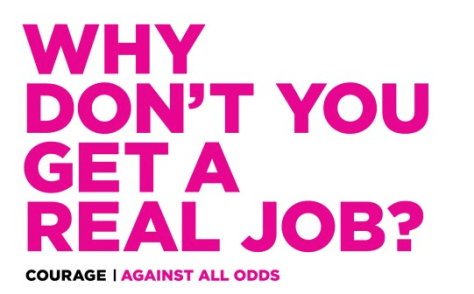
Berlinale Talents turns 15 and shows “Courage: Against All Odds”

With its focus on “Courage: Against All Odds”, the 15th edition of Berlinale Talents takes on the significance of everyday bravery and fearlessness for today’s film professionals. 250 exceptional Talents and over 100 international experts and mentors will be invited to the six-day programme, held once again at the three venues of HAU Hebbel am Ufer from February 11 to 16, 2017.

Talents and experts will jointly explore moments of courage in the filmmaking process, from making daring choices at personal risk to pushing artistic, political or financial boundaries and venturing into unknown narrative worlds.

screen-shot-2016-12-17-at-10-28-54-am

“Every time a filmmaker acts with courage, their step takes the true measure of a challenge. For the anniversary edition, Berlinale Talents will focus on these crucial points while celebrating a new generation busy making film with unshakeable optimism and against all odds,” programme manager Florian Weghorn explains the theme.

screen-shot-2016-12-17-at-10-29-30-am

The Berlinale Talents 2017 key visual showcases quotes that will sound familiar to many filmmakers from their day-to-day lives. With a little wink, the poster series calls on Talents, guests and Berliners to find the courage to interact with these messages during the festival.

New structures for more interaction

With the level of Talent experience continuously on the rise, Berlinale Talents has redesigned integral parts of the programme to strengthen the networking effects. Four major slots traditionally reserved for master classes have been replaced by a new series of interactive sessions and smaller encounters to better deepen the Talents’ knowledge and harness their expertise.

screen-shot-2016-12-17-at-10-29-14-am

Berlinale Talents is also intensifying its ties with the European Film Market and the other industry activities of the festival. The re-branded “Talents Market Studio” offers emerging sales and distribution professionals a better framework to discuss unconventional and collective marketing strategies and to test them directly on location at the “Talents Market Hub” of the EFM.

More information at www.berlinale-talents.de

Press contact Berlinale Talents:
Malte Mau

Tel. +49 30 259 20-518
Fax +49 30 259 20-534

Berlinale Talents is an initiative of the Berlin International Film Festival, a business division of the Kulturveranstaltungen des Bundes in Berlin GmbH, funded by the Federal Government Commissioner for Culture and the Media, in cooperation with Creative Europe MEDIA, a programme of the European Union, Robert Bosch Stiftung and Medienboard Berlin-Brandenburg, the German Federal Foreign Office and the German Federal Film Board.

1280px-berlin_international_film_festival_logo-svg

(Source: Berlinale Press Office Press Release)

First Films for the Competition of the Berlinale 2017

Posted by Larry Gleeson

The first 14 films have been selected for the Competition and Berlinale Special section of the 67th Berlin International Film Festival. So far ten productions and co-productions have been invited to the Competition from Belgium, Chile, the Czech Republic, Denmark, Finland, France, Germany, the United Kingdom, Hungary, Lebanon, Poland, Portugal, Romania, Senegal, the Slovak Republic, Spain, Sweden, and the USA.

As part of the official programme, Berlinale Special also presents topical works by contemporary filmmakers, documentaries and extraordinary formats. To date four productions have been invited.

Further announcements regarding programme selections will be made in the coming weeks.

screen-shot-2016-12-17-at-9-04-58-am
Colo

Competition

Teströl és lélekröl (On Body and Soul)
Hungary
By Ildiko Enyedi (My 20th Century, Simon the Magician)
With Géza Morcsányi, Alexandra Borbély, Zoltán Schneider
World premiere

Ana, mon amour
Romania / Germany / France
By Călin Peter Netzer (Child‘s Pose, Maria)
With Mircea Postelnicu, Diana Cavallioti, Carmen Tănase, Adrian Titieni, Vlad Ivanov
World premiere

Beuys – Documentary
Germany
By Andres Veiel (Black Box Germany, Addicted To Acting, If not us, Who)
World premiere

Colo
Portugal / France
By Teresa Villaverde (The Major Age, The Mutants, Trance)
With João Pedro Vaz, Alice Albergaria Borges, Beatriz Batarda, Clara Jost
World premiere

The Dinner
USA
By Oren Moverman (The Messenger, Rampart)
With Richard Gere, Laura Linney, Steve Coogan, Rebecca Hall, Chloë Sevigny
World premiere

Félicité
France / Senegal / Belgium / Germany / Lebanon
By Alain Gomis (L’Afrance, Andalucia, Tey)
With Véro Tshanda Beya, Gaetan Claudia, Papi Mpaka
World premiere

The Party
United Kingdom
By Sally Potter (Orlando, Yes, Ginger & Rosa)
With Patricia Clarkson, Bruno Ganz, Cherry Jones, Emily Mortimer, Cillian Murphy, Kristin Scott Thomas, Timothy Spall
World premiere

Pokot (Spoor)
Poland / Germany / Czech Republic / Sweden / Slovak Republic
By Agnieszka Holland (Europa Europa, Bitter Harvest, In Darkness)
With Agnieszka Mandat, Wiktor Zborowski, Miroslav Krobot, Jakub Gierszał, Patricia Volny, Borys Szyc
World premiere

Toivon tuolla puolen (The Other Side of Hope)
Finland
By Aki Kaurismäki (The Match Factory Girl, I Hired A Contract Killer, Juha, Le Havre)
With Sakari Kuosmanen, Sherwan Haji
International premiere

Una Mujer Fantástica (A Fantastic Woman)
Chile / Germany / USA / Spain
By Sebastián Lelio (El Año del Tigre, Gloria)
With Daniela Vega, Francisco Reyes, Luis Gnecco, Aline Küppenheim, Amparo Noguera
World premiere

Berlinale Special

Berlinale Special Gala at the Friedrichstadt-Palast

La Reina de España (The Queen of Spain)
Spain
By Fernando Trueba (The Year of Awakening, Belle Époque, The Girl of Your Dreams)
With Penélope Cruz, Antonio Resines, Chino Darín, Cary Elwes, Mandy Patinkin, Neus Asensi, Ana Belén
International premiere

Le jeune Karl Marx (The Young Karl Marx)
France / Germany / Belgium
By Raoul Peck (Sometimes In April, Moloch Tropical, Fatal Assistance)
With August Diehl, Stefan Konarske, Vicky Krieps, Hannah Steele, Olivier Gourmet
World premiere

Berlinale Special at the Kino International

Últimos días en La Habana (Last Days in Havana)
Cuba / Spain
By Fernando Pérez (Life Is to Whistle, Madrigal)
With Jorge Martínez, Patricio Wood, Gabriela Ramos
European premiere

Berlinale Special at the Volksbühne

Acht Stunden sind kein Tag (Eight Hours Don’t Make a Day)
Federal Republic of Germany 1972 – TV series with 5 episodes
By Rainer Werner Fassbinder
With Hanna Schygulla, Gottfried John, Luise Ullrich, Werner Finck, Irm Hermann
World premiere of the restored version

1280px-berlin_international_film_festival_logo-svg

(Source: Berlinale Press Office press release)

Berlinale Launches Endowed Documentary Award

For many years now, the Berlin International Film Festival has been committed to documentary film and diverse documentary forms.

Thanks to the support of Glashütte Original, watch manufacturer from Saxony, the Berlin International Film Festival is launching a new award, the Glashütte Original Documentary Award.

This prize for the best documentary film will be endowed with € 50,000, funded by Glashütte Original. A total of about 18 documentary entries from the current programmes of the Competition, Panorama, Forum, Generation, Berlinale Special and Perspektive Deutsches Kino sections as well as the Culinary Cinema special series will be nominated for the Glashütte Original Documentary Award. A three-member jury will pick the winner – the prize money will be split between the film’s director and producer.

Besides the prize money, Glashütte Original will also provide the trophy, which will be finely crafted in the Saxon manufactory and will be presented to the director of the winning film.

The prize will be awarded during the official Award Ceremony in the Berlinale Palast.

Here are the official documentary award guidelines: glashuette_original_documentary_award_guidelines

1280px-berlin_international_film_festival_logo-svg

(Source: http://www.berlinale.de)

*Featured photo courtesy of Berlinale Film Festival

The Berlin International Short Film Jury 2017

The Berlinale Shorts International Jury consists of three filmmakers and artists with a working relationship to the short form. At home in multiple artistic and cultural fields, they each bring with them their own perspective on the way they view and evaluate the competing films: talented international directors, young artists and actors as well as short film curators and film academy directors award works that tread new cinematographic territory.

Artist and professor at the Stuttgart State Academy of Art and Design Christian Jankowski; curator and social media manager at the New York Metropolitan Museum of Art Kimberly Drew; and the artistic director of SANFIC (Santiago International Film Festival) Carlos Núñez make up the 2017 International Short Film Jury. They will award the Golden and the Silver Bear, as well as the Audi Short Film Award. In addition, the Jury will nominate one film for Best Short Film at the European Film Awards.

Maike Mia Höhne, curator of Berlinale Shorts, comments on the 2017 Jury:

1fffb27ed49f09e44c7ac2501bc994b2
Maike Mia Hohne, curator of Berlinale Shorts (Photo via AG Kurzfilm)

“The top-notch biographies of Jankowski, Drew and Núñez give us a jury for 2017 that combines three highly accomplished and very different points of view. I’m very pleased!”


Christian Jankowski (Photo credit: Jorg Reichardt)

Christian Jankowski (Germany)
Jankowski works in the area of concept and media arts using film, video, photography and performance, as well as painting, sculpture and installations. His special focus is on the performative interaction between the artist and an audience far removed from the professional art world. His works are exhibited in numerous museums and collections, and have been shown at the Venice Biennale in 1999 and 2013, among other events. In 2016, he curated the European Biennial of Contemporary Art in Zurich, “Manifesta 11”. Christian Jankowski also holds a professorship in sculpture at the Stuttgart State Academy of Art and Design.


Kimberly Drew (Photo credit: Naima Green)

Kimberly Drew (USA)
Kimberly Drew is a curator, writer and the social media manager at the Metropolitan Museum of Art, New York. Her blog “Black Contemporary Art”, founded in 2011, and her Instagram channel “museummammy” are among the most influential digital platforms for African and African-American art worldwide. She has been awarded the AIR Gallery Feminist Curator Award and the Gold Rush Award by the Rush Philanthropic Arts Foundation for her curatorial work. Kimberly Drew studied art history and African-American studies with an emphasis on museum studies at Smith College in Northampton, USA.


Carlos Nunez (Photo Credit: Nicolas Tello)

Carlos Núñez (Chile)
Festival programmer and film producer Carlos Núñez is the co-founder and artistic director of SANFIC, the Santiago International Film Festival, an important forum for Chilean and Latin American film. In addition, he is the director and co-founder of the production and distribution company Storyboard Media. Among other films, he has co-produced La Mujer de Barro by Sergio Castro San Martín, which screened in Forum at the 2015 Berlinale. Carlos Núñez is also a university lecturer and a member of Cinema23, a platform for the promotion of film culture in Latin America, Spain and Portugal.


Logo-Berlinale-Facebook

Paul Verhoeven Appointed Jury President of the Berlinale 2017

Posted  by Larry Gleeson

The Dutch director and screenwriter Paul Verhoeven will serve as jury president of the 67th Berlin International Film Festival.

Berlinale-“With Paul Verhoeven as jury president, we have a filmmaker who has worked in a variety of genres in Europe and Hollywood. His creative, multifaceted boldness and his willingness to experiment are reflected in the spectrum of his works,” says Dieter Kosslick, director of the Berlinale.

The Berlinale welcomed the acclaimed filmmaker in 2013 at the Berlinale Talent Campus (today’s Berlinale Talents). At the panel “Follow Your Instincts: Filmmaking According to Paul Verhoeven” he gave insight into his work methods and his perspective on production landscapes in the US and Europe.

Following studies in mathematics and physics, Paul Verhoeven turned his attention towards film in the mid-1960s, and began his directing career in 1969 with the successful Dutch television series Floris. After his feature film debut Business is Business in 1971, about two prostitutes who dream of a conventional middle-class life, came the erotic thriller Turkish Delight in 1973, a big hit in the Netherlands that also garnered a nomination for Best Foreign Language Film at the 1974 Academy Awards. Following his international breakthrough Soldier of Orange (1977) – which was nominated for a Golden Globe – and The Fourth Man (1983), Paul Verhoeven moved to Hollywood to focus on an evolution of style in his work.

Large productions featuring lots of action and special effects, like RoboCop (1987), and especially Total Recall (1990), were big box-office hits that revolutionized the science fiction film genre while maintaining credibility as author’s films.

The provocative, erotic thriller Basic Instinct (1992) saw Paul Verhoeven return to themes prevalent in his Dutch works. Basic Instinct shot Sharon Stone to stardom, and was nominated for two Academy Awards. In 1997 and 2000, he once again focused on science fiction with Starship Troopers and Hollow Man.

After nearly 20 years in Hollywood, Paul Verhoeven returned to the Netherlands in 2006 to film Black Book (2006), based on the story of a Dutch resistance fighter during World War II.

Starting in 2007, he moved his attention to writing. He returned to the cinema in 2016, celebrating his comeback with the French-German production Elle. In Elle, Paul Verhoeven continues his focus on familiar themes in a surprising new way. Isabelle Huppert plays a woman whose forays through the depths of sado-masochism help her transcend childhood trauma.

Elle, set to open in German cinemas on February 2, 2017, is nominated for the European Film Awards in three categories, as well as in two categories for the US Critics’ Choice Awards.
Press Office
December 9, 2016

Logo-Berlinale-Facebook

(Source:www.berlinale.de)

EDITORIAL: Messages and meaning at the Middleburg Film Festival

Posted by Larry Gleeson

By Times-Mirror Editorial Board

In just four years, the Middleburg Film Festival has earned a place among such iconic film festivals as Sundance, Telluride, Tribeca, Toronto, Melbourne, Berlin, Venice and Cannes. The film festival’s quaint venues – a converted ballroom at Salamander Resort, a performing arts auditorium at an elementary school, a library-museum for horse enthusiasts, a spartan reception hall in Upperville and the barrel room of a local winery – differentiate the festival from the glitz and glamour of Hollywood’s showplaces.

Middleburg brings something more meaningful to the conversation about movies: an intimacy with the stories and the people of the movies.

The charming town tucked in Virginia hunt-and-horse country is more than just a setting for a cozy film festival. Middleburg is also a character in the movies shown there.

Over four postcard-perfect days, about 4,000 people traveled to what looks like a back lot for idyllic moviemaking. Film buffs took Route 50, the two-lane road that follows the rolling hills, stone fences and horse farms to the charming town in Loudoun’s southern tier. Nearing the town, two oversized Trump banners greeted visitors from a private parcel of land on the roadside – seemingly out of place and out of character in a setting known for its style and discretion.

The wearisome soundbites of the presidential campaign become a faint echo at Middleburg’s one stoplight, a few hundred feet down Route 50 where it becomes Washington Street. Make a right turn, or a left, and you are at an unexpected venue for a movie. Or you can follow scenic side roads to the festival’s more distant venues.

At this place, in this time, Middleburg is about movies. But something more, too.

screen-shot-2016-10-29-at-2-40-48-pm

In Loving,the quiet and courageous love story of Richard and Mildred Loving, the Virginia countryside is both prominent and familiar, enhancing the realism of rural racism in the commonwealth at the time. The movie follows the courtship and marriage of Mildred Jeter, a black woman, and Richard Loving, a white man, who are arrested and sentenced to prison in Virginia in 1958 because their interracial marriage violates the state’s anti-miscegenation laws. Exiled to Washington, they sue the Commonwealth of Virginia in a series of proceedings leading to the Supreme Court’s unanimous decision in Loving v. Virginia, which holds that laws prohibiting interracial marriage are unconstitutional.

The film, scheduled for release in the U.S. on Nov. 4, was shown at the new National Museum of African American History and Culture in Washington on Monday. But at a discussion following the screening on Sunday, Virginians were able to better appreciate the continuing relevance of Loving as its British producer and former U.S. Attorney General Eric Holder gave the story context. Following the program, dozens of attendees swarmed Holder, the first African American to serve as Attorney General (2009-2015).

Middleburg also had a brief role in the screening of Jackie, Natalie Portman’s riveting portrayal of Jacqueline Kennedy’s private grief as she coped with her public persona and the nation’s reaction to the assassination of her husband, President John F. Kennedy.

The movie would not have been screened in Middleburg but for a photograph of Jackie attending mass with JFK at the Middleburg Community Center, which now serves as the box office for the film festival. The distributors of Jackie had initially rejected the advance screening of the movie in Middleburg, a young festival with a relatively small audience in rural Virginia. But the photo provided a meaningful connection between Jackie Kennedy and Middleburg, where she spent private time away from Washington riding at her farm.

As Middleburg presented itself as a haven away from the front lines of the nation’s capitol 43 miles down the road, the film festival also provided a conversation that played to the politics of the moment. A conversation about presidents, politics and the movies quickly turned to “the elephant in the room,” as CNN political analyst David Gergen observed: Donald Trump.

Who would play Trump in the movie about the current presidential race? Alec Baldwin, of course, came the response to a joke that was apparently known to all in the audience. Film clips from movies about past presidents then left attendees to wonder whether art imitates life or life imitates art.

Middleburg’s messages echoed beyond. The Eagle Huntress followed Aisholpan, a 13-year-old girl who trains to become the first female in 12 generations of her Kazakh family to become an eagle hunter and rises to the pinnacle of a tradition that has been handed down from father to son for centuries. While there were many old Kazakh eagle hunters who vehemently rejected the idea of a female taking part in their ancient tradition, Aisholpan’s father, Nurgaiv, believed that a girl could do anything a boy can, as long as she was determined.

That idea brought cheers from the denizens in Virginia that included local Girl Scout troops that came to honor Aisholpan. The girl and her father traveled from Mongolia to Middleburg to acknowledge the cheers and to demonstrate how ordinary people could do extraordinary things. The cheers came again when it was announced that Aishholpan would become a character in a super-heroes cartoon.

So we come to superheros and the deeper meaning of the Middleburg Film Festival. In just four years, Sheila Johnson has exceeded her dream of turning her passion for cinema into a festive gathering of fellow film aficionados in the chic yet comfy venues of Northern Virginia’s horse country. The entrepreneur, philanthropist and film producer has made Middleburg a metaphor for creative endeavor with a social purpose. She has provided a lens to view the important films about our our culture, as well as perspective that is authentically Virginia.

But perhaps Johnson’s greatest gift is bringing together movies and people who make us think, feel and belong. Devoid of cynicism, these are the stories of our times. Johnson presents them as a kindred spirit in a place called Middleburg.

(Source:www.loudountimes.com)

16_05_middleburyfilmfest_event2


Japanese films fail to make mark at ‘Big 3’ festivals

Posted by Larry Gleeson

By Misuzu Sato

Japanese films failed to make the Golden Lion shortlist at the 73rd Venice Film Festival that wrapped up in September. A question was posed at the Venice Film Festival Press Conference on why Japan is missing out on challenging in the top competition for the second consecutive year.

Also in Cannes and Berlin this year, no Japanese films were shown in competition, meaning they were not in the running for the top prizes at the “Big Three” film festivals.

While experts say Asian films have been losing their foothold in the increasingly competitive film festival circuit, they urge Japanese filmmakers to pursue their ingenuity and attempt a more international perspective.

The Venice festival has given the Golden Lion prize to Akira Kurosawa’s Rashomon and Takeshi Kitano’s Hana-bi, and also showcased films by Kitano, Hayao Miyazaki, Shinya Tsukamoto and other Japanese filmmakers in competition for 13 consecutive years until 2014. Although three of the 21 films showcased in competition in 2008 were from Japan, no Japanese movies have made it to the main competition for the past two years.

“With the number of films produced having increased, the margin for not only Japanese films but also for other Asian movies to be featured at international film festivals has shrunk in recent years,” said Tokyo International Film Festival programming director Yoshihiko Yatabe. “As it stands, it is less of the quality of the works than the fact that organizers can’t get around to reviewing Asian films as South American and North European films are also doing great.”

However, Filipino director Lav Diaz won the Golden Lion for Best Film for his The Woman Who Left at Venice this year.

A forum focusing on the rapidly growing Chinese market was also held on the sidelines.

But Venice festival director Alberto Barbera said the festival had picked up a powerful and beautiful Japanese work in the Orizzonti section for cutting-edge films: Kei Ishikawa’s first feature film Gukoroku–Traces of Sin.

While Ishikawa was presented in Orizzonti, Yasushi Kawamura’s full-CG film Gantz: O–also his first full-length feature–was screened out of the competition at Venice.

At Cannes, Koji Fukada’s Harmonium received the Jury Prize in the Un Certain Regard section.

“In Japan, it is difficult for filmmakers to make auteuristic art films, but it shouldn’t be impossible if they are determined,” said film journalist Atsuko Tatsuta, as to how Japanese films could break into the competition lineup. “They need to gain a more international perspective by collaborating with other countries and making other efforts.”

Jean-Michel Frodon, former editorial director of film magazine Cahiers du Cinema, said that although Japanese filmmakers are making good films, they have yet to earn recognition abroad. He also stressed the importance of showing their presence at other film festivals and promoting their works to overseas audiences.

*Featured photo: The red carpet at the Venice Film Festival in Lido Island, Italy, where all the films want to be competing (The Asahi Shimbun)

(Source: http://www.asahi.com)