Blackboard Jungle (1955) Relevant Now, Relevant Then

Written and reviewed by Larry Gleeson

The Blackboard Jungle directed by Richard Brooks and based Evan Hunter’s novel of the same title, is a cautionary tale of when conservatism runs amok – think “wildings” and the crack epidemic in New York City during the 1980’s and early 1990’s. Brooks uses a school for his setting. Brooks shows the audience an unruly, and undisciplined students, refusing to follow basic classroom and assembly procedures, assaulting teachers, and wielding switch blades. The students make the rules, and the teachers go along out of fear and apathy.

Mr. Dadier (Glen Ford) is new to the school. He is a veteran of World War II and has beautiful and pregnant wife (Ann Francis) he is attempting to support and provide for. Dadier, quickly becomes known as Daddio. Despite his soft-spoken nature Dadier has moral fiber and is willing to go to any lengths to keep his classroom safe for those students who want to learn. A young Sidney Portier (Gregory J. Miller) is a refined, quiet student who has all the markings of a leader. Dadier sees this and continuously attempts to persuade Miller to use his leadership talents for the good of the class. Initially, Miller gets the students to answer all of Mr. Dadier’s questions erroneously. Through time and effort, Dadier wins over Miller and the rest of the class with the exception of two ne’er do wells portrayed exceptionally by Vic Morrow and Danny Dennis.

The film opens with white text overlay and a deep black background with the words,

“We, in the United States, are fortunate to have a school system that is a tribute to our communities and to our faith in American youth. Today we are concerned with juvenile delinquency — its causes — and its effect. We are especially concerned when this delinquency boils over into our schools. The scenes and incidents depicted here are fictional. However, we belie that public awareness is a first step toward a remedy for any problem. It is in this spirit that the BLACKBOARD JUNGLE was produced.”

Having recently viewed the 1995 French film, La Haine (Matthew Kassovitz) in the not-too-distant past, I saw a distinct similarity. Both films are shot in black and white showing the socially marginalized in gritty, documentary style. Both films use pop music and cultural props. Interestingly, Blackboard Jungle, is almost as well known for its soundtrack, as it is for its narrative. When I heard the non-diegetic, Bill Haley and His Comets’ “Rock Around the Clock,” after the scrolling public service announcement, I immediately sensed something was awry. Later, as Dadier goes to have a drink whit mathematics teacher, Joshua (Richard Kiley) Joshua is feeling the music of Stan Kenton and His Orchestra’s “Invention for Guitar and Trumpet,” The next day Joshua brings in his jazz collection to share his math class, beginning with Bix Beiderbecke and His Gang’s “The Jazz Me Blues.” Unfortunately, as well intentioned as Joshua is, he doesn’t have the moral fortitude of Dadier, and his class rebels in a destructive fashion.

Blackboard Jungle received four Oscar nominations including, Best Screenplay, Best Editing, Best Cinematography Black and White, and Best Art Direction, Black and White. Glen Ford carries Dadier with credibility. And, Portier has the mark of greatness tattooed all over him. Furthermore, I found Brooks’ use of music to convey a potent theme. After the scrolling PSA, the Rock ‘n Roll anthem of “Rock Around the Clock,” foreshadows society’s indifference to the plight of the underclass and the ramifications of social indifference. As the Trump Administration and its acolytes proclaim the Department of Education is a disaster and needs to be abolished, Blackboard Jungle is as relevant today as it was in 1955. With a runtime of one hour and forty-one minutes, Blackboard Jungle is very highly recommended.

President’s Day and the Greatest of Them All

Posted by Larry Gleeson

Abe Lincoln in Illinois, is a period piece, directed by John Cromwell, and tells the story of Abraham Lincoln’s early days, including the tragedy of his first love. This morning as I was watching the news, a film thought to be lost over 100 years ago was discovered cleaned, restored and digitized. The film was originally titled, The Heart of Lincoln (1915). The film was directed by and starred Francis Ford, the legendary, Hollywood director, John Ford’s older brother. John Ford directed the Henry Fonda led Young Mr. Lincoln (1939), a year before Cromwell’s film. Cromwell’s Abe Lincoln in Illinois was adapted from the Pulitzer Prize winning play of the same title by Robert Sherwood. The leading man from Broadway transitioned to film to reprise his role as Abe Lincoln (Raymond Massey).

The opening of the film was reminiscent of Daniel Boone as a lone man paddling a canoe in a wooded area covered by fog. Triumphant non-diegetic music sets the tone. As the introductory credits roll a male deer is seen on a ridge followed by a dissolve transition revealing wagon rolling through a gap into a clearing before crossing a small river. The non-diegetic music also transitions into a spiritual song. Eventually a series of log cabins enters the screen to establish a place and time. A text overlay reveals the year to be 1831.Rain is pouring down outside the cabins. The camera moves inside to a long-legged Abe by the fire reading book, while Abe’s father, Tom (Charles Middleton) is lamenting the weather and its impact on their survival. Soon, a pair of locals burst through the doors for Abe as they have been hired to take a raft of hogs down the river to New Orleans. Abe has a moment with his mother, Sarah (Elisabeth Risdon), who supported and encouraged Abe’s reading. From here, the reader is treated to the rafting adventure, Abe’s introduction to New Salem, Illinois, where he first sees Anne Rutledge (Mary Howard), through his years as a small shop owner, then into the law and politics in Springfield, Illinois.

Abe begins his political ascent and becomes known as a trustworthy and compassionate man. It’s his time in Springfield where Cromwell delves into Abe’s romantic life. True to his humble upbringing, the death of Anne Rutledge, and his awkward appearance, Abe was far from a ladies’ man. With some help from Mary Todd’s brother-in-law, Abe is matched with the ambitious Mary Todd (Ruth Gordon). The Todd’s were a well-respected and prominent family from Lexington, Kentucky, and Mary boasted that she was going to marry a man who would be President someday.  As Abe continued to rise in political stature, Mary Todd smoothed the path for Abe. Mary had several suitors including Stephen A. Douglas (Gene Lockhart). In 1858 seven debates between Lincoln and Douglas took place across the state of Illinois for an open U.S. Senate seat. His oratory style was not the lofty style of Stephen A. Douglas. Yet, Abe’s logical reasoning and impeccable timing won over crowds clamoring to hear him speak. While Abe lost, he gained national prominence that lead to his election as President in 1860.

For his role as Abe Lincoln Massey would receive an Oscar nomination. I found it difficult to not compare Massey and Daniel Day-Lewis’s performances. Both are cut from the same cloth. Cinematographer James Wong Howe’s use of deep focus, location-based photography, and chiaroscuro landed the second of his ten Oscar nominations. Surprisingly, neither Robert Sherwood nor Grover Jones (credited with adaptation) received nominations. I’m surprised because what emerges from the film, besides the exquisite mise-en-scen, is how powerful Abraham Lincoln’s words were. I have seen the 1939 Young Mr. Lincoln, as well as the 2012 Lincoln with Lewis and Sally Field as Mary Todd. Abe Lincoln from Illinois more than holds its own. Philosophically, it tops them. Highly recommended.


Alice Adams (1935) Starts Fast and Finishes Strong

Reviewed by Larry Gleeson during the annual TCM 31 Days of Oscar

Alice Adams (1935), a dramatic romantic comedy, directed by George Stevens, was nominated for two Oscars, Best Picture, and Best Actress in a Leading Role for Katherine Hepburn’s work as Alice Adams. The film helped establish Stevens as a formidable director and stabilized Hepburn career after several box office flops. As Alice Adams, Hepburn is lively, animated, and delivers her lines with physicality and with credibility.

The film features several other solid performances. Fred Stone (Virgil Adams) has a self-deprecating manner along the lines of W.C. Fields – only Stone stays primarily within the dramatic. A twenty-seven-year-old, Fred MacMurray (Double Indemnity), plays a dashing young suitor, Arthur Russell. Hattie McDaniel (Melana), who would go on to become the first African American nominated and win an Oscar, provides a solid presence in the Adams household, especially when Arthur comes calling.

With Arthur in the house, and with the Adams family attempting to ensure the dinner is up to par for a social engagement, on what is a blistering evening, the subtle humor begins to ramp up. Mrs. Adams engaging in polite conversation as Virgil is finishing dressing. Alice is frantic moving from one worrying detail to the next. First sewing up her father’s formal dress shirt that doesn’t button up. Then, ensuring they use the stairs to make an entry into their own living room.

The dinner scene has some high moments of comedy where seemingly everything goes haywire. Without much of  a word, dinner has ended. Alice and Russell share a moment outside on the porch. Alice, beside herself, bids Russell farewell feeling the aftereffects of the dinner. Russell politely tells Alice it’s just a good night, not the end of their relationship.

Ann Shoemaker (Mrs. Adams) is a watchful mother, seeking a better life for Alice – usually in the form of pushing Virgil to do more to provide for Alice.  Alice wears nice-looking dresses from two years ago, an eternity in the fashion world, and picks flowers for a corsage from a municipal park. Alice never really complains. Instead, she users her imagination and her fluency in French to put forth an aura of sophistication and intelligence – she is both.

Eventually, Virgil moves forward in business. Mr. Lamb is a sharp, successful businessman and despite Mr. Lamb paying Virgil while he is recuperating, Virgil takes the glue formula he and another employee, now deceased, created while under the employ of Mr. Lamb. Virgil goes all in putting every penny into the glue works business venture. When a troubling situation arises involving Virgil’s son, Walter (Frank Albertson), Virgil is at wits end. Walter is a standup young man, and Virgil doesn’t want him to end up in the penitentiary.

Made in the fully enforced Production Code, Depression-era of 1935, Alice Adams, subtly deals with the economic shortfalls and the social issues prevalent in small-town America. The cinematography, by Robert De Grasse, delivers insight into the intricacies of relationship dynamics. The costuming and makeup reveal distinct social stature. But it’s the well-designed mise-en-scen that informs the most.

Primarily a character-driven narrative, based on Booth Tarkington’s Pulitzer Prize winning 1921 novel, Alice Adams, the film manages to wrest the sentiment of a young girl who desires to climb the social ladder. Stevens gets Hepburn to emanate the interior feelings of Alice as she competes with her cross-town rival, Mildred Palmer, a society girl who has her eyes on Arthur.  But when Lamb builds a glue factory in a large building across the street from Virgil’s glue works, the Adams family finds itself on the brink.

What transpires is heartwarming as the Adams family rallies around Walter’s trouble. Mr. Lamb and Virgil reconcile, and Alice finds love despite, or possibly due to, the idiosyncrasies of her imagination and curiosity-seeking behavior. With a runtime of one hour and thirty-nine minutes, Alice Adams is charming and delightful. Highly recommended.

TCM Classic Film Festival 2025

Posted by Larry Gleeson

GRAND ILLUSIONS: FANTASTIC WORLDS ON FILM

APRIL 24-27, 2025


Movie lovers will once again descend upon Hollywood Boulevard for one-of-a-kind programming event themed “Grand Illusions: Fantastic Worlds on Film” at the TCM Classic Film Festival on April 24 – April 27, 2025. Over four packed days and nights, attendees will be treated to an extensive lineup of great movies, appearances by legendary stars, panel discussions, special events, and more.

The festival also welcomes George Stevens Jr.  as the Robert Osborne Award recipient, which recognizes an individual who has helped keep the cultural heritage of classic film alive for future generations. Stevens – a writer, director, producer, playwright, author, two-time Peabody Award recipient and Founding Director of the American Film Institute (AFI) – will be the sixth honoree to receive this award and will present the Hollywood premiere of the 4K restoration of GEORGE STEVENS: A FILMMAKER’S JOURNEY, the acclaimed film he wrote and directed about his Oscar winning father.

Additionally, each year the event pays tribute to a select group of individuals whose work in Hollywood has left a lasting impact on film. This year’s tributes will include filmmaker and producer Michael Schultz, with special presentations of CAR WASH (1976) and THE LAST DRAGON (1986). The festival’s final tribute will be announced at a later date.

Featured films announced thus far include:

  • World premiere restoration of BEAU GESTE (1926)
  • World premiere restoration of THE BIG COMBO (1955)
  • World premiere restoration of THE ENCHANTED COTTAGE (1945)
  • World premiere restoration of SPLENDOR IN THE GRASS (1961)
  • World premiere restoration of THE WIZ (1978)
  • THE DIVORCEE (1930)
  • THE TIME MACHINE (1960)
  • 2001: A SPACE ODYSSEY (1968)
  • SUPERMAN (1978)
  • JAWS (1975) 50th anniversary
  • BLACKBOARD JUNGLE (1955)
  • SUSPICION (1941)
  • BRIGADOON (1954)
  • GUNMAN’S WALK (1958)
  • THE TALK OF THE TOWN (1942)
  • BEN-HUR (1959)
  • RHAPSODY IN BLUE (1945)
  • BRINGING UP BABY (1938)
  • SERVANTS’ ENTRANCE (1934)
  • HUD (1963)

Giant (1956), an Epic Picture of Texan History

Written and reviewed by Larry Gleeson during the annual TCM 31 Days of Oscar

Giant (1956) received 10 Oscar nominations with George Stevens taking home the statuette for Best Director. The film, based on his adaptation of Edna Ferber’s 1952 best-selling novel, is three hours and seventeen minutes long following the Benedict family across several generations. Along the way the audience is introduced to cattlemen, roughnecks, the underclass. The Benedicts are Texas royalty. Jordan Benedict (Rock Hudson) referred to as Bick needs a wife and courts Leslie (Liz Taylor). Leslie is an East Coast girl – refined, educated, spirited, well-spoken, and attractive. After the two are married they settle at the Reata Ranch – a massive 594,000-acre cattle ranch. A hired hand, et Rink (James Dean), beloved by Bick’s sister is bequeathed a small patch of the ranch and strikes oil.

The narrative covers a lot of ground while keeping centered on these three characters; Bick, Leslie, and Jett. Dean and Hudson both received nominations for Best Actor in a Leading Role for their work in Giant. Unfortunately, Dean’s nomination was posthumously awarded as he had succumbed to injuries sustained in a fatal car crash on a rural California highway just days after the film wrapped. While Taylor was not nominated, her entrance at the Benedict ranch wearing a powder blue sundress with matching bow and heels, her blue eyes, and raven black hair, is a spectacle to behold. Taylor maintained of all the roles she had; the role of Leslie Benedict came the closest to matching her off-screen persona.

Stevens attention to detail in Giant is meticulous. William T. Mellor is credited as the Director of Photography. Mellor had won an Oscar for in 1952 for A Place in the Sun and would go on to win second Oscar for in 1960 for The Diary of Anne Frank. Today many cinephiles comment on modern auteur Wes Anderson’s works with his frames being painstakingly shot to photographic perfection. Well, Mellor was Wes Anderson before Wes Anderson became Wes Anderson. But there’s more in Giant than just the photography. It’s the film’s mise-en-scen with its costuming, it’s set design, the cinematography, the non-diegetic musical score, the pacing, the acting, the narrative, and the continuity editing that make the story come to life.

Giant is not a perfect film by any stretch of the imagination. The characters age with some costuming and hair styles adjustments. Unfortunately, the makeup falls short of the mark. Maybe a nitpick. But while the film’s narrative is engaging, a few of the film’s scenes feel a bit gratuitous. Seeing Jett addressing an empty room, falling forward knocking over an entire row of folding tables and tablecloths before passing out for the second time in one evening seemed a tad unnecessary. Although, it does seem to underscore the ridiculousness of the entire event. Nevertheless, Judy Benedict (Fran Bennett) needed to see what kind of person Jet was in order to move on with her life. As this was James Dean’s capstone, It makes sense to keep it in the final product.

Seeing Rock Hudson, originally typecast to be a matinee idol, James Dean, and Liz Taylor at the top, or near the top, of their career performances is a treat. The entire cast is excellent. The film was made in the Hollywood era of the epic – several of which were nominated for Best Picture in 1956, including The Ten Commandments, The King and I, and Around the World in Eight Days (winner). In addition, Stevens chose to use IB Technicolor, a specific type of Technicolor print known for its longevity and high color stability prints. While Giant was made nearly seventy years ago, it is still an epic telling of Texan history. Highly recommended.

Somebody Up There Likes Me, a Story of the Heart

Written and reviewed by Larry Gleeson

Somebody Up There Likes Me, based on the autobiography of Rocky Graziano, is the story of Rocky Barbella, a.k.a, Rocky Graziano, a world champion middleweight boxer. Paul Newman stars in the leading role of Rocky. Other cast members include Pier Angeli (Norma), Everett Sloan (Irving Cohen), Eileen Heckart (Ma Barbella), Sal Mineo (Romolo), Harold J. Stone (Nick Barbella (, and an uncredited appearance by Steve McQueen (Fidel). Perry Como delivers a non-diegetic rendition of the film’s title song to begin and end the film’s narrative.

Young Rocky endures abuse from his father, a retired preliminary pugilist who has wine breath and only shows Rocky the back of his hand. Young Rocky is shown running away down an empty street. A dissolve transition shows a young man running towards camera eluding the police. Rocky has become a two-bit, wise guy, street thug terrorizing the neighborhood. The only person who hasn’t given up on Rocky, at this point, is his mother, Ma Barbella. Rocky takes it too far and robs a school inside the pollock’s turf.

After his arrest, Rocky is sent to a reformatory where he assaults a guard landing Rocky at the infamous Rikers Island, New York City’s largest jail. Ma Barbella is at her wits end and tells Rocky he’s the only one that can help himself. A remorseful Rocky promises to shape up with his catchphrase, “Don’t worry about a thing.” Upon his release, Rocky is forced to volunteer to be drafted for service during World War II. Rocky is not cut out for life in the Army. After knocking out a Captain, who threatened to teach Rocky a lesson, Rocky goes Absent Without Leave (AWOL) for several months.

While AWOL Rocky begins boxing to make money to “buy off” the Captain he knocked out. Before the MP’s catch Rocky, he wins six fights by knockout. Rocky’s professional career is put on hiatus as he is dishonorably discharged from the Army and is sentenced to one year of hard labor at Leavenworth. Rocky showed a lot of promise as a fighter drawing the attention of the boxing team coach at Leavenworth. The coach manages to convince Rocky to train and work. Rocky returns to fighting in the best shape of his life. The Army boxing coach infused into Rocky to use his hate inside the boxing ring to overcome his difficulties outside the ring.

Somebody Up There Likes Me is as much a redemptive love story as it is a boxing film. The film has some similarities thematically and narratively with On the Waterfront, starring Marlon Brando as a washed-up boxer, who took a dive, and Eva Marie Saint as the shy, reserved love interest with fortified morals. Norma, Rocky’s love interest, is shy and reserved, but her heart is bursting with love for Rocky. Over time Rocky manages to channel his inner hate as a boxer to overcome his life’s difficulties. When Rocky falters, the timid Norma exerts her powerful love to influence and to help Rocky see through his confusion. Overcoming childhood abuse and his inner hate, Rocky comes to love and, by the age of 28, is a husband, a father, a neighborhood hero, and a world champion middleweight boxer.

Interestingly, James Dean was originally cast in the title role but was replaced by Paul Newman following his untimely death. Also, a decision was made to move away from a Technicolor format on location in New York City to black and white format on studio sets, possibly to emphasize the good versus evil theme. With a runtime of one hour and fifty-three minutes, Somebody Up There Likes Me, doesn’t come across as preachy. But certainly, cheeky at times. Seeing the interactions between opposites in Norma and Rocky is quite sweet. Highly recommended. Happy Valentine’s Day!

Black Narcissus awes with production values, stuns with narrative

Written and reviewed by Larry Gleeson during the annual TCM 31 Days of Oscar

The first time I saw Black Narcissus was the Egyptian Theatre in Hollywood, California, during the TCM Classic Film Festival. Martin Scorsese introduced the film. While introducing the film, Scorsese informed the audience the Egyptian had been recently retrofitted to allow for silver nitrate film stock to be safely screened and tonight’s screening of Black Narcissus would be from a 35mm silver nitrate film reel. It was my first and, as far as I know, the only time I’ve seen a film on 35mm silver nitrate film stock. As most of you probably know, the film industry moved away from the stock as it had the propensity to combust when not stored properly. Nevertheless, the screening was majestic with a vibrant array of grays, deep blacks, and shimmering silver, unparalled in my filmic experience. Technicolor added rich and saturated color palette, as well.

Black Narcissus, adapted from a novel by Rumer Godden, was written, produced and directed by Michael Powell and Emeric Pressburger. The narrative revolves around a group of nuns sent to an old, dilapidated Palace of Nopu to establish a school and a hospital for the natives. Sister Clodagh, young and not considered experienced enough by the Reverend Mother Superior (Nancy Roberts), was selected to be the Sister Superior at Nopu. To accompany Sister Clodagh, the  Reverend Mother selected four other nuns: Sister Briony (Judith Furse), picked for her strength; Sister Philippa (Flora Robson), picked for her gardening skills; Sister Honey (Jenny Laird), the most popular nun in the order, picked to help with popularity among the local populace; and Sister Ruth (Kathleen Bryon), who is ill but in need of challenge and a sense of importance.

A voice-over informs the audience of the contents of the letter from the General. The Palace of Nopu is perched on a mountain shelf had been where a General had housed his ladies (harem) and was locally known as the House of the Women. The wind blows constantly. The natives live below. The men are men, the woman are women, and the children are children. In addition, a holy man sits above the palace day and night and the locals revere him with food and drink. A caretaker, Angu Ayah (May Hallatt) lives in the palace by herself imagining what life must have been like in its heyday.

As the nuns arrive and make the palace home, the audience is treated to majestic views of the populace and the stunning vistas. The air is clear and fresh. Soon, however, Sister Briony and Sister Clodagh begin having flashbacks of their lives before taking their vows. Both are troubled by these memories. The tension in the environment is so thick a butter knife could cut through it. There’s tension between the Sisters. There’s tension between Mr. Dean and two of the Sisters. Lastly, Sister Ruth does not renew her vows. What unfolds is a cold and stark reality of the environment. Lessons are learned. Lives are lost.

Nevertheless, the production design (Alfred Junge) of Black Narcissus is magnificent. The mise-en-scen underscores the palace history and helps reveal the narrative. The costuming works in establishing time and place. The Oscar-winning cinematography, by Jack Cardiff ,adds an artistic dimension with various camera angles allowing for power, something awry, god shot perspectives and character emotionality. Continuity editing (Reginald Mills) is evident and used to great effect in more than one scene  In addition, Kerr and Bryon turn in stellar performances. Roberts is very convincing as Mother Superior. Meanwhile, Farrar fills the scene with masculinity in his scenes throughout the film. Furse, Robson, and Laird more than hold their own. With a runtime of one hour and forty-one minutes there is nary a dull moment. This is a production that awes! Highly recommended.


AFI Announces the Directors Selected for the AFI DWW+ Class of 2026

Posted by Larry Gleeson

AFI ANNOUNCES THE DIRECTORS SELECTED FOR THE
AFI DWW+ CLASS OF 2026

Award-winning Filmmaker Marie Jamora Named Guest Artistic Director

Alums Include Lesli Linka Glatter, Siân Heder, Dime Davis, Cicely Tyson, Lee Grant, Gandja Monteiro, Marianne Jean-Baptiste, Maya Angelou and More

FOR IMMEDIATE RELEASE, Los Angeles, CA, February 13, 2025 – Today, the American Film Institute (AFI) announced the filmmakers selected for the AFI DWW+ Class of 2026. Founded in 1974 as the Directing Workshop for Women, AFI DWW+ is a tuition-free year-long directing program, open to all applicants, that supports emerging narrative filmmakers through the production cycle of a short film, providing hands-on instruction led by industry experts. The short films will premiere at the annual DWW+ Showcase in Spring 2026.

The artists selected for the AFI DWW+ Class of 2026 are Ragini Bhasin, Reena Dutt, Maja Fernqvist, Melissa Fisher, Ran Jing, Eunice Levis, Chaconne Martin-Berkowicz and Destinee Stewart.

The eight participants demonstrate a passion for visual storytelling, the tenacity to pursue a directorial career and a willingness to learn and grow, among other program requirements. Each participant went through a rigorous selection process and were ultimately selected from 20 finalists who met with the Final Selection Committee.

AFI also announced that Marie Jamora (AFI DWW Class of 2020) has been named the AFI DWW+ Guest Artistic Director for the Class of 2026.

“For over 50 years, AFI DWW+ has had a meaningful impact on the industry,” said Susan Ruskin, Dean of the AFI Conservatory and Executive Vice President of the American Film Institute. “We are honored that AFI DWW+ Alum and trailblazing director, Marie Jamora, will be guiding the new cohort as they create their films and showcase their unique visions. We look forward to watching the Class of 2026 flourish as directors and inspire the next generation of filmmakers.”

“AFI’s DWW changed my life – the short film that I produced in the program became my calling card that launched me into the television directing career I aspired to,” said Jamora. “The filmmakers in my class are not just my dearest friends, we continue to provide each other with support and feedback in our ongoing projects. I’m honored to be able to give back to the program that gave me so much, to design the curriculum setting up this amazing new cohort for success. Now more than ever, we need to elevate voices like theirs to contribute to the film industry that we all love and grew up dreaming about.”

Born and raised in Manila, Jamora is an award-winning filmmaker who has directed countless films and television programs, including episodes of FIRE COUNTRY, THE CLEANING LADY and QUEEN SUGAR. Most recently, she directed an episode of the MATLOCK reboot starring Academy Award® and Emmy® winner Kathy Bates. Her short film, FLIP THE RECORD, won the Grand Jury Award for Best Narrative Short at Urbanworld and was shortlisted for the 90th Academy Awards®. Her first feature, WHAT ISN’T THERE, premiered at the Slamdance Film Festival. Jamora also produced and directed a project for Ava DuVernay, created for Starz. After two decades of filmmaking and teaching in the Philippines, she has taught at the AFI Conservatory and Sundance Co//ab. She is one of the leaders of the DGA’s Women’s Steering Committee’s Squad Mentorship program, the founder of the non-profit community organization Cinema Sala, and proudly one of the few Filipinos in the Directors Guild of America.

Jamora will act as a mentor for the DWW+ participants throughout the production cycle and industry showcase and oversee and direct the artistic curriculum, which is taught by film and television professionals working at top levels within the industry, as well as experienced Faculty from the AFI Conservatory.

As one of the longest-running and preeminent film and television workshops nationwide, AFI DWW+ has trained hundreds of artists whose directorial work has entertained global audiences and defined our collective cultural landscape. Distinguished Alums of the AFI DWW+ program include Maya Angelou, Anne Bancroft, Neema Barnette, Pippa Bianco, Tessa Blake, Tricia Brock, Ellen Burstyn, Rebecca Cammisa, Dyan Cannon, Dime Davis, Jan Eliasberg, Naomi Foner, Jennifer Getzinger, Lesli Linka Glatter, Lyn Goldfarb, Randa Haines, Siân Heder,  Victoria Hochberg, Marianne Jean-Baptiste, Matia Karrell, Maggie Kiley, Lynne Littman, Nancy Malone, Gandja Monteiro, Sarah Gertrude Shapiro, Becky Smith, Cicely Tyson and Joanne Woodward. View full list of 350+ AFI DWW Alums here.


About the AFI DWW+ Class of 2026:

Ragini Bhasin

Ragini Bhasin is a South Asian writer/director and graduate of Chapman University film school who specializes in everyday thrillers and socially conscious films told with a feminist lens. Her shorts have screened at several Oscar®-qualifying festivals, including two recent shorts opening at Palm Springs ShortFest. Her films have also been featured in The Wrap’s ShortList festival, selected as Vimeo Staff Pick, and distributed by ARTE Channel, ShortsTV, Argo Channel and PBS. She received the Meredith MacRae Memorial Award from WIF, was a BAFTA Newcomer (2021–2024), won the 2022 Julia S. Gouw Short Film Challenge hosted by CAPE and Janet Yang Productions, and was a 2023 Film Independent’s Project Involve Directing fellow.

Reena Dutt

Reena Dutt is dedicated to new and reimagined texts that catapult polarizing conversations through unexpected stories of the underheard. Her short film, FOUND is being used to start conversations within the transracial adoptee community, and TOO MANY BODIES was supported by NoRAnow.org and Survivors Empowered, advocating for gun reform. As a producer, her films have been screened at over 80 festivals including Sundance, Outfest, SF Dance and Frameline. She was a past producing fellow with SFFilm, TAP and Film Independent. Dutt is also a theater director working regionally in the USA and her next production opens in Long Beach in March.

Maja Fernqvist 

Maja Fernqvist is a multi-award-winning creative director, with many years of experience in the advertising industry. Fernqvist focuses on telling stories in artful and visually arresting ways. Her work includes music videos, art films, commercials and short films officially selected by film festivals such as LA Short Fest and Brooklyn Film Festival. Fernqvist was chosen by Lionsgate to direct a short film from the Twilight Saga Universe and selected as one of the emerging directors for SHOOT New Directors Showcase. Fernqvist’s work has received worldwide recognition from the Cannes Lions International Festival of Creativity, Clios and British Television Advertising Awards.

Melissa Fisher

Melissa Fisher is an accomplished director, writer and multi-hyphenate in the industry with over 12 years of experience on Academy Award®-winning sets such as Damien Chazelle’s LA LA LAND and FIRST MAN, and Emmy Award®-winning shows like GLOW and THE DROPOUT. A graduate of Chapman University’s Dodge College of Film, Fisher’s directorial work merges technical skill with poetic imagery to create emotionally evocative drama, tackling social justice themes and highlighting marginalized communities. Fisher’s recent short BUSCANDO ALMA focused on immigration and gender identity, and won numerous awards including the Oscar®-Qualifying Jury Award at Atlanta’s Out On Film Festival.

Ran Jing

Ran Jing is a transnational writer and director, acclaimed for her debut feature MODEL, which was featured in Variety China, won multiple awards at Academy Award®- and BAFTA-qualifying festivals, and had a theatrical release in China. Named one of ISA’s Top 25 Writers to Watch, Jing has written features for Ruyi Films. A former storyboard artist at Blue Sky Studios, she worked on blockbusters such as SPIES IN DISGUISE, THE PEANUTS MOVIE and the ICE AGE franchise. Her extensive experience in both Hollywood and China profoundly informs her passion for crafting nuanced, character-driven stories that explore themes of identity and belonging.

Eunice Levis

Writer and director, Eunice Levis, is a first-generation Dominican American from the Bronx, New York. Levis’ work focuses on genre-bending stories that explore technology, race, gender, history and diaspora identity. She was most recently a 2024 NALIP Media Accelerator fellow, and a Starz #TakeTheLead Writer’s Lab Intensive fellow. Levis was previously a Stowe Story Lab Fellow and a Netflix/NALIP Women of Color Short Film Incubator fellow. Her latest short, RO & THE STARDUST, a bilingual space fantasy, is currently streaming on Netflix. Levis is a film adjunct professor and holds an MA from New York University.

Chaconne Martin-Berkowicz 

Chaconne Martin-Berkowicz is a writer and director whose work explores desire, power dynamics and the female gaze. Her television writing credits include Amazon’s CRUEL INTENTIONS and Amazon’s I KNOW WHAT YOU DID LAST SUMMER. As a director, Martin-Berkowicz’s short film SCOTTY’S VAG premiered at SXSW and is now streaming on Vimeo, where it received a Staff Pick. Her previous short, IN SYNC, premiered at the Maryland Film Festival and is streaming on NoBudge. Martin-Berkowicz is a 2024 Sony Pictures TV Diverse Directors fellow and is developing her feature directorial debut. She holds a BA from Johns Hopkins University. 

Destinee Stewart

Destinee Stewart is a director and writer from Dallas, Texas, now based in Los Angeles, who explores identity, resilience and connection. Her most recent film, THE OTHER PARTNERS, premiered in 2024 at the Oscar®-qualifying RiverRun Film Festival, and her feature, WADE IN THE WATER, a psychological horror, has been supported by BendFilm: Basecamp and the Cucalorus Writing Residency. She is developing her proof-of-concept short film for her feature WADE IN THE WATER. Previously, she led international dubbing productions for Netflix, collaborating on global projects like LOVE IS BLIND, REPRESENT and IN HIS SHADOW.

AFI DWW+ is part of the AFI Conservatory’s Department of Innovative Programs, which also includes the AFI Cinematography Intensive Workshop. Through a range of learning opportunities, Innovative Programs serves a diverse community of aspiring visual storytellers to cultivate cutting-edge technological and media-making skills, bridge access to professional networks and place participants on an upward career trajectory.

Learn more at Conservatory.AFI.com/Innovative-Programs/.

About the American Film Institute (AFI)

The American Film Institute (AFI) is a nonprofit organization with a mandate to champion the moving image as an art form. Established in 1967, AFI launched the first comprehensive history of American film and sparked the movement for film preservation in the United States. In 1969, AFI opened the doors of the AFI Conservatory, a graduate-level program to train narrative filmmakers. The Conservatory, which counts Deniese Davis, Affonso Gonçalves, Susannah Grant, Matthew Libatique, David Lynch, Melina Matsoukas and Rachel Morrison as Alumni, is ranked one of the top film schools in America. AFI’s enduring traditions include the AFI Life Achievement Award, which honors the masters for work that has stood the test of time; AFI AWARDS, which celebrates the creative ensembles of the most outstanding screen stories of the year; and scholarly efforts such as the AFI Catalog of Feature Films and the AFI Archive that preserve film history for future generations. AFI exhibition programs include AFI FEST and year-round exhibition at the AFI Silver Theatre and Cultural Center in Maryland. AFI Movie Club is a destination for movie lovers from around the world to celebrate and engage with the art form every day. Other pioneering programs include workshops aimed at elevating emerging storytellers and technology, including AFI DWW+ and the AFI Cinematography Intensive Workshop. Read about all of these programs and more at AFI.com and follow us on social media at Facebook.com/AmericanFilmInstitute, YouTube.com/AFI, X.com/AmericanFilm, TikTok.com/@americanfilminstitute and Instagram.com/AmericanFilmInstitute.

About the AFI Conservatory

The AFI Conservatory opened its doors in 1969 to an inaugural class that included Terrence Malick, Caleb Deschanel and Paul Schrader. Today, the Conservatory offers a two-year MFA degree in six filmmaking disciplines: Cinematography, Directing, Editing, Producing, Production Design and Screenwriting. In a collaborative production environment, AFI Fellows learn to master the art of storytelling, collectively creating up to 175 films a year. Fellows actively participate in the entire life cycle of a film, from development through production and exhibition.

Alumni of this elite program, ranging from modern masters to bold new voices defining the state of the art form, include Andrea Arnold, Darren Aronofsky, Ari Aster, Deniese Davis, Sam Esmail, Brad Falchuk, Affonso Gonçalves, Susannah Grant, Liz Hannah, Patty Jenkins, Janusz Kamiński, Matthew Libatique, David Lynch, Melina Matsoukas, Polly Morgan, Rachel Morrison and Wally Pfister, among others.

Press contact:

American Film Institute

Shari Mesulam, Shari@themesulamgroup.co

Summer of ’42, A Time of Lost Innocence and Reflection

Reviewed by Larry Gleeson during the annual TCM 31 Days of Oscar.

Summer of ’42, directed by Robert Mulligan tells the story of three friends who vacation on an island in the Summer of ’42 and how certain events transform their lives. The film opens with montage of nostalgic photos set melancholic non-diegetic music. In turn, the beat increases in tempo becoming more upbeat and more pensive. The film won an Oscar for Best Music. Voice-over narration informs the audience of a time and place. the time is when the narrator was fifteen years old, and the place is an island where the narrator’s family came for summer vacation. It was a simpler time and a less hectic locale where loneliness tended to abound.

In the opening scene, Director of Photography, Robert Surtees uses an out of focus establishing shot before bringing a foregrounded flowered bed into focus eventually bringing the three running figures into focus on a beach.  The narrator introduces his friends that summer, Oscy, his best friend, and Benji, his next to best friend. The three called themselves the Terrible Trio. They find themselves on a beachhead position to see a beach house with a young couple and its pile of freshly cut firewood. With an element of foreshadowing the narrator continues with,

“That was her house. And nothing from that first day I saw her. And no one that has happened to me since been as frightening and confusing. For no person I have ever known has done more to make me feel more sure, more insecure, more important and less significant.”

The voice-over ends and the film transitions to the friends spending a typical summer day, horsing around and sharing moments of teen angst. In a vein similar to American Graffiti, the majority of the film centers around the relationships between Oscy and the narrator, Hermie. They meet girls, go on a double date to a Bette Davis flick, and spend a coming-of-age moment with their dates on the beach at night. Through it all, Hermie has his eyes on Dorothy (Jennifer O’Neill), the attractive wife of a naval officer called to duty in World War II. Hermie befriends Dorothy helping her with carrying groceries and putting boxes into the attic.

When Dorothy receives news, her husband has perished everything changes and nothing will ever be the same. Dorothy departs for her home leaving a note for Hermie on the door of her beach house wishing Hermie well and to be kept safe from any senseless tragedy. The film concludes with a wistful voice-over narration from Hermie on the porch of Dorothy’s now vacant beach house,

“I was never the see her again. Nor was I ever to learn what became of her. We were different then. Kids were different. It took us longer to understand the things we felt. Life is made up of comings and goings….and in the Summer of ’42…, in a very special way, I lost Hermie forever.”

I first saw the ‘Summer of ’42 when I was the same age as the Terrible Trio. The film had a profound impact on me despite not knowing any of the devices the filmmaker uses to elicit such a response. The musical score by Andre Hossein and Michael Legrand mixes highs and lows while changing pace with subtlety. The mise-en-scen, especially the cinematography, is done with an artful touch full of revelation at the beginning and ending of the narrative. In addition, Gary Grimes’ acting is excellent as he seems to convey the utmost emotionality at the precise moment needed. And O’Neill’s presence onscreen is captivating. Also, Houser more than holds his own as Oscy.

Produced and distributed by Warner Brothers, the film came in with a runtime of one hour and forty-four minutes. The pacing is good. Very few dull moments. Pay close attention to the music and cinematography, especially at the beginning and end of Summer of ’42. You’ll be glad you did! Highly recommended.

97the Oscar nominees – The Oscars set to Air Live March 2nd at 7 P.M. ET/4 P.M. PT, on ABC AND HULU

Posted by Larry Gleeson

The Academy of Motion Picture Arts and Sciences recently announced the designated Oscar® nominees that were yet to be determined in the Animated Feature Film, Documentary Feature Film and Best Picture categories at the time of the 97th Oscars® Nominations Announcement that took place on Thursday, January 23. Across 23 awards categories, there are a total of 220 individual nominees, not including the five countries nominated for International Feature Film. For a complete list of nominees, visit www.oscars.org.

Watch the Oscars live – Sunday March 2, 2025 at 7ET/4PT on ABC and Hulu.

Actor in a Leading Role

Nominees

Adrien Brody

The Brutalist

Timothée Chalamet

A Complete Unknown

Colman Domingo

Sing Sing

Ralph Fiennes

Conclave

Sebastian Stan

The Apprentice

Actor in a Supporting Role

Nominees

Yura Borisov

Anora

Kieran Culkin

A Real Pain

Edward Norton

A Complete Unknown

Guy Pearce

The Brutalist

Jeremy Strong

The Apprentice

Actress in a Leading Role

Nominees

Cynthia Erivo

Wicked

Karla Sofía Gascón

Emilia Pérez

Mikey Madison

Anora

Demi Moore

The Substance

Fernanda Torres

I’m Still Here

Actress in a Supporting Role

Nominees

Monica Barbaro

A Complete Unknown

Ariana Grande

Wicked

Felicity Jones

The Brutalist

Isabella Rossellini

Conclave

Zoe Saldaña

Emilia Pérez

Animated Feature Film

Nominees

Flow

Gints Zilbalodis, Matīss Kaža, Ron Dyens and Gregory Zalcman

Inside Out 2

Kelsey Mann and Mark Nielsen

Memoir of a Snail

Adam Elliot and Liz Kearney

Wallace & Gromit: Vengeance Most Fowl

Nick Park, Merlin Crossingham and Richard Beek

The Wild Robot

Chris Sanders and Jeff Hermann

Animated Short Film

Nominees

Beautiful Men

Nicolas Keppens and Brecht Van Elslande

In the Shadow of the Cypress

Shirin Sohani and Hossein Molayemi

Magic Candies

Daisuke Nishio and Takashi Washio

Wander to Wonder

Nina Gantz and Stienette Bosklopper

Yuck!

Loïc Espuche and Juliette Marquet

Cinematography

Nominees

The Brutalist

Lol Crawley

Dune: Part Two

Greig Fraser

Emilia Pérez

Paul Guilhaume

Maria

Ed Lachman

Nosferatu

Jarin Blaschke

Costume Design

Nominees

A Complete Unknown

Arianne Phillips

Conclave

Lisy Christl

Gladiator II

Janty Yates and Dave Crossman

Nosferatu

Linda Muir

Wicked

Paul Tazewell

Directing

Nominees

Anora

Sean Baker

The Brutalist

Brady Corbet

A Complete Unknown

James Mangold

Emilia Pérez

Jacques Audiard

The Substance

Coralie Fargeat

Documentary Feature Film

Nominees

Black Box Diaries

Shiori Ito, Eric Nyari and Hanna Aqvilin

No Other Land

Basel Adra, Rachel Szor, Hamdan Ballal and Yuval Abraham

Porcelain War

Brendan Bellomo, Slava Leontyev, Aniela Sidorska and Paula DuPre’ Pesmen

Soundtrack to a Coup d’Etat

Johan Grimonprez, Daan Milius and Rémi Grellety

Sugarcane

Julian Brave NoiseCat, Emily Kassie and Kellen Quinn

Documentary Short Film

Nominees

Death by Numbers

Kim A. Snyder and Janique L. Robillard

I Am Ready, Warden

Smriti Mundhra and Maya Gnyp

Incident

Bill Morrison and Jamie Kalven

Instruments of a Beating Heart

Ema Ryan Yamazaki and Eric Nyari

The Only Girl in the Orchestra

Molly O’Brien and Lisa Remington

Film Editing

Nominees

Anora

Sean Baker

The Brutalist

David Jancso

Conclave

Nick Emerson

Emilia Pérez

Juliette Welfling

Wicked

Myron Kerstein

International Feature Film

Nominees

Brazil

I’m Still Here

Denmark

The Girl with the Needle

France

Emilia Pérez

Germany

The Seed of the Sacred Fig

Latvia

Flow

Makeup and Hairstyling

Nominees

A Different Man

Mike Marino, David Presto and Crystal Jurado

Emilia Pérez

Julia Floch Carbonel, Emmanuel Janvier and Jean-Christophe Spadaccini

Nosferatu

David White, Traci Loader and Suzanne Stokes-Munton

The Substance

Pierre-Olivier Persin, Stéphanie Guillon and Marilyne Scarselli

Wicked

Frances Hannon, Laura Blount and Sarah Nuth

Music (Original Score)

Nominees

The Brutalist

Daniel Blumberg

Conclave

Volker Bertelmann

Emilia Pérez

Clément Ducol and Camille

Wicked

John Powell and Stephen Schwartz

The Wild Robot

Kris Bowers

Music (Original Song)

Nominees

El Mal

from Emilia Pérez; Music by Clément Ducol and Camille; Lyric by Clément Ducol, Camille and Jacques Audiard

The Journey

from The Six Triple Eight; Music and Lyric by Diane Warren

Like A Bird

from Sing Sing; Music and Lyric by Abraham Alexander and Adrian Quesada

Mi Camino

from Emilia Pérez; Music and Lyric by Camille and Clément Ducol

Never Too Late

from Elton John: Never Too Late; Music and Lyric by Elton John, Brandi Carlile, Andrew Watt and Bernie Taupin

Best Picture

Nominees

Anora

Alex Coco, Samantha Quan and Sean Baker, Producers

The Brutalist

Nick Gordon, Brian Young, Andrew Morrison, D.J. Gugenheim and Brady Corbet, Producers

A Complete Unknown

Fred Berger, James Mangold and Alex Heineman, Producers

Conclave

Tessa Ross, Juliette Howell and Michael A. Jackman, Producers

Dune: Part Two

Mary Parent, Cale Boyter, Tanya Lapointe and Denis Villeneuve, Producers

Emilia Pérez

Pascal Caucheteux and Jacques Audiard, Producers

I’m Still Here

Maria Carlota Bruno and Rodrigo Teixeira, Producers

Nickel Boys

Dede Gardner, Jeremy Kleiner and Joslyn Barnes, Producers

The Substance

Coralie Fargeat and Tim Bevan & Eric Fellner, Producers

Wicked

Marc Platt, Producer

Production Design

Nominees

The Brutalist

Production Design: Judy Becker; Set Decoration: Patricia Cuccia

Conclave

Production Design: Suzie Davies; Set Decoration: Cynthia Sleiter

Dune: Part Two

Production Design: Patrice Vermette; Set Decoration: Shane Vieau

Nosferatu

Production Design: Craig Lathrop; Set Decoration: Beatrice Brentnerová

Wicked

Production Design: Nathan Crowley; Set Decoration: Lee Sandales

Live Action Short Film

Nominees

A Lien

Sam Cutler-Kreutz and David Cutler-Kreutz

Anuja

Adam J. Graves and Suchitra Mattai

I’m Not a Robot

Victoria Warmerdam and Trent

The Last Ranger

Cindy Lee and Darwin Shaw

The Man Who Could Not Remain Silent

Nebojša Slijepčević and Danijel Pek

Sound

Nominees

A Complete Unknown

Tod A. Maitland, Donald Sylvester, Ted Caplan, Paul Massey and David Giammarco

Dune: Part Two

Gareth John, Richard King, Ron Bartlett and Doug Hemphill

Emilia Pérez

Erwan Kerzanet, Aymeric Devoldère, Maxence Dussère, Cyril Holtz and Niels Barletta

Wicked

Simon Hayes, Nancy Nugent Title, Jack Dolman, Andy Nelson and John Marquis

The Wild Robot

Randy Thom, Brian Chumney, Gary A. Rizzo and Leff Lefferts

Visual Effects

Nominees

Alien: Romulus

Eric Barba, Nelson Sepulveda-Fauser, Daniel Macarin and Shane Mahan

Better Man

Luke Millar, David Clayton, Keith Herft and Peter Stubbs

Dune: Part Two

Paul Lambert, Stephen James, Rhys Salcombe and Gerd Nefzer

Kingdom of the Planet of the Apes

Erik Winquist, Stephen Unterfranz, Paul Story and Rodney Burke

Wicked

Pablo Helman, Jonathan Fawkner, David Shirk and Paul Corbould

Writing (Adapted Screenplay)

Nominees

A Complete Unknown

Screenplay by James Mangold and Jay Cocks

Conclave

Screenplay by Peter Straughan

Emilia Pérez

Screenplay by Jacques Audiard; In collaboration with Thomas Bidegain, Léa Mysius and Nicolas Livecchi

Nickel Boys

Screenplay by RaMell Ross & Joslyn Barnes

Sing Sing

Screenplay by Clint Bentley, Greg Kwedar; Story by Clint Bentley, Greg Kwedar, Clarence Maclin, John “Divine G” Whitfield

Writing (Original Screenplay)

Nominees

Anora

Written by Sean Baker

The Brutalist

Written by Brady Corbet, Mona Fastvold

A Real Pain

Written by Jesse Eisenberg

September 5

Written by Moritz Binder, Tim Fehlbaum; Co-Written by Alex David

The Substance

Written by Coralie Fargeat

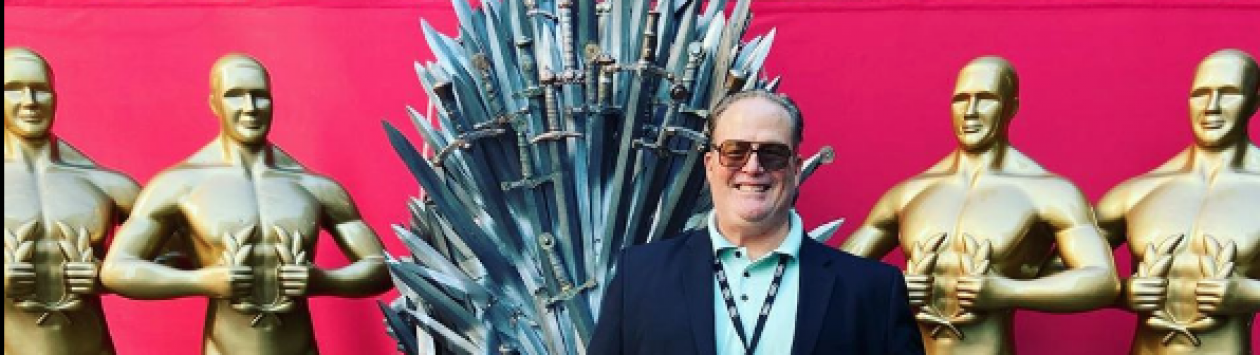
(Photo credit: Larry Gleeson)