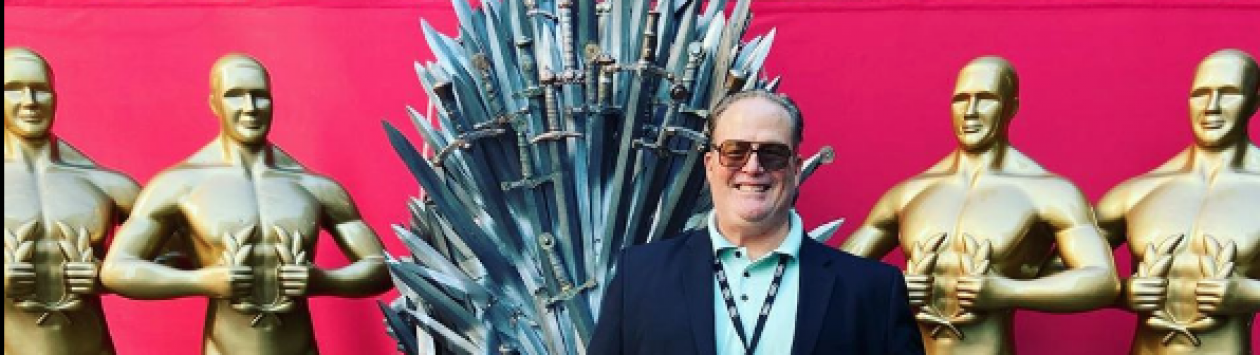
Rory Kennedy’s Above and Beyond: NASA’s Journey to Tomorrow

Posted by Larry Gleeson

Quite a day getting an opportunity to sit down with documentary filmmaker, Rory Kennedy, before the screening of her AFI DOCS 2018 Centerpiece film, Above and Beyond: NASA’s Journey to Tomorrow.


Following my interview, I gathered my gear and waited for the evening’s festivities. A brief reception was held before the screening in the Space Museum with some light appetizers and refreshments.

National Air and Space Museum Director Ellen Stofan discusses ABOVE AND BEYOND_ NASA'S JOURNEY TO TOMORROW during AFI DOCS 2018. Credit_ Gediyon Kifle
Dr. Ellen Stofan, the former Chief Scientist of NASA (2013-2016) and current Director of the Smithsonian National Air and Space Museum, makes introductory remarks on June 15, 2018, at the  Mueum’s Lockheed-Martin IMAX theater before the screening of Above and Beyond: NASA’S Journey to Tomorrow. (Photo credit: Gediyon Kifle)

The screening was held in the Lockheed-Martin IMAX Theater. Introductory remarks were made by Dr. Ellen Stofan, the former Chief Scientist of NASA (2013-2016) and Director of the Smithsonian National Air and Space Museum, who served as principal advisor to the NASA Administrator on the agency’s science-related strategic planning and programs. Stofan glowingly praised Kennedy’s work before bringing George Stevens, the American Film Institute’s (AFI) Founding Director, to the podium to make Kennedy’s formal introduction. And, after informing the audience of Kennedy’s nearly 50 films and that Kennedy’s middle name, Elizabeth, was in honor of Stevens’ wife, Stevens introduced Rory Kennedy.

ABOVE AND BEYOND_ NASA'S JOURNEY TO TOMORROW Discussion at the National Air and Space Museum during AFI DOCS 2018. Credit_ Gediyon Kifle
Rory Kennedy, second from left, speaks on making her newest film, Above and Beyond: NASA’S Journey to Tomorrow, during a panel discussion moderated by Ted Johnson, Senior Editor and Washington Bureau Chief for Variety, at the Smithsonian National Air and Space Museum’s Lockheed-Martin IMAX Theater on June 16, 2018. Panel members seated left to right: Ellen Stofan, Director of the Air and Space Museum; Rory Kennedy; Charles Bolden, NASA Administrator from 2009-2017; William “Bill” Barry, NASA Chief Historian; and, Ted Johnson. (Photo credit: Gediyon Kifle)


Kennedy thanked the Discovery team, as well as several other notable figures, including John Hoffman, for their support and stated what a great honor it has been to make the film. And, without further adieu Above and Beyond was screened. A lively panel discussion followed the screening on the NASA mission and the future safeguarding of Planet Earth.

Stay tuned for more on the panel discussion. In the meantime, keep an eye out for Above and Beyond. For your reading pleasure, I’m including a review of the film!

REVIEW: ABOVE AND BEYOND: NASA’S JOURNEY TO TOMORROW

Documentary Filmmaker Rory Kennedy delivers a powerful payload of stunning and breathtaking imagery in her latest film, Above and Beyond: NASA’s Journey to Tomorrow. Kennedy has made a slew of award-winning and critically acclaimed films including American Hollow (1999), The Ghosts of Abu Ghraib (2007), Ethel (2012), and Last Days in Vietnam (2014). In, addition, Kennedy has been nominated for both the Oscar and Primetime Emmy – winning an Emmy with Last Days in Vietnam (2014). Above and Beyond, a Moxie Firecracker film, might be the film that puts her over the top when it comes to Oscar.

The film opens with an aerial shot of the Challenger Rover landing on the planet of Mars. Non-diagetic music aids in adding to the suspense of the momentous occasion. The  archival footage shows the final moments of the landing with a voice-over narrator informing the audience the module had entered the atmosphere at 1100 miles and slowed to a final descending speed of one and a half miles an hour. A nice transition is made to a loud, cheering operations room at the National Aeronautics and Space Administration (NASA) Jet Propulsion Laboratory leading into the title and rolling credits. Various space images of NASA machinery accompany the opening and set the mood for the film’s narrative.

Kennedy provides a good portion of the  film’s voice-over narration and reads some poignant words her uncle, President John Fitzgerald Kennedy (JFK), spoke in the early, transformative years of NASA. President Kennedy believed the Space Program and NASA offered America its greatest opportunities for its best and brightest minds as well as its able and fit bodies and tripled NASA’s budget from 1961 to 1962. Filmmaker Kennedy expertly crafted the words with complementary imagery. Archival footage of President Kennedy purveying an early rocket launch site as well as his wise and inspirational speech at Rice University as to why America would go to the moon, “not because it’s easy, but because it’s hard, because that goal will serve to organize and measure the best of our energies and skills…” signifies the advent of the Space Race between the United States and Russia. Kennedy wanted to see space used for knowledge and understanding rather than a place for the deployment of weapons of mass destruction.

Over the course of the next six decades NASA would lead the way in space exploration. There were budgetary setbacks and unfortunate mishaps resulting in untimely deaths that temporarily halted some exploration efforts. But, more importantly, there were massive strides made and Rory Kennedy manages to weave them into the complex history of NASA with some inspirational words of her own at film’s end. Surprisingly, while NASA has been known predominantly for its space exploration it has also engaged itself in the exploration of the earth. And, Kennedy manages to keep pace with this duality through a precise curation of NASA archival clips.

Having been approached by The Discovery Channel about making a documentary on NASA, Kennedy answered the call and incorporated numerous interviews with astronauts and leading NASA officials, coupled with stunning visuals and copious amounts of research materials as she delved into the known and unknown dealing with a simple philosophical premise:

“Human beings, more than any other species, are driven by an insatiable curiosity, a remarkable ability to wonder. It is a need to know that lies deep within our DNA as we seek to answer some of time’s most fundamental questions: Where do we come from? Are we alone? What will become of us?”

And, much like her famous uncle, JFK, Rory Kennedy rallies NASA with its plans for space exploration and throws down the gauntlet with a call to action to moviegoers to safeguard our Planet Earth.

Above and Beyond is an ambitious film containing a wild and dangerous universe while inherently addressing the earth’s fragility and our place in it. One of the year’s most important films. Highly recommended.

*Featured photo: Rory Kennedy (Photo credit: Gediyon Kifle)
AFI DOCS


AFI DOCS Charles Guggenheim Symposium with 2018 honoree Steve James

Posted by Larry Gleeson

Documentary filmmaker, Steve James (Hoop Dreams (1994), The Interrupters (2011), Abacus: Small Enough to Jail (2016)), the 2018 American Film Institute’s (AFI) AFI DOCS Charles Guggenheim Symposium honoree, pleased a large audience at the Smithsonian Museum of American History’s Warner Bros. Theater with his candor and openness. James had plenty of help with the affable, Chicago Tribune critic, Michael Phillips. The AFI DOCS Charles Guggenheim Symposium honors masters of the non-fiction art form who inspire audiences by documenting and exploring the human experience.

Phillips gently led the conversation, after opening remarks from AFI President and CEO Bob Gazzale, from James’ personally poignant documentary, Stevie (2002), through to James’ latest work, America to Me, a twelve part series set in Oak Park, Illinois, an older, racially diverse, liberal-minded community, four blocks away from the boundary of the City of Chicago. James along with camera man, Bing Liu (Minding the Gap), spent a year following a group of high school students as they deal with and navigate life issues including the explosive Black Live Matter movement. The twelve-part series will premiere on Starz this fall.

Surprisingly, the conversation drifted from areas of ethical issues to camera movements to how a subject is chosen to make a documentary film with James work as the back drop. According to James he may have crossed the line with possible exploiting and manipulating people in Stevie to tell the story. The outcome, the public understanding how such a personality developed and how society deals with it, made making the film worthwhile and rewarding. Stevie had been a troubled youth for whom James had been a Big Brother Advocate.

2018 Guggenheim Honoree Steve James and Chicago Tribune Film Critic Michael Phillips. Credit_ Gediyon Kifle
The 2018 American Film Institute’s AFI DOCS Charles Guggenheim Symposium honoree, Steve James, right, shares with the audience at the Smithsonian Institute of American History Warner Bros. Theater his experience as a documentary filmmaker on June 15th, 2018. James’ films include Stevie, The Interrupters and Abacus:Small Enough to Jail. (Photo credit: Gediyon Kifle)

James’ candor in how he dealt with returning to reconnect with Stevie segued into Phillips next question revolving around how a key relationship with a subject can change from the beginning of filming. According to James, much of what the person is experiencing in their own interpersonal world in a specific moment is what he finds to be of genuine interest.

One question that seems to surface with any human interest documentary is what affect the camera has on the subject. James experience is no different. Jokingly, James frankly quipped without having access to an alternate universe, we will never know what the filmic experience would look like without a camera. One thing James is certain of, however, is that in the end the film shows that the force of human emotions is so powerful that the presence of the camera makes little difference in the telling of the story.

James’ breakthrough film, Hoop Dreams, followed two inner-city, African-American high school basketball players recruited to play at the prestigious, suburban high school, St, Joseph’s in outlying Westchester, Illinois. James said as recently as last year he’s been posed with the question, “So what have you done since Hoop Dreams?” that brought a big chuckle from the audience. James said his wife, whom he initially followed to Southern Illinois University-Carbondale, where he studied film in the graduate program, is an intuitive bounce. While working on America to Me, James had the impetus for his most recent film about a small Chinese-American banking institution, Abacus: Small Enough to Jail, that was the only company to be criminally indicted in the United States mortgage crisis of 2008. He wasn’t sure with his already full workload about taking on another project simultaneously. Thankfully, his wife told him he had to make the film!

Bringing the conversation to a close, Phillips brought to light James’ penchant for Chicago grassroots films. Seemingly hesitant at first, James responded while that may be the case, his films also deal with issues any large metropolitan area might have such as injustice and urban violence. Admittedly, James feels a great pride in being a Chicagoan and then dropped the bombshell that his next work, based in Chicago (which he calls the most racially divided city in America), Race in America.

With final remarks James thanked numerous people for their support, including Chaz Ebert who was in the audience. James also made it quite clear, Hoop Dreams would not have received the recognition it did without the help and support of long-time, Chicago film critic, Roger Ebert.

Following the discussion, the first episode of America to Me was screened.

*Featured photo from left to right: Michael Phillips, critic for the Chicago Tribune, and Steve James, documentary filmmaker and 2018 American Film Institute’s AFI DOCS Charles Guggenheim Symposium honoree. (Photo credit: Gediyon Kifle)

AFI DOCS

AFI DOCS 2018 IS OPEN! Personal Statement sets the tone.

Posted by Larry Gleeson

The 2018 edition of the American Film Institute’s AFI DOCS is open. AFI President and Chief Executive Officer, Bob Gazzale kicked off the festival with eloquent opening remarks reminding a receptive audience of the action by former United States President Lyndon Johnson took 50 years ago to create the American Film Institute and its mission “to preserve the heritage of the motion picture, to honor the artists and their work and to educate the next generation of storytellers.”

Opening_Night-1-2
Enoch Jemmott, one of the lead subjects of the AFI DOCS 2018 Opening Night Film, Personal Statement, strikes a pose on the red carpet inside the Newseum, in Washington, D.C., June 13, 2018 (Photo credit: Larry Gleeson/HollywoodGlee)

Personal Statement, the 2018 AFI DOCS Opening Night Film, directed and produced by Julianne Dressner, and co-directed by Edwin Martinez, was also making its world premiere. The cast and crew were out in full force on the red carpet before the film’s screening.

Opening_Night-1-2
Personal Statement Producer, Beth Levinson (far right), marshals Personal Statement actors at the 2018 American Film Institute’s AFI DOCS for press photos at the Newseum, in Washington, D.C., on June 13, 2018. Dressner’s film about three Brooklyn high school seniors who took on the role of college guidance counselors for their under-served classmates was making its world premiere at the Newseum’s Annenberg Theatre. (Photo credit; Larry Gleeson/HollywoodGlee)


The film follows three Brooklyn, New York, high school seniors, Enoch, Christine, and Karoline, as they prepare themselves for college and try to inspire and encourage their classmates to make the jump with them.

Screen Shot 2018-06-14 at 3.56.52 PM
Brooklyn, New York, high school senior, Christine, addresses her classmates on the importance of vocalizing their wants and needs followed up by taking positive actions as a way to get their needs met. (Photo courtesy of Reify Films)

The film opened with a nice out-of-focus frame of a night-time city-scape slowly coming into focus as a textual overlay informs the viewer of the setting. A transition reveals a young black male doing homework with his niece. Another transition reveals a young bi-racial female in dialogue with a young Hispanic female as she explains some of the challenges she is facing. A third transition reveals an Hispanic mother in the kitchen followed quickly by another transition revealing Christina, one of the film’s protagonist. An upbeat non-diagetic score shows the three characters on their way to school meeting. The meeting turns out to be a training so the three protagonists can work as school guidance counselors.

Enoch and Andrew call college admissions offices_Juliane Dressner
Enoch Jemmott, right, a Brooklyn, New York, high school senior, prods his friend and classmate as the pair prepare to finalize thier respective college admission processes. (Photo courtesy of Julianne Dressner – Reify Films)

This forms the crux of Dressner’s film. Shot in a direct cinema style interspersed with fragments of cinema verite, Personal Statement uncovers societal issues as it reveals the struggles minority students are facing as they attempt to, not only go to college, but also navigate what will be their collegiate experience.

Screen Shot 2018-06-14 at 3.48.10 PM
Karoline, who has undergone bullying for her dress and sexual orientation, shows her counselor a copy of her personal statement for her college application to Smith College, an all-female institution. (Photo courtesy of Reify Films)

Karoline, an LGBTQ student, wants a place where she can meet people who will accept her for who she is. Enoch, a standout high school football anxious to become his own person, lives with his sister. Christina lives at home with a strong-willed mother, who feels Christina needs to consider the financial undertaking in attending college. All three are passionate about going to college and they want their peers to undertake the collegiate journey as well. At the heart of the narrative is the personal statement that explains why each student wants to go their respective schools.

Karoline is a colorful character who had twenty-three absences in her first year of high school has progressed to where she has perfect attendance in her senior year. Enoch faces obstacles that include a mother who lives in a homeless shelter and a lower than desired grade-point-average from the college of his choice, Cortland. Christina, whose mother financed her older brother’s college education, has reservations in supporting Christina’s college choice. Christina’s brother has been out of work for the last four years and her mother has had her work hours reduced.

While all three students wind up attending college, difficult choices are made along the way and challenging issues are revealed surrounding their pursuit of higher education.

Opening_Night-1-3
Personal Statement Director and Producer, Julianne Messner (second from left) applauds as her team is introduced to the audience during a panel discussion following the screening of her film at the Annenberg Theatre inside the Newseum in Washington, D.C., on June 13, 2018. To Messner’s left is Co-Director Edwin Martinez and actors Karoline, Christine and Enoch.  (Photo credit: Larry Gleeson/HollywoodGlee)

A panel discussion immediately followed the film’s screening with Dressner, Martinez and the film’s three actors. To close out the evening a Private Gala celebrated the conscience-altering work.

Opening_Night-1-4
The Opening Night Gala setting following the 2018 AFI DOCS Opening Night Film, Personal Statement. (Photo credit: Gediyon Kifle)

Personal Statement will have its U.S. broadcast premiere on public television’s WORLD Channel and PBS on Tuesday, October 23, 2018 at 8:00 pm. This is a film that needs to be seen and the issues it raises need to be addressed sooner rather than later. Highly recommended.

*Featured photo: Bob Gazzale, President and CEO of the American Film Institute (Photo credit: Tom Kochel)

AFI DOCS


The AFI DOCS Interview: THE PROVIDERS Directors Anna Moot-Levin & Laura Green

Posted by Larry Gleeson

Laura Green and Anna Moot-Levin’s THE PROVIDERS follows three “country doctors” — health care providers working for a small network of clinics in northern New Mexico — as they confront the challenges of keeping those in their poor and opioid-plagued communities healthy and safe.

The film movingly shows each doctor’s day-to-day responsibilities, while also revealing their own struggles with addiction and crime, and a complex portrait emerges of small-town America. This absorbing documentary is a quiet yet urgent reminder that the country’s heartland is in trouble, and that the very nature of general practice medicine needs to be rethought to address a devastating epidemic.

AFI spoke with the directors in a joint email interview about the film, which was recently selected for the AFI DOCS Impact Lab. THE PROVIDERS plays AFI DOCS on Friday, June 15. Get tickets here.

AFI: What led you to pursue documentary filmmaking?

We were drawn to documentary filmmaking as a way to explore how people experience and imagine their surrounding worlds. Documentary has the distinct power to represent subjective realities and, in doing so, can reveal dimensions of the human experience that are often unseen. Narratives that build empathy for others help audiences develop and enrich their understandings of the systems and realities at work in the world around us. We see documentary not only as a product, a vehicle for conveying ideas and stories, but also as a profound act of research: the process of making documentaries is a way not only to represent actuality but an engagement with those realities the filmmaker seeks to represent.

The_Providers_Still02_preview

AFI: What inspired you to tell this story?

We are both children of doctors and share a lifelong fascination with medicine. We grew up with lunches stored in the “biohazard” fridge and dinner-table discussions about the unequal and often unreasonable American healthcare system. Back in 2014, Laura — who, like many freelancers, benefits from the Affordable Care Act (ACA) — heard a radio story about how even after the ACA, many Americans remained unable to access care in rural communities where doctors are often few and far between. As we spent more than 100 days filming in New Mexico over three years, we saw the ways the healthcare problems in these small towns are entwined with the broader challenges facing rural America — such as rural brain-drain and aging populations. Through making this film we witnessed firsthand the insidious connections between poverty, lack of opportunity, illness and addiction.

AFI: How did you find the subjects in your film?

Through a good old-fashioned shoe-leather approach. We started by trying to find outstanding rural healthcare practitioners. Each provider we spoke to would refer us to a few other providers, and our research became a nationwide phone tree of passionate healthcare providers. After speaking with between providers all over the country, we ended up on the phone with Matt Probst. Although we spoke with many incredible providers, Matt was unique in that he came from the community that he served, and the challenges in his personal life mirrored those of his patients. As medical director and clinician at El Centro Family Health, he was also unusual in that he was trying to simultaneously tackle the challenges in rural healthcare both from a structural perspective, and patient-by-patient in the clinic.

The_Providers_Still05_preview

AFI: What was a particular obstacle you faced while making the film?

One mentor said to us that a director’s first film is often multiple films jammed into one. While we planned to structure the film around three healthcare providers from the outset, during production we were drawn in many unexpected directions — from the stories of the many phenomenal patients we met, to the funding crisis nurse practitioner Chris Ruge’s program faced. We ultimately decided to feature five patients, in addition to the three providers — which is a lot of people! It was extremely difficult to figure out a structure that could support so many arcs.

AFI: What do you want audiences to take away from your film?

While THE PROVIDERS addresses many aspects of the crisis in rural healthcare, the core of the film speaks to the profoundly positive impact of human connection within healthcare, particularly for people who have been marginalized. In different ways, each of the providers in the film connects deeply with their patients and the communities they serve. While nobody disputes that clinicians must excel at the “science” of medicine – diagnosis and prescription – the film illuminates the ways that the “art” of patient interaction can itself be healing. As is articulated when Chris’ program is cancelled, it is sometimes feeling cared about that makes the greatest difference for the most vulnerable patients. We hope to leave audiences thinking about the ways that healthcare centered on human connection can heal both medical and social ills.

The_Providers_Still07_preview

AFI: Why is Washington, DC, a valuable location in which to screen your film?

Our film is set both physically and figuratively far from the rooms in Washington where healthcare policy is made. Yet clinics like El Centro (where our film is set) are where the life-and-death consequences of those decisions play out. The ongoing challenges of rural healthcare are the subject of discussion and debate among both legislators and civil society in Washington, DC. Our film offers something rare in policy discussions — intimate, compelling access to the lives of both healthcare providers and patients that shows how rural people are affected by national healthcare policy. We hope that our film will offer a unique form of insight and serve as a catalyst for discussion and action among committed stakeholders in Washington DC.

AFI DOCS

(Source: blog.afi.com)

AFI DOCS Announces 2018 Impact Lab Film Projects

Posted by Larry Gleeson

Five films have been selected for the fourth annual AFI DOCS Impact Lab in partnership with RABEN_IMPACT. The selections for this distinguished fellowship and training program are four feature documentary films — CHARM CITY, DON’T BE NICE, THE PROVIDERS, and PERSONAL STATEMENT, which will have its world premiere and open AFI DOCS this year — and the short documentary film, BROTHER.

Led by impact strategists Heidi Nel and Charlie Crocker, the Impact Lab is designed for filmmakers with issue-driven films who aim to create broader social impact and political change through the power of story and film. The two and a half day Lab, which will take place June 11 through 13 in the lead-up to the festival, provides fellows with unique training opportunities with some of the most sought-after tacticians in the areas of advocacy, grassroots communications and grasstops engagement. Lab fellows are also connected with policymakers and Congressional aides working on legislation relevant to their films. The 16th edition of AFI DOCS will run June 13–17 in Washington, DC, and Silver Spring, MD.

THE 2018 IMPACT LAB FILMS

BROTHER
Synopsis: U.S. Army Captain Matt Zeller and Janis Shinwari barely knew each other when Janis, an Afghan translator for the Army, body-checked Matt to the ground, shot two approaching Taliban fighters and dragged him to safety, saving his life. What resulted was a new lease on life, and an incredible cross-cultural friendship.
Lab Fellows: Daniel Klein (Producer and Co-director) and Hunter Johnson (Director of Photography and Co-director)

CHARM CITY

Synopsis: On the streets of Baltimore, the murder rate is approaching an all-time high and distrust of the police reaches a fever pitch. With neighborhoods in peril, residents attempt to diffuse the violence through cooperative efforts helmed by community leaders, compassionate law-enforcement officers and a progressive young city councilman.
Lab Fellows: Marilyn Ness (Director) and Simon Mendes (Associate Producer)

DON’T BE NICE
Synopsis: Following a diverse team of slam poets as they mine their feelings and personal experiences about race, sexuality, gender and popular culture to craft poems for national competition, DON’T BE NICE demonstrates how collaboration and communication between artists can allow them to better understand who they are and what they want to say.
Lab Fellows: Nikhil Melnechuk (Producer) and Mason Granger (Impact Producer)

PERSONAL STATEMENT
Synopsis: Karoline, Enoch and Christine are Brooklyn high school seniors who just want to go to college, but like so many public school students throughout the country, their schools don’t have enough college guidance support. Refusing to give up, they decide to work as college counselors in their schools, becoming the very resource they don’t have themselves.
Lab Fellows: Juliane Dressner (Director, Producer and Cinematographer) and Beth Levison (Producer)

THE PROVIDERS
Synopsis: THE PROVIDERS follows three “country doctors” — health care providers working for a small network of clinics in northern New Mexico — as they confront the challenges of keeping those in their poor and opioid-plagued communities safe. As the film movingly shows each doctor’s day-to-day responsibilities, a complex portrait emerges of small-town America.
Lab Fellows: Anna Moot-Levin (Director and Producer) and Laura Green (Director and Producer)

AFI DOCS

(Source: blog.afi.com)


Venice News: David Cronenberg to Receive Golden Lion for Lifetime Achievement

Posted by Larry Gleeson

David Cronenberg will receive the Golden Lion for Lifetime Achievement for directors at the 75th Venice International Film Festival (August 29 – September 8, 2018).

golden-lion-prize-venice-825x450

Accepting the award, David Cronenberg declared: “I’ve always loved the Golden Lion of Venice. A lion that flies on golden wings –that’s the essence of art, isn’t it? The essence of cinema. It will be almost unbearably thrilling to receive a Golden Lion of my own.”

The decision was made by the Board of Directors of the Biennale di Venezia, chaired by Paolo Baratta, who espoused the proposal made by the Festival Director, Alberto Barbera.

With regard to this prize, Alberto Barbera declared: “Although Cronenberg was originally relegated to the margins of the horror genre, right from his first, scandalously subversive movies, the director has shown that he wants to take his audiences well beyond the cinema of exploitation, as he constructs an original and highly personal structure, movie after movie. Revolving around the inseparable relationship of body, sex, and death, his universe is populated by grotesque deformities and terrifying couplings, a horror which reflects the fear of mutations inflicted on bodies by science and technology, of disease and physical decay, of the unresolved conflict between spirit and flesh. Violence, sexual transgression, confusion between what is real and what is virtual, the image’s deforming role in contemporary society: these are a few of the recurring themes which have helped make him one of the most daring and stimulating filmmakers ever, a tireless innovator of forms and languages.”

Screen Shot 2018-05-28 at 11.21.43 PM

(Source: labiennale.org)

The AFI DOCS Interview: DON’T BE NICE Director Max Powers

Posted by Larry Gleeson

Following a team of New York slam poets as they prepare to compete in the National Poetry Slam during the charged summer of 2016, DON’T BE NICE shows the value of a team in developing, workshopping and refining a poem before it is ready for competition.

Featuring a diverse group of poets — each mining their feelings about race, sexuality, gender and popular culture, and digging deep from painful personal experiences — this exhilarating film demonstrates how collaboration and communication between artists can allow them to better understand who they are and what they want to say.

AFI spoke to director Max Powers about the film, which plays AFI DOCS on Friday, June 15, at 1:15 p.m. and 8:45 p.m. Get tickets here.

AFI: What led you to pursue documentary filmmaking?

MP: My passion for storytelling and fascination with human connection is at the heart of my interest in documentary. Documentaries deal with the real world and tell vital, urgent stories. This pursuit is especially important now given the massive amount of content available. I believe that creating films that expose audiences to new experiences, concepts and people can have an important and lasting effect on how they view the world.

AFI: Why inspired you to tell this story?

MP: The Poets. Coming into this film, I had no real experience with slam poetry but was immediately blown away by the brilliant, vulnerable and powerful poems being shared at Bowery Poetry. I knew there must be a unique, deeply personal process behind the work. Coming from a sports film background, the fact that slam had scores and that the poets formed teams to travel to a national competition appealed to me as a storyteller.

DON_T BE NICE

AFI: How did you find the subjects in your film?

MP: Poetry slam teams are almost always chosen through a slam competition process lasting weeks or months. Bowery Poetry was the same. I began filming at the club as over one hundred of poets came through to compete for a spot on the team. Through that process, I met many potential Bowery team members, but knew I would only end up concentrating on the winning five. Ultimately, it was out of my hands and I found out when the audience found out. Ashley August, one of the Bowery team members, found Lauren Whitehead and Jon Sands, the two coaches and icons of the poetry community.  In this way, the entire slam community contributed to picking the subjects of the film. This turned out to be a great gift.

AFI: What was a particular obstacle you faced while making the film?   

MP: One huge challenge was bringing the poetry to life onscreen. At a slam, you have the power of a poet’s actual presence, and an enthusiastic crowd reacting spontaneously. Our team filmed dozens and dozens of slams, but it was difficult to approach the visceral experience of seeing a slam live. We decided to use other cinematic tools such as dance, direct address and music-video-style elements to create a poetry world for the film. Additionally, we concentrated on the creative development of the poems so when you do see it performed onstage in the film, you understand where it is coming from — something a live audience usually does not have access to.

2. TEAM REHEARSE

AFI: What do you want audiences to walk away with after screening your film?

MP: I want audiences to walk away feeling braver. The subjects in the film are wildly vulnerable, and the creation of their art depends on trust and giving themselves completely to the process. Watching their bravery had a profound effect on me while filming with the team, and it was one of the key things I wanted to convey in the film. Hopefully audience members can be inspired to take a leap of faith and trust themselves to speak their truth, whether that be in the form of a poem, or to their friends and loved ones. I also want the audience to discover something about themselves through the poet’s words. When the poets speak truth to power, I believe they speak for everyone listening.

AFI: Why is Washington, DC, a valuable location to screen your film? 

MP: Washington, DC, has sharp, informed audiences that I hope will receive the film well and engage strongly with it. The vast, multicultural demographic that is DC is a fertile bed for important and dynamic dialogue surrounding the political and social issues that the poems explore in the film.

AFI: Why are documentary films important today?

MP: Documentaries provide a wonderful tool for building empathy. They allow access to ways of thinking that can be vastly different than your own. Today, with the staggering amount of content and re-sharable opinions available about current events and culture, you are able to simply choose what you want to hear, and this content can often lack depth. Documentarians are charged with telling audiences a story that digs deeper, examines an experience that you might not agree with and brings you face to face with a universal humanity that you can’t help but feel a connection with.

AFI DOCS

(Source:blog.afi.com)

Julia Roberts to Present George Clooney with AFI Life Achievement Award

Posted by Larry Gleeson

Julia Roberts will present the nation’s highest honor for a career in film, the AFI Life Achievement Award, to her longtime friend and colleague George Clooney at the 46th AFI Life Achievement Award Gala Tribute honoring the actor, director, writer and producer. The event will take place Thursday, June 7, 2018, at the Dolby Theatre in Hollywood, CA.

Roberts has frequently collaborated with George Clooney, sharing the screen with him on the films OCEAN’S ELEVEN (2001), OCEAN’S TWELVE (2004) and MONEY MONSTER (2016). Additionally, she starred in his directorial debut, CONFESSIONS OF A DANGEROUS MIND (2002) and in AUGUST: OSAGE COUNTY which Clooney produced.

Screen Shot 2018-06-03 at 12.36.51 AM
Actor George Clooney, pictured above, will receive the 46th AFI LIFE ACHIEVEMENT AWARD on Thursday, June 7, 2018, at the Dolby Theatre in Hollywood, CA. (Photo credit: AFI.com)

TNT will premiere the hour-and-a-half special, THE 46TH AFI LIFE ACHIEVEMENT AWARD: A TRIBUTE TO GEORGE CLOONEY on Thursday, June 21, at 10:00 p.m. ET/PT, followed by an encore at 11:30 p.m. ET/PT. Sister network Turner Classic Movies (TCM) will also air the special in September 2018 during a night of programming dedicated to Clooney’s work.


afi_logo_20110611000547

(Source: AFI.com)


68th Belinale: May We Have Some Diversity, Please?

Posted by Larry Gleeson


Seeing and witnessing the ever-changing, shape-shifting of film festival perspectives, the Berlin International Film Festival, known simply as the Berlinale, lays testament to not only the validity of film as a cultural force but also its ability to transform and expand consciousness. With too many films to lend as examples of this, for simplicity I’ll just propose The Other Side of Hope.

But, let’s get back to the festivals. The best festivals, in my opinion, are highly organic and are representational of their respective communities. Having had an opportunity to attend the 67th Berlinale, I found my own awareness shift from a film-oriented focus to a focus on my German film-going cohorts, primarily German journalists. Having been nurtured via Southern California festivals (AFIFEST in Hollywood and Santa Barbara International Film Festival), I arrived well-before screening time and found myself engaging with my fellow attendees. So the article below goes beyond a resonance – it’s an awakening. Be sure to read it through to the end. You’ll be glad you did!


Screen Shot 2018-06-02 at 10.08.24 PM
Adina Pintilie (Touch Me Not), Tom Tykwer, Dieter Kosslick
Berlinale 2018

The magic of the Berlinale derives from the audience itself. For everyone present, it is as simple as it is complicated: a journey into one’s own emotions, a short trip out of the bustling city into the world of possibilities to live one’s life in a different way.

—- Robert Ide, Der Tagesspiegel, February 26 2018

In one sense, the 2018 Berlinale began early: on November 24, 2017. With the somewhat sensationalist title “Filmmakers Want to Revolutionise the Berlinale”, Spiegel Online published an appeal from 79 film directors that the procedure chosen to select the new Festival Director should be transparent. This was a legitimate request. Dieter Kosslick’s contract ended in 2019 and the processes of appointing leading positions in Berlin’s cultural institutions had in recent years sometimes lead to unfortunate choices and even met with massive opposition – the memory of the turmoil following the installation of Chris Dercon as artistic director of the Volksbühne was still fresh.

But what then turned the appeal into a farce was the article in which the few words from the filmmakers were embedded. Hannah Pilarczyk wrote: “Instead of sharpening the profile of the festival in terms of content, Kosslick has sought to counter the loss of significance with a constant expansion of sections and special presentations. This has led to a mess of programmes which in themselves are as insubstantial as the competition and mean that attention and discussion is scattered rather than concentrated” (Spiegel Online, November 24, 2017). Instead of focusing on the deficiencies and structures of cultural policy, the debate was turned into a final reckoning of the Festival Director. This was a totally unintended turn of events, as one of the joint signatories, Christian Petzold, later made clear: “Our appeal became personalised and was turned into a judgement of Dieter Kosslick, even though he had nothing at all to do with it” (in an interview with Der Tagesspiegel, February 16, 2018). An incensed Dominik Graf similarly spoke out: “If I had known that our letter would be dragged into the journalistic swamp of a judgement on Kosslick, I would never have signed it” (in Die Zeit, November 29, 2017).

The appeal was instrumentalised to channel often personal and long-held sensitivities into a kind of vendetta. In the Spiegel article, Pilarczyk basically did nothing more than bring into play the unease at an increasing “gigantism of the festival” (Yearbook 1988) that has been simmering amongst Berlinale critics for 30 years to insinuate that the signatories wanted to “deliver a damning indictment of the Kosslick era”. The man himself could only react laconically to the persistent hostility: “Well, it’s quite baffling, really […]. It was initially […] aimed at the process but then it attacked me […]. I have long been hoping for specific proposals about what we should do. But apart from the suggestion that we should make the Berlinale smaller, nothing has been forthcoming so far” (in an interview with Deutschlandfunk Kultur, February 15, 2018).

The festival and the city – Berlin, February 16, 2018

The Diversity of the Film/World

To make the Berlinale smaller, the call for a stronger curatorial hand – demands that have become as intrinsic to the festival as the cold weather. In light of the journalistic mudslinging in the run-up to the 2018 Berlinale, the impression might have arisen that Dieter Kosslick would be handing over a desolate and meaningless event to his successor in 2019. That this was not the case was proven by the festival itself, its programme and the journalistic debate arising in its wake. It became clear that the Berlinale is alive and kicking: its uniqueness clearly stood out in 2018.

Rather than exposing an untenable situation requiring urgent revolution, critics like Hannah Pilarczyk simply held an opinion which differed from others. And it was an opinion, as things turned out, that was not shared by the majority. “The tangled undergrowth, the profusion – that is the urban jungle, that is Berlin. It is what differentiates the Berlinale from the hysterical clarity of the small towns of Cannes and Venice […]. The critics […] fail to grasp the Berlinale because they have already failed to grasp Berlin. One should not accommodate them by pruning this film festival into something that complies with an authoritarian small-town character and its fantasies of control,” wrote Jens Jessen in Zeit Online on February 14, 2018. You only needed to take an early morning stroll across Potsdamer Platz and observe the slowly awakening bustle of journalists, industry visitors, audiences, selfie hunters and tourists to comprehend the special quality and atmosphere of the festival.

It was never a goal of the festival to court hermetically sealed specialist discourses. At its centre stood diversity and an enthusiastic audience who packed the cinemas once again in 2018. “Does it not demonstrate cinephile self-aggrandisement to believe that the audience requires a strong guiding hand? Instead, one should have the confidence that, in this complex world, people are able to navigate their way through a substantial programme brochure and allow it to inspire them,” argued Wenke Husmann in Zeit Online (February 15, 2018).

A bath in the crowd: Joaquin Phoenix at the premiere of Don’t Worrry, He Won’t Get Far on Foot

Her plea for diversity found prominent support: “I usually hate film festivals. Last night, Gus [Van Sant] was doing the Berlin Talents and I went along to watch and saw all these young filmmakers that are curious about the process and hearing Gus speak, I had a real appreciation for a film festival,” said Joaquin Phoenix, in Berlin for the premiere of Gus Van Sant’s Don’t Worrry, He Won’t Get Far on Foot, about his first positive festival experience (deadline, February 21, 2018).

As in previous years, the days of the festival celebrated the opportunity provided by almost 400 films to travel round the world, experience the most diverse milieus, ways of life, opinions and attitudes, and to put one’s own preconceptions and prejudices to the test. “The eyes of many Berlinale viewers are shining when the credits roll and they ponder the films in the Panorama, Forum or Generation sections on which they have fruitfully lavished their time in recalibrating their own world view,” wrote Robert Ide (Der Tagespiegel, February 26, 2018). The 2018 Competition was representative of the immense diversity of the entire festival. Film critic Katja Nicodemus admitted: “I have never experienced anything like it, so many different aesthetics and crazy film ideas” (NDR Online, February 22, 2018).

For the very first time in its history, the Berlinale opened with an animated film: Wes Anderson’s Isle of Dogs was not only a curatorial stroke of luck, bringing the necessary star power to the festival’s first Red Carpet, but also a “parable of a world filled with fascist ideas of purity and exclusion” (Verena Lueken, FAZ, February 16, 2018) and hence a paradigm for the festival’s concept of diversity.

At the premiere of Bixa Travesty (Tranny Fag): director Kiko Goifman, Panorama section head Paz Lázaro, director Claudia Priscilla and protagonist Linn da Quebrada

#MeToo and Diversity

In mid-October 2017, the MeToo hashtag dominated social networks. It was established in the wake of the heated debates on gender relations in the film industry triggered by the scandal surrounding producer Harvey Weinstein. Several female actors have accused Weinstein of sexual assault, up to and including rape. The issue had wide repercussions, including in Germany, and became a dominant topic at the 2018 Berlinale where Dieter Kosslick put #MeToo in a wider context and focused on power relations in general. Such discussions are “also a bit in the DNA of the Berlinale” (in an interview with Deutschlandfunk Kultur, February 15, 2018) because this issue, too, is ultimately about diversity. The festival’s commitment was accordingly recognised by the press: “Where else can cinema-goers find such a wide range of queer, international and political movies without working as an industry insider? Certainly not Cannes nor Venice, both of which remain privy only to those with the correct pass […]. Much like Berlin itself, the Berlinale prizes inclusivity above all else, and in this tumultuous era, it’s hard to imagine anything more important than that” (David Opie, EXBERLINER, 09 February 2018).

The last days of eastern Aleppo’s siege: : Milad Amin’s Ard al mahshar (Land of Doom) from Forum Expanded

The Obstructed View

With #MeToo, the film world turned its attention to its own structures, and in view of the current global political situation, the 2018 festival also became a question of identity. The image of a world out of joint already present in previous years had only sharpened and the Berlinale, which began in 1951 as a “showcase of the free world”, had to ask itself whether this free world even still existed. The so-called “leader of the free world”, a buffoonish US billionaire now unexpectedly a year into office, had still not forsaken his fantasy of a concrete wall between the USA and Mexico, had introduced protective tariffs, fired his foreign minister by Twitter and was himself accused of sexual assault. A continuing manifestation of this chaos was bomb-flattened Syria. The (proxy) wars between Russia and the USA, the interests of Turkey, the Kurds, Bashar al-Assad, the dystopian ideals of Islamic State, etcetera, were being fought on the backs of a fleeing or dying civilian population. Most of the world closed its eyes to the mass murder taking place.

It was therefore all the more important that a trend from previous years continued in the 2018 programme: films again challenged the act of forgetting and insisted on holding the past to account, and this took place across all sections. As Christoph Terhechte, head of Forum, summarised in an interview: “Addressing the past is what preoccupies filmmakers most at the moment. Especially because the view of the future is so obstructed worldwide. It is very hard to imagine what our civilisation will look like in 20 or 50 years time. To find answers to this question requires taking recourse to the past because it contains the reasons for the current situation. That is the prerequisite for future utopias.”

Two films, both using material originally shot in the 1980s: Unas preguntas (One or Two Questions) by Kristina Konrad and Waldheims Walzer (The Waldheim Waltz) by Ruth Beckermann

Nationalism Then as Now

It was striking how frequently the focus was trained on the devastation caused by dictatorial regimes. In his Competition entry Ang Panahon ng Halimaw (Season of the Devil), Lav Diaz returned to the darkest hours of the Marcos regime in the Philippines. Almudena Carracedo and Robert Bahar’s The Silence of Others in Panorama depicted the fight against the state-sanctioned forgetting of the Franco regime in Spain. An amnesty law issued after the military dictatorship in Uruguay was at the centre of Unas Preguntas (One or Two Questions) by Kristina Konrad in Forum. Konrad drew on material she shot in the 1980s to show how active democracy worked then and should work today. In a similar way, Ruth Beckermann edited together footage she also shot in the 1980s. In Waldheims Walzer (The Waldheim Waltz) she followed the – successful – 1986 election campaign of former UN Ambassador Kurt Waldheim as he ran for the office of Austrian Federal President. At that time, Waldheim had consigned his Nazi past to oblivion and thus became a symbol for an entire nation which perceived itself as a victim of the Nazi regime rather than its accomplice. Waldheims Walzer insisted, and persisted, in scrutinising and refusing to forget – and for this the film was rewarded with the Glashütte Original – Documentary Award. Beckermann’s film also had a burning topicality as the shift to the right and the resurgence of nation states was in evidence everywhere in our supposedly globalised world.

That certain milieus or individuals have long since bid farewell to the idea of democracy was reflected in multifaceted ways in the 2018 programme. In Až přijde válka (When the War Comes) in Panorama, Jan Gebert documented the preparations made by a paramilitary group in Slovakia for the self-heralded clash of civilisations. The most shocking aspect of this was the commonplace way in which paramilitary posturing was integrated into people’s everyday lives. The catastrophe to which such ways of thinking can lead was made tangible by Erik Poppe in the Competition. With Utøya 22. juli (U – July 22) he delivered the audience back to the year 2011 and the warzone of a war without borders, to the mass murder committed by the self-proclaimed defender of the Western world Anders Breivik who, unwilling to wait any longer for the clash of civilisations to begin, transformed the Social Democrat Party’s youth camp into the scene of a massacre.

War games: Až přijde válka (When the War Comes) by Jan Gebert

Revolution of the Senses

Beyond its topic, Utøya 22. juli also impressively tackled the prerequisite of any form of politics: perception. With a running time of 90 minutes, the film’s length corresponded to that of the 2011 massacre itself. Poppe eschewed cuts and hence the audience experienced the flight and dying of the Norwegian teenagers in an, at times, agonising tour-de-force of a single take. Allowing the events to play out in real time made the suffering and fear tangible in a much stronger way than any conventional documentary could hope to achieve. Just how strongly form is connected to political implications was also demonstrated by Nesrine Khodr’s installation Extended Sea in the Forum Expanded exhibition. Here, once again, a single, and in this case, fixed shot: for 705 minutes almost nothing happens. Anyone who could spare over eleven hours – and particularly in the context of a film festival where the limited nature of time and the imperative to accumulate the greatest possible number of viewed films dictate the daily schedule – to devote their full attention to a single work has obviously left behind the premises of turbo-capitalism and can also perceive the social world in an entirely new way.

© Nesrine Khodr
Extended Sea by Nesrine Khodr

Extended Sea found its counterpart in Panorama where Profile offered a wonderful reflection on the state of perception in the digital age. Timur Bekmambetov told the story of a British journalist who allows herself to be recruited by IS via Skype in order to write an article about it. For him, a mere laptop screen was sufficient cinematic space, where the ways in which perception becomes hysterical and incredibly accelerated can be experienced, as can the abstruse manner in which the private and professional, life and death, are pieced together in hard cuts. “From the point of view of a normal resident of audiovisual culture, film festivals are only as good as they are representatives, engines and reflections of general image culture” wrote Georg Seeßlen in Freitag (07/2018 edition) – and the 2018 programme had no reason to shy away from this demand.

A Farewell and Three Welcomes

In the summer of 2017, Panorama saw a significant change in personnel. After 25 years, Wieland Speck passed the leadership baton to Paz Lázaro who curated the programme for the 68th Berlinale together with Michael Stütz and Andreas Struck. All three had worked for Panorama for a long time already and they continued to focus on key topics such as LGBT cinema. At the same time, their very own distinctive styles became clearly visible in a focused and compact programme.

And it was also an end of an era at the European Film Market: after 30 years the grande dame of the film world, Beki Probst, was bid farewell with a Berlinale Camera. As director and then president, she had made the market an incomparable success story. “I began with three colleagues and a handful of films,” she recalled in the Tagesanzeiger (February 15, 2018). In 2018, with 10,000 participants from 112 countries and 661 films screened, the EFM set new records.

At the Award Ceremony: The team of Touch Me Not with the Golden Bear

“Sexperiments”

The 2018 festival reserved its biggest surprise for the Award Ceremony. Instead of awarding one of the tipped favourites in the Competition, Jury President Tom Tykwer and his fellow jurors honoured a “small”, semi-documentary film experience from Romania which hardly anyone had on their radar: Touch Me Not by Adina Pintilie took home both the GWFF Best First Feature Award and the Golden Bear. Its candid treatment of naked bodies, sexuality and intimacy had already caused a stir at its premiere two days earlier. Some critics left the screening in a huff, lurid headlines blazed for the next few days: “Gold for the Nude Shocker” (Berliner Morgenpost), “Sexperimental Film ‘Touch Me Not’ Unsettles Berlinale Audiences” (Rolling Stone), “Audience Members Walk Out Due to Excessive Sex Scenes” (Die Welt).

In a time of an omnipresent digital porn economy, Pintilie had struck a nerve. The film investigates the fundamentals of what is termed “intimacy”, what defines it and how it is experienced. In view of the heterogeneous bodies and personalities it portrays – Pintilie’s protagonists are all psychologically or physically peculiar in their own way – rather than the nudity in the film, it is the normativity of the “beautiful” bodies which generally prevail on our cinema screens which seems monstrous. Pintilie’s film discovers beauty in what is all too often excluded and marginalised and in the #MeToo era it was another powerfully urgent plea for true diversity. Reactions to the Golden Bear winner were heated and divergent. Peter Bradshaw from the Guardian took the jury’s decision as an opportunity to make a personal reckoning of the festival as a whole: “Victory for Adina Pintilie’s humourless and clumsy documentary essay underscores Berlin’s status as a festival that promotes the dull and valueless” (February 25, 2018). Tobias Kniebe, in contrast, wrote in the Süddeutsche Zeitung: “And a film that succeeds in completely rewiring a few synapses in the brains of its viewers – does that not deserve all the Bears going?” (February 25, 2018).

Alonso Ruizpalacios and Manuel Alcalá celebrating the Silver Bear for Best Screenplay

The passion of the debate unleashed by Touch Me Not also demonstrated the exceptional quality in the 2018 Competition in which many films deserved a prize. Above all, the German critics were disappointed that the four strong German entries – Christian Petzold’s Transit, Emily Atef’s 3 Tage in Quiberon (3 Days in Quiberon), Philip Gröning’s Mein Bruder heißt Robert und ist ein Idiot (My Brother’s Name is Robert and He is an Idiot) and Thomas Stuber’s In den Gängen (In the Aisles) – went home empty-handed. Gunnar Decker succinctly summed up the general mood in Neues Deutschland on February 26, 2018: “This year’s competition [was] one of the strongest in recent years. Above all, it saw a return of strong German films which surprised with very different distinctive styles.”

The other awards revealed how multifaceted and diverse the 2018 Competition was: Małgorzata Szumowska won the Grand Jury Prize with her satire on contemporary Poland, Twarz (Mug); Wes Anderson secured consideration for his animated film Isle of Dogs with the award for Best Director. The quiet, intimate Paraguayan drama Las herederas (The Heiresses) by Marcelo Martinessi won the Silver Bear Alfred Bauer Prize and the Silver Bear for Best Actress for Ana Brun.

Anthony Bajon with the Silver Bear for Best Actor

For his role as the drug-addicted young drifter in Cédric Kahn’s La prière (The Prayer), young French performer Anthony Bajon won the Silver Bear for Best Actor. The prize for Best Screenplay went to Mexico for Manuel Alcalá and Alonso Ruizpalacios’ (who also directed the film Museo (Museum)) retelling of the audacious 1985 break-in at the Mexican National Museum. The Russian Elena Okopnaya was honoured for her Outstanding Artistic Contribution (Costume and Production Design) in Alexey German Jr.’s portrait of the artist Dovlatov.

And so the 68th Berlinale climaxed in an Award Ceremony which once again reflected the great diversity of the festival. As Hanns-Georg Rodek summed up: “The Berlin Film Festival is returning to its roots. It’s once again a political festival of free thinking that ventures to take more risks than Venice or Cannes. ‘Touch Me Not’ is a signal to the other festivals that this Berlinale is ready to change. And a signal to all filmmakers that they are looking to take risks” (Die Welt, February 25, 2018). Amongst the critics, anticipation for next year and the 69th Berlinale won out in the end. Tim Caspar Böhme, for example, wrote: “This year could […] turn out to be the prelude for an increased understanding of the Berlinale as an experimental laboratory for films. Which would be no bad thing” (Die Tageszeitung, February 25, 2018). The alleged sense of deep crisis proclaimed by Der Spiegel in late November had, by the end of February, ultimately been transformed into a hopeful spirit of optimism.

Frauleins
@Berlinale (Photo credit: Larry Gleeson/HollywoodGlee)

1280px-berlin_international_film_festival_logo-svg

(Source: Berlinale.de)