Category Archives: television

Rory Kennedy’s Above and Beyond: NASA’s Journey to Tomorrow

Posted by Larry Gleeson

Quite a day getting an opportunity to sit down with documentary filmmaker, Rory Kennedy, before the screening of her AFI DOCS 2018 Centerpiece film, Above and Beyond: NASA’s Journey to Tomorrow.


Following my interview, I gathered my gear and waited for the evening’s festivities. A brief reception was held before the screening in the Space Museum with some light appetizers and refreshments.

National Air and Space Museum Director Ellen Stofan discusses ABOVE AND BEYOND_ NASA'S JOURNEY TO TOMORROW during AFI DOCS 2018. Credit_ Gediyon Kifle
Dr. Ellen Stofan, the former Chief Scientist of NASA (2013-2016) and current Director of the Smithsonian National Air and Space Museum, makes introductory remarks on June 15, 2018, at the  Mueum’s Lockheed-Martin IMAX theater before the screening of Above and Beyond: NASA’S Journey to Tomorrow. (Photo credit: Gediyon Kifle)

The screening was held in the Lockheed-Martin IMAX Theater. Introductory remarks were made by Dr. Ellen Stofan, the former Chief Scientist of NASA (2013-2016) and Director of the Smithsonian National Air and Space Museum, who served as principal advisor to the NASA Administrator on the agency’s science-related strategic planning and programs. Stofan glowingly praised Kennedy’s work before bringing George Stevens, the American Film Institute’s (AFI) Founding Director, to the podium to make Kennedy’s formal introduction. And, after informing the audience of Kennedy’s nearly 50 films and that Kennedy’s middle name, Elizabeth, was in honor of Stevens’ wife, Stevens introduced Rory Kennedy.

ABOVE AND BEYOND_ NASA'S JOURNEY TO TOMORROW Discussion at the National Air and Space Museum during AFI DOCS 2018. Credit_ Gediyon Kifle
Rory Kennedy, second from left, speaks on making her newest film, Above and Beyond: NASA’S Journey to Tomorrow, during a panel discussion moderated by Ted Johnson, Senior Editor and Washington Bureau Chief for Variety, at the Smithsonian National Air and Space Museum’s Lockheed-Martin IMAX Theater on June 16, 2018. Panel members seated left to right: Ellen Stofan, Director of the Air and Space Museum; Rory Kennedy; Charles Bolden, NASA Administrator from 2009-2017; William “Bill” Barry, NASA Chief Historian; and, Ted Johnson. (Photo credit: Gediyon Kifle)


Kennedy thanked the Discovery team, as well as several other notable figures, including John Hoffman, for their support and stated what a great honor it has been to make the film. And, without further adieu Above and Beyond was screened. A lively panel discussion followed the screening on the NASA mission and the future safeguarding of Planet Earth.

Stay tuned for more on the panel discussion. In the meantime, keep an eye out for Above and Beyond. For your reading pleasure, I’m including a review of the film!

REVIEW: ABOVE AND BEYOND: NASA’S JOURNEY TO TOMORROW

Documentary Filmmaker Rory Kennedy delivers a powerful payload of stunning and breathtaking imagery in her latest film, Above and Beyond: NASA’s Journey to Tomorrow. Kennedy has made a slew of award-winning and critically acclaimed films including American Hollow (1999), The Ghosts of Abu Ghraib (2007), Ethel (2012), and Last Days in Vietnam (2014). In, addition, Kennedy has been nominated for both the Oscar and Primetime Emmy – winning an Emmy with Last Days in Vietnam (2014). Above and Beyond, a Moxie Firecracker film, might be the film that puts her over the top when it comes to Oscar.

The film opens with an aerial shot of the Challenger Rover landing on the planet of Mars. Non-diagetic music aids in adding to the suspense of the momentous occasion. The  archival footage shows the final moments of the landing with a voice-over narrator informing the audience the module had entered the atmosphere at 1100 miles and slowed to a final descending speed of one and a half miles an hour. A nice transition is made to a loud, cheering operations room at the National Aeronautics and Space Administration (NASA) Jet Propulsion Laboratory leading into the title and rolling credits. Various space images of NASA machinery accompany the opening and set the mood for the film’s narrative.

Kennedy provides a good portion of the  film’s voice-over narration and reads some poignant words her uncle, President John Fitzgerald Kennedy (JFK), spoke in the early, transformative years of NASA. President Kennedy believed the Space Program and NASA offered America its greatest opportunities for its best and brightest minds as well as its able and fit bodies and tripled NASA’s budget from 1961 to 1962. Filmmaker Kennedy expertly crafted the words with complementary imagery. Archival footage of President Kennedy purveying an early rocket launch site as well as his wise and inspirational speech at Rice University as to why America would go to the moon, “not because it’s easy, but because it’s hard, because that goal will serve to organize and measure the best of our energies and skills…” signifies the advent of the Space Race between the United States and Russia. Kennedy wanted to see space used for knowledge and understanding rather than a place for the deployment of weapons of mass destruction.

Over the course of the next six decades NASA would lead the way in space exploration. There were budgetary setbacks and unfortunate mishaps resulting in untimely deaths that temporarily halted some exploration efforts. But, more importantly, there were massive strides made and Rory Kennedy manages to weave them into the complex history of NASA with some inspirational words of her own at film’s end. Surprisingly, while NASA has been known predominantly for its space exploration it has also engaged itself in the exploration of the earth. And, Kennedy manages to keep pace with this duality through a precise curation of NASA archival clips.

Having been approached by The Discovery Channel about making a documentary on NASA, Kennedy answered the call and incorporated numerous interviews with astronauts and leading NASA officials, coupled with stunning visuals and copious amounts of research materials as she delved into the known and unknown dealing with a simple philosophical premise:

“Human beings, more than any other species, are driven by an insatiable curiosity, a remarkable ability to wonder. It is a need to know that lies deep within our DNA as we seek to answer some of time’s most fundamental questions: Where do we come from? Are we alone? What will become of us?”

And, much like her famous uncle, JFK, Rory Kennedy rallies NASA with its plans for space exploration and throws down the gauntlet with a call to action to moviegoers to safeguard our Planet Earth.

Above and Beyond is an ambitious film containing a wild and dangerous universe while inherently addressing the earth’s fragility and our place in it. One of the year’s most important films. Highly recommended.

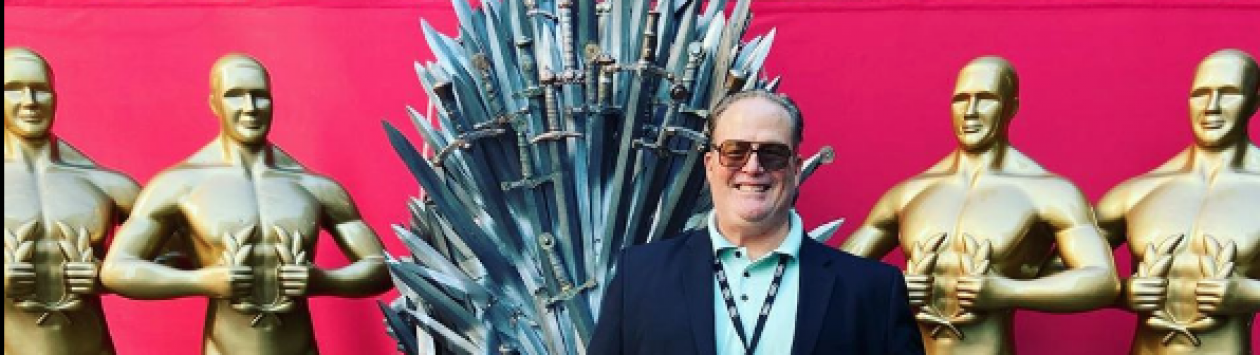
*Featured photo: Rory Kennedy (Photo credit: Gediyon Kifle)
AFI DOCS


The AFI DOCS Interview: THE PROVIDERS Directors Anna Moot-Levin & Laura Green

Posted by Larry Gleeson

Laura Green and Anna Moot-Levin’s THE PROVIDERS follows three “country doctors” — health care providers working for a small network of clinics in northern New Mexico — as they confront the challenges of keeping those in their poor and opioid-plagued communities healthy and safe.

The film movingly shows each doctor’s day-to-day responsibilities, while also revealing their own struggles with addiction and crime, and a complex portrait emerges of small-town America. This absorbing documentary is a quiet yet urgent reminder that the country’s heartland is in trouble, and that the very nature of general practice medicine needs to be rethought to address a devastating epidemic.

AFI spoke with the directors in a joint email interview about the film, which was recently selected for the AFI DOCS Impact Lab. THE PROVIDERS plays AFI DOCS on Friday, June 15. Get tickets here.

AFI: What led you to pursue documentary filmmaking?

We were drawn to documentary filmmaking as a way to explore how people experience and imagine their surrounding worlds. Documentary has the distinct power to represent subjective realities and, in doing so, can reveal dimensions of the human experience that are often unseen. Narratives that build empathy for others help audiences develop and enrich their understandings of the systems and realities at work in the world around us. We see documentary not only as a product, a vehicle for conveying ideas and stories, but also as a profound act of research: the process of making documentaries is a way not only to represent actuality but an engagement with those realities the filmmaker seeks to represent.

The_Providers_Still02_preview

AFI: What inspired you to tell this story?

We are both children of doctors and share a lifelong fascination with medicine. We grew up with lunches stored in the “biohazard” fridge and dinner-table discussions about the unequal and often unreasonable American healthcare system. Back in 2014, Laura — who, like many freelancers, benefits from the Affordable Care Act (ACA) — heard a radio story about how even after the ACA, many Americans remained unable to access care in rural communities where doctors are often few and far between. As we spent more than 100 days filming in New Mexico over three years, we saw the ways the healthcare problems in these small towns are entwined with the broader challenges facing rural America — such as rural brain-drain and aging populations. Through making this film we witnessed firsthand the insidious connections between poverty, lack of opportunity, illness and addiction.

AFI: How did you find the subjects in your film?

Through a good old-fashioned shoe-leather approach. We started by trying to find outstanding rural healthcare practitioners. Each provider we spoke to would refer us to a few other providers, and our research became a nationwide phone tree of passionate healthcare providers. After speaking with between providers all over the country, we ended up on the phone with Matt Probst. Although we spoke with many incredible providers, Matt was unique in that he came from the community that he served, and the challenges in his personal life mirrored those of his patients. As medical director and clinician at El Centro Family Health, he was also unusual in that he was trying to simultaneously tackle the challenges in rural healthcare both from a structural perspective, and patient-by-patient in the clinic.

The_Providers_Still05_preview

AFI: What was a particular obstacle you faced while making the film?

One mentor said to us that a director’s first film is often multiple films jammed into one. While we planned to structure the film around three healthcare providers from the outset, during production we were drawn in many unexpected directions — from the stories of the many phenomenal patients we met, to the funding crisis nurse practitioner Chris Ruge’s program faced. We ultimately decided to feature five patients, in addition to the three providers — which is a lot of people! It was extremely difficult to figure out a structure that could support so many arcs.

AFI: What do you want audiences to take away from your film?

While THE PROVIDERS addresses many aspects of the crisis in rural healthcare, the core of the film speaks to the profoundly positive impact of human connection within healthcare, particularly for people who have been marginalized. In different ways, each of the providers in the film connects deeply with their patients and the communities they serve. While nobody disputes that clinicians must excel at the “science” of medicine – diagnosis and prescription – the film illuminates the ways that the “art” of patient interaction can itself be healing. As is articulated when Chris’ program is cancelled, it is sometimes feeling cared about that makes the greatest difference for the most vulnerable patients. We hope to leave audiences thinking about the ways that healthcare centered on human connection can heal both medical and social ills.

The_Providers_Still07_preview

AFI: Why is Washington, DC, a valuable location in which to screen your film?

Our film is set both physically and figuratively far from the rooms in Washington where healthcare policy is made. Yet clinics like El Centro (where our film is set) are where the life-and-death consequences of those decisions play out. The ongoing challenges of rural healthcare are the subject of discussion and debate among both legislators and civil society in Washington, DC. Our film offers something rare in policy discussions — intimate, compelling access to the lives of both healthcare providers and patients that shows how rural people are affected by national healthcare policy. We hope that our film will offer a unique form of insight and serve as a catalyst for discussion and action among committed stakeholders in Washington DC.

AFI DOCS

(Source: blog.afi.com)

75th Golden Globes List Of Nominations

Posted by Larry Gleeson

The Hollywood Foreign Press Association (HFPA) nominations for the 75th annual Golden Globe Awards have The Shape of Water, a fantasy love story between a mute woman and a sea creature, holding a leading seven nominations with Three Billboards Outside Ebbing, Missouri and The Post garnering six each.

Click here to see the full list of the Official 2018 Golden Globe Nominations

The 75th Golden Globe Awards, hosted by comedian Seth Meyers, will be held January 7th, 2018 at the  Beverly Hilton Hotel and will be broadcast live by NBC-TV.

2017-0328-goldenglobes-generic-showimage-1920x1080-ko

The HFPA has recognized excellence in film and television, both foreign and domestic since 1944 and announced its 75th nominations on Monday, December 11, 2017.


Gal Gadot to Receive the Rising Star Award at 29th Annual PSIFF Film Awards Gala

Posted by Larry Gleeson

The 29th annual Palm Springs International Film Festival (PSIFF) will present Gal Gadot with the Rising Star Award – Actress at its annual Film Awards Gala for her performance in Wonder Woman. The Film Awards Gala, hosted by Mary Hart, will be held Tuesday, January 2 at the Palm Springs Convention Center. The Festival runs January 4-15, 2018.

“Gal Gadot’s Wonder Woman showed us a strong, capable, poised, curious and compassionate character, and her performance has been universally praised, resonating with audiences everywhere.  Gal plays the immortal warrior so well, and the film’s themes are especially apt for today, empowering all types of people—women and men, young and old—the world over,” said Festival Chairman Harold Matzner. “The Palm Springs International Film Festival is honored to present Gal Gadot with this year’s Rising Star Award – Actress.”

Past recipients of the Rising Star Award include Ruth Negga, Alicia Vikander, Jennifer Lawrence, Scarlett Johansson, Anna Kendrick and Dakota Fanning.

Warner Bros. Pictures’ Wonder Woman is based on the iconic DC character.  In the film, an American pilot crashes off an island and is rescued by Diana, an Amazonian princess and warrior.  He tells the them about the ongoing World War, and Diana decides she must help, leaving with him to fight, discovering her full powers and true destiny along the way.  Wonder Woman, which earned more than $410 million in the U.S. and over $820 million worldwide, set numerous box office records, including becoming the highest-grossing film directed by a woman, the highest-grossing superhero origin film domestically, and the largest opening for a female-led comic-based film.  The action adventure, starring Gal Gadot and Chris Pine, was directed by Patty Jenkins from a screenplay by Allan Heinberg, story by Zack Snyder & Heinberg and Jason Fuchs.

Gal Gadot is an actress born in Rosh Ha’ayin, Israel.  In 2004, she was crowned Miss Israel; then, like all Israeli citizens, went on to serve two years in the Israel Defense Forces.  She studied at IDC Herzliya College before pursuing modeling and acting.  While cultivating television work both in Israel and the U.S., Gadot made her film debut in Fast & Furious, as well as its sequels Fast Five and Fast & Furious 6, also performing her own stunts.  She appeared in the 2010 action comedy films Date Night and Knight and Day, the 2014 Israeli film Kicking Out Shoshana, and the 2016 films Triple 9, Criminal and Keeping Up with the Joneses.  Gadot was cast as Wonder Woman in Batman v Superman: Dawn of Justice, before playing the title character in the 2017 mega-hit Wonder Woman, which earned Gadot a Teen Choice Award for Action Actress.  She will reprise the character in the DC extended universe film Justice League, to be released on November 17, 2017.

About The Palm Springs International Film Festival

The Palm Springs International Film Festival (PSIFF) is one of the largest film festivals in North America, welcoming 135,000 attendees last year for its lineup of new and celebrated international features and documentaries. The Festival is also known for its annual Film Awards Gala, a glamorous, black-tie event attended by 2,500.  The Film Awards Gala honors the year’s best achievements in cinema in front of and behind the camera.  The celebrated list of talents who have been honored in recent years includes Ben Affleck, Javier Bardem, Cate Blanchett, Sandra Bullock, Bradley Cooper, George Clooney, Daniel Day-Lewis, Leonardo DiCaprio, Clint Eastwood, Tom Hanks, Nicole Kidman, Matthew McConaughey, Julianne Moore, Brad Pitt, Eddie Redmayne, Julia Roberts, Meryl Streep and Reese Witherspoon. For more information, call 760-778-8979 or 800-898-7256 or visit www.psfilmfest.org.

posterart_ff18_horizontal

(Source: press release from bwr, public relations)

Sam Rockwell to Receive Spotlight Award at 29th Annual PSIFF Film Awards Gala

Posted by Larry Gleeson

Today, the 29th annual Palm Springs International Film Festival (PSIFF) announced it will present Sam Rockwell with the Spotlight Award – Actor at its annual Film Awards Gala for his performance in Three Billboards Outside Ebbing, Missouri.  The Film Awards Gala, hosted by Mary Hart, will be held Tuesday, January 2 at the Palm Springs Convention Center. The Festival runs January 4-15, 2018.

“Sam Rockwell is one of the most dynamic actors of his generation known for creating memorable and diverse characters.  Once again he takes on another challenging role as the immature and explosive Officer Dixon in his critically acclaimed performance in Three Billboards Outside Ebbing, Missouri,” said Festival Chairman Harold Matzner. “For this outstanding awards-worthy performance, it is an honor to present Sam Rockwell with the Spotlight Award.”


Past recipients of the Spotlight Award include Amy Adams, Jessica Chastain, Bryan Cranston, Andrew Garfield, Helen Hunt, Rooney Mara, Julia Roberts and J.K. Simmons. All recipients received Academy Award® nominations in the year they were honored, with Simmons receiving the Oscar for Best Supporting Actor.

Fox Searchlight’s Three Billboards Outside Ebbing, Missouri is a darkly comedic drama from Academy Award® winner Martin McDonagh. After months without a culprit in her daughter’s murder case, Mildred Hayes makes a bold move, painting three signs leading into her town with a controversial message for Ebbing’s revered Chief of Police, William Willoughby. With the involvement of Officer Dixon (Rockwell), his short-tempered second-in-command, the battle between Mildred and the town’s law enforcement is only exacerbated. The film is written and directed by McDonagh, starring Frances McDormand, Woody Harrelson, Sam Rockwell, Abbie Cornish, Lucas Hedges, Željko Ivanek, Caleb Landry Jones, Clarke Peters and Samara Weaving, with John Hawkes and Peter Dinklage. Rockwell won the Hollywood Film Awards Best Supporting Actor Award for his role in the film.

Sam Rockwell’s film credits include Conviction, Iron Man 2, Cowboys and Aliens, Moon, Charlie’s Angels, The Green Mile, Galaxy Quest, The Assassination of Jesse James By the Coward Robert Ford, Seven Psychopaths, Snow Angels, Welcome to Collinwood, Heist, Everybody’s Fine, Frost/Nixon, Joshua, The Hitchhiker’s Guide to the Galaxy, Matchstick Men, Celebrity, A Midsummer Night’s Dream, Lawn Dogs, Safe Men, Jerry and Tom and Box of Moonlight. Rockwell won critical praise, as well as the Berlin Film Festival’s Silver Berlin Bear Award and Movieline’s Breakthrough Performance of the Year Award, for his portrayal of Chuck Barris in Confessions of a Dangerous Mind. He was nominated for a Critics’ Choice Award in 2014 for Best Actor in a Comedy for his performance in The Way, Way Back and in 2010 for Best Supporting Actor for Conviction.

About The Palm Springs International Film Festival

The Palm Springs International Film Festival (PSIFF) is one of the largest film festivals in North America, welcoming 135,000 attendees last year for its lineup of new and celebrated international features and documentaries. The Festival is also known for its annual Film Awards Gala, a glamorous, black-tie event attended by 2,500.  The Film Awards Gala honors the year’s best achievements in cinema in front of and behind the camera.  The celebrated list of talents who have been honored in recent years includes Ben Affleck, Javier Bardem, Cate Blanchett, Sandra Bullock, Bradley Cooper, George Clooney, Daniel Day-Lewis, Leonardo DiCaprio, Clint Eastwood, Tom Hanks, Nicole Kidman, Matthew McConaughey, Julianne Moore, Brad Pitt, Eddie Redmayne, Julia Roberts, Meryl Streep and Reese Witherspoon. For more information, call 760-778-8979 or 800-898-7256 or visit www.psfilmfest.org.

posterart_ff18_horizontal

 (Source: Press release from bwr, public relations)

AFI FEST 2017: Stephen Altman on His Father’s Legacy

Posted by Larry Gleeson

As part of AFI FEST 2017 and the 50th Anniversary of the American Film Institute, a celebration of the late filmmaker Robert Altman’s work , a true master and icon of American cinema, is on display through a series of films.

Robert and Stephen Altman

Born in Kansas City in 1925, Robert Altman was one of the preeminent auteurs of American cinema, from his first studio hit M*A*S*H (1970) to his 39th feature A PRAIRIE HOME COMPANION (2006). In the pantheon of American directors, Altman was a maverick who worked both inside and outside the Hollywood system. His films exhibit a trademark style of diffuse ensemble narratives, complex soundtracks and restless zoom lenses. Film remained Altman’s tireless passion until his death in 2006, and he remains an iconoclast of modern American cinema. This year, AFI FEST is proud to present 12 of his greatest achievements.

Ahead of the festival retrospective, AFI spoke with Stephen Altman, Robert Altman’s son and frequent collaborator. Stephen Altman served as the production designer on a wide range of Altman films, from THE PLAYER to GOSFORD PARK, which earned him an Oscar® nomination.

The Robert Altman Retrospective launches at AFI FEST on Thursday, November 9, with THE PLAYER. Head to the Film Guide for free tickets to all 12 Altman screenings.

AFI: You were a production designer on many of Robert Altman’s films. Can you talk about what it was like to collaborate so closely with your father?

Stephen Altman: It was heavy teamwork. He told me what to do, and I said “Yes, sir.” No, actually it started early on. I started as an apprentice editor and projectionist when I was 17, for CALIFORNIA SPLIT — if you’re a gambler, that’s a great one — and on NASHVILLE, I was apprentice editor and did projection for the dailies, but during the day I was helping the sound team. He had made that eight-track sound recorder, with seven mics, which was a new thing. Then I segued into property. I was then on the set for most of the filming, so [Robert Altman] got very used to me. It was an easy transition from there to being his property master and later his set decorator, then his art director, then production designer. I hadn’t stopped working for him since 1974. His last two films I didn’t work on. When he died, sadly, we were scouting locations for another movie. It was abrupt. Had I known that A PRAIRIE HOME COMPANION was his last movie, I would’ve quit what I was doing and ran to it.

NASHVILLE
NASHVILLE

AFI: The AFI FEST Retrospective offers a wide-ranging survey of Robert Altman titles, including some his better known efforts such as NASHVILLE, as well as works awaiting rediscovery, such as VINCENT & THEO and KANSAS CITY. What are some of your personal favorites?

SA: MCCABE & MRS. MILLER may be one of my favorite films, not just a favorite “Bob” film. I think it stands out among all of them. I love THE LONG GOODBYE — just really watchable, and fun and interesting. M*A*S*H is timeless. It’s still funny to me, and cool. NASHVILLE I may not like as much as everybody else does, but I get it. I understand why it’s insane and wonderful at the same time. Of all of them, MCCABE & MRS. MILLER is maybe more conventional in some way, with real movie stars.

AFI: And what about a film like SHORT CUTS, which is three hours long but thoroughly engrossing from start to finish, and with a huge tapestry of characters and interweaving plots?

SA: That was very personal for me. It was very funny. At the first screening, it shook me. I used to be in property and editorial and so I would end up watching every single frame of film like a hundred thousand times between dailies and cutting the film. When I moved into production design, I avoided editorial, so when I watched the first cut I thought, “Oh this is fresh and new to me.” I left the screening and my dad called me the next day and said, “I think everybody loved the movie except one person.” I said “Who?” He replied, “You.” I was just shaken by the movie. It’s really heavy. I loved working on it. There’s another one, A WEDDING: it’s not similar but in an Altman kind of way, he turned it from a farce and a comedy into a tragedy without you realizing.

SHORT CUTS
SHORT CUTS

AFI: This retrospective is a treat for Altman fans, but is also meant as an entry-point for those who haven’t discovered Altman before. What would you say to a neophyte who’s starting to navigate the world of his films?

SA: You can see a thread in a lot of them, but they’re all really different. He never did the same movie twice. I would just say what he always said, which was, “Giggle and give in.” Some of them are more commercial or accessible than others. You go from something like MCCABE & MRS. MILLER to NASHVILLE — that’s a pretty big stretch in seven years.

AFI: 3 WOMEN is a good example of a movie that certainly would not be made today.

SA: Right. Exactly. That was the luxury of Fox films at the time. [Robert Altman] said, “Hey, I had this dream the other night. I wrote a script.” And Alan Ladd, Jr., who was running Fox at the time, said “Here’s a million-and-a-half dollars, go to Palm Springs and make a film. Don’t go over budget.” That’s how he used to do those kinds of things. That was quite a fun time in the desert. That’s his real weird dreamy thing. He loved playing with the camera. He had this kind of a water-and-oil mobile sculpture, what he called “the wave machine.” It looked like a flat aquarium. It had oil on the top and blue water on the bottom and it rocked back and forth on a machine and made what looked like ocean waves across the screen. He was always inventing those kinds of things. On QUINTET, he would put Vaseline on the lens to blur the edges.

3 WOMEN
3 WOMEN

AFI: Altman had the spirit of an independent filmmaker even while making studio films, where he maintained creative freedom. How did he accomplish that?

SA: For the most part, they let him go. On one of his later films, THE GINGERBREAD MAN, with Kenneth Branagh, he was more of a director-for-hire. His shooting style, his camerawork and his editing are pretty much done in his head as he’s making the movie. The studio basically got scared of the movie, took it away from him and gave it to a Hollywood editor to try and recut it, with traditional close-ups and that kind of thing. They couldn’t do it, and they couldn’t even put it back together. They gave it back to [Altman] later and said, “Here, put it back together, do what you want. We can’t make any sense of this movie.” He had such his own style that it was hard for anybody really to interfere. It’s hard to go onto the set and say, “You’re doing this wrong.”

On THE PLAYER, we have that 10-minute opening shot. That was no improvisation. That was planned to a T. We built a model of the parking lot, with models of cut-out people. The camera was on this crane with a partially flattened tire and we used the parking lot as basically a huge dolly, and we rehearsed the hell out of that. We could have probably used the first take and walked away. They used take 16, and wrapped right after lunch, and we were four days ahead of schedule. He was really efficient with his money, and everyone knew that, so I think the studios let him be because he would only spend a certain amount of money and come back with a movie. People were eager to gamble with him.

THE PLAYER
THE PLAYER

AFI: Why do you think Altman is a filmmaker we are still talking about today?

SA: He was innovative; he didn’t give in. He had basically final cut on his movies. He was never rich, never got big budgets precisely because he would never let the studios make a movie for him. He said, “If you want a movie, I’ll make my movie.” He was brutal to screenwriters — you give him your script and it may not be recognizable at the end of the day.

After POPEYE, which was deemed the biggest bomb in the entire history of filmmaking, it was hard for him to get any kind of work. That’s when he was filming one-hour plays in a theatrical stage the size of your closet. They offered him M*A*S*H 2. He said, “I can’t do it. It would ruin my career. I’d be like everybody else.” At the end of the day, everybody’s pleased he didn’t do stuff like that. He stuck to his guns. I hate to put him on a pedestal but he was kind of pure in this way. He really didn’t give in to the pressure.

Actors loved him so much because he basically said, “Go out there and act.” Some people were intimidated by that, not having an actual script. “Wait, I’ve got to write my dialogue by myself?” The ones that loved it, embraced it, it was a big joy to them. I think he made everybody comfortable — except for the crew.

afi-fest-2011-logo-and-free-tickets

(Source: afi.com)


FilmBuff Proudly Presents MANSFIELD 66/67 – Just in time for Holloween!

Posted by Larry Gleeson

Mansfield6667_01

Wildly entertaining! A side of Jayne Mansfield kept out of the public eye! The incredible, untold true story of film icon Jayne Mansfield’s relationship with Church of Satan founder Anton LaVey. Utilizing archival footage, stills and direct interviews, the vivacious bombshell envelopes the screen in a way few stars of any era have. And, who could resist cheering for Jayne Mansfield — the seemingly punk Marilyn Monroe and the ultimate atomic-era sex-positive kitten-gone-berserk — as she navigates the cultural and spiritual landscape of a quickly changing world?

Mansfield6667_03

Welcome to Mansfield 66/67, a true story based on rumor and hearsay, where classic documentary interviews and archival materials are blended with dance numbers, performance art, and animation — elevating a tabloid tale of a fallen Hollywood idol into a celebration of the mythical proportions – in a campy, California set production from the creators of Room 237. This is one you don’t want to miss!

Mansfield 66/67 will have its theatrical opening in Los Angeles at Laemmle’s Ahrya Fine Arts Theatre on October 27, 2017, co-programmed alongside a number of Mansfield classics including Girl Can’t Help It and Will Success Spoil Rock Hunter. There will be a special premiere on Wednesday, October 25th, with talent in attendance.

Mansfield_6667

Color
English Language
85 minutes

Not Rated

Featuring Jayne Mansfield, Anton LaVey, John Waters, Mary Woronov, Tippi Hedren, Mamie Van Doren, and more!
Directed by P. David Ebersole and Todd Hughes

For additional dates visit: www.mansfield6667.com

About FilmBuff

FilmBuff, A Gunpowder and Sky Company, is an award-winning full-service global sales and distribution company, with a focus on delivering high quality, compelling film and video to targeted audiences. Founded in 2007, FilmBuff consistently introduces audiences to the best in independent film, including Oscar-nominated EXIT THROUGH THE GIFT SHOP, Sundance Audience Award winner, SENNA, Sundance Grand Jury Prize winner, THE HOUSE I LIVE IN, Jared Leto’s ARTIFACT, Adam Carolla’s ROAD HARD, THE INTERNET’S OWN BOY, BURT’S BUZZ, THE INVITATION, SPRING, and many others. Offering a comprehensive array of services and solutions for today’s evolving media landscape, FilmBuff partners with creative filmmakers, publishers and brand marketers to reach, engage and inspire viewers around the world. Connect with FilmBuff at www.FilmBuff.com and @FilmBuff.
(Press materials provided by publicist Ted Geoghegan)

Meet the Press Film Festival With AFI Official Selections Announced

Posted by Larry Gleeson

Quality begets quality.

The Meet the Press Film Festival in Collaboration With the American Film Institute has announced its full slate of official selections — 16 short-length political documentaries produced by filmmakers from across the country.The inaugural film festival will be held at the Landmark Atlantic Plumbing Cinema in Washington, DC, on the evening of November 13. Film screenings will be organized under seven issues and followed by Q&As with the respective filmmakers and an NBC News correspondent.

See below for descriptions of the selected films. Tickets to the festival are now on sale and available here.

Battling America’s New Epidemic

  • “Heroin(e)”: Once a bustling industrial town, Huntington, WV has become the epicenter of America’s modern opioid epidemic, with an overdose rate 10 times the national average. This flood of heroin now threatens this Appalachian city with a cycle of generational addiction, lawlessness and poverty. But within this distressed landscape, Peabody Award-winning filmmaker Elaine McMillion Sheldon (“Hollow”) shows a different side of the fight against drugs — one of hope, highlighting three women working to change the town’s narrative one person at a time.

Love and the Law

  • “62 Days”: Marlise Muñoz was 33 years old and 14 weeks pregnant with her second child when she died, suffering a pulmonary embolism. Pronounced brain-dead in a hospital in Fort Worth, TX, she had discussed her end-of-life wishes with her husband and did not want to be on life support. Director Rebecca Haimowitz tells the story of how, despite this, her family was forced to keep Marlise on mechanical support due to a little-known state law.
  • “Edith + Eddie”: Edith and Eddie, at ages 96 and 95, became America’s oldest interracial newlyweds. Their love story, told by director Laura Checkoway, is disrupted by a family feud that threatens to tear the couple apart.

Life After Prison

  • “Knife Skills”: Over 650,000 people are released from prison every year. Director Thomas Lennon follows the launch of an haute cuisine restaurant in Cleveland, staffed by men and women recently released from behind bars to tell the story of re-entry, second chances and the healing power of fine food.

Higher (Court) Education

  • “Fight for the First”: Director Sharon Liese addresses the freedom of the press in the Trump era through the eyes of journalists-in-training at the world’s oldest journalism school.
  • “Gavin Grimm vs.”: Director Nadia Hallgren tells the story of transgender teen Gavin Grimm suing his local school board in 2016 after its members refused to let him use the bathroom of his choice. He was ready to take his case all the way to the Supreme Court — and then the election happened.

The Cost of Justice

  • “A Debtors’ Prison”: Across the racially segregated landscape of St. Louis County, MO, thousands are routinely sent to jail because they cannot pay local court fines and fees. The vast majority of those fined are poor and black. Directors Brett Story and Todd Chandler follow two plaintiffs in an unfolding court case, as they describe the matrix of controls that subjected them to incarceration for being poor.
  • “Shawna: Life on the Sex Offender Registry”: After having consensual sex with a younger boy while she was still a teenager, Shawna Baldwin found herself one of the 800,000 people on America’s sex offender registries. Director David Feige explores the effects on her life, as she is now in her mid-30s and a mother of three.
  • “219”: A chilling portrait of the inner-workings of the death penalty in America, directed by Ed Hancox and told by the man once known as “the face of executions.”

Living in America

  • “Election Day 2016″: After a long and contentious presidential campaign, 10,000 people spontaneously came to pay tribute to Susan B. Anthony’s grave in Rochester, NY. They placed their “I Voted” stickers upon her headstone and expressed their pride and gratitude to America’s most famous suffragette.
  • “Osama and Ayman”: Osama and Ayman are brothers, skateboarders, entrepreneurs, Americans and Muslims. As they skate through the streets of our nation’s capital, they navigate growing Islamophobia with characteristic style and humor in a film directed by Ben Mullinkosson, Sam Price-Waldman and Chris Cresci.
  • “From Aleppo to L.A.”: Director Julia Meltzer tells the story of Dalya and her mother Rudayna fleeing Aleppo for Los Angeles in 2012. Can they hold on to their Islamic traditions in a country that doesn’t embrace them?
  • “Roadside Attraction”: After a very famous airplane arrives at Palm Beach International Airport, an otherwise ordinary stretch of Florida highway attracts an avid cluster of excited onlookers and selfie-takers, directed by Ivete Lucas and Patrick Bresnan.

On the Edge

  • “Ferryman at the Wall”: Originally proposed as an international peace park with Mexico, Big Bend, TX has a unique relationship with its southern neighbor. For the past 40 years, Mike Davidson has been ferrying tourists across the Rio Grande for a little taste of Mexican life — but now, as director David Freid shows, a great big border wall might divide the park.
  • “Los Lecheros”: The fates of undocumented immigrant workers and Wisconsin’s $43 billion dairy industry are closely intertwined, as director Jim Cricchi tells the story of how both are grappling with their options for survival as fears of ICE raids and deportations under the Trump administration grow.
  • “Monument | Monumento”: Director Laura Gabbert tells the story of Friendship Park, a unique meeting place along the US-Mexico border where family members and loved ones from both countries can see and speak to each other through a meshed fence, but cannot touch.

(Sourced from AFI press release)